


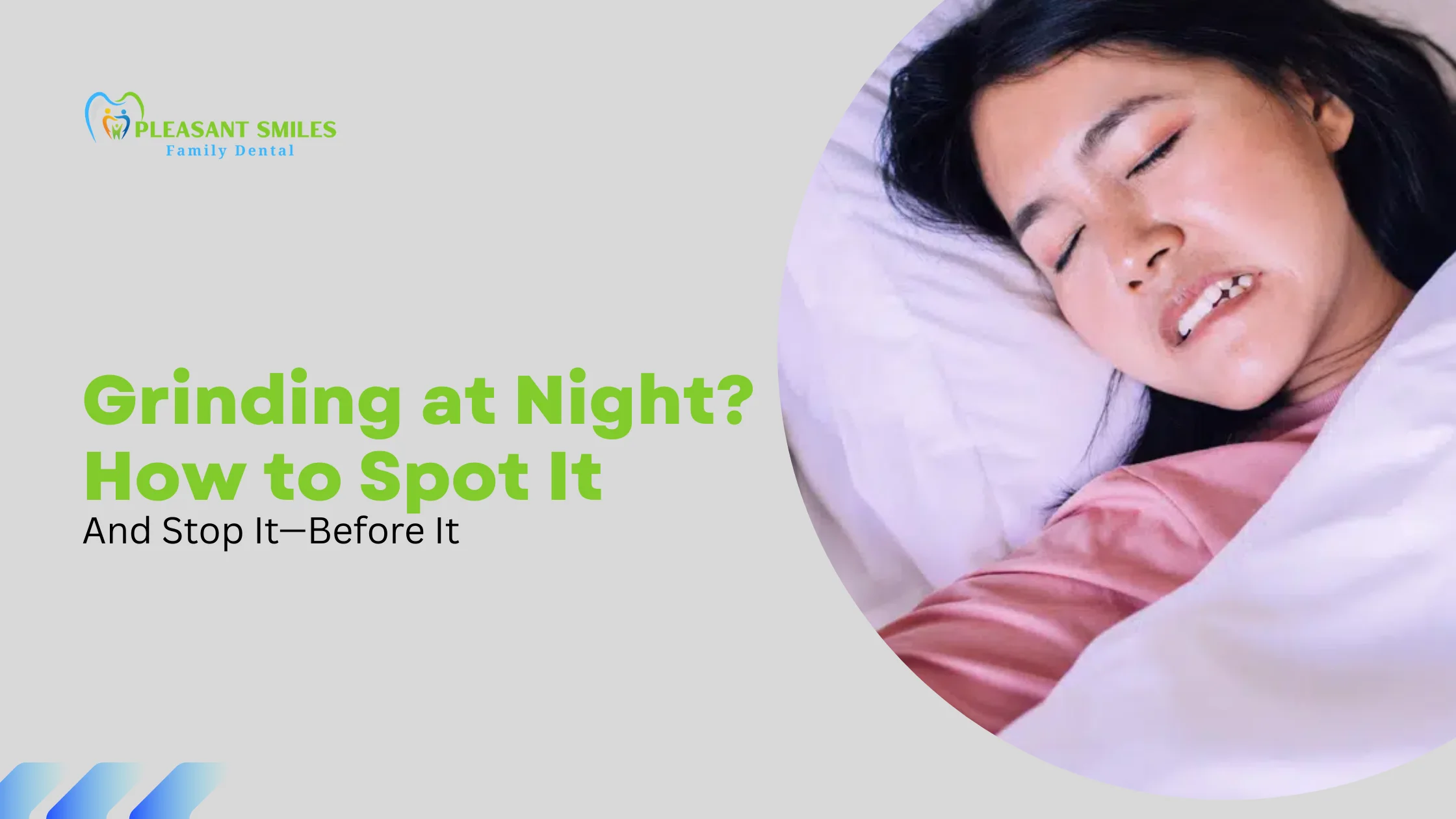
Do you wake up with a sore jaw, morning headaches, or sensitive teeth? These symptoms may be signs of nighttime teeth grinding, also known as bruxism. It happens when you clench or grind your teeth while sleeping, often without realizing it. Over time, repeated grinding can wear down tooth enamel, cause chips or cracks, and leave your jaw feeling sore or tense.
One of the challenges with nighttime teeth grinding is that you may not know it’s happening until you notice the symptoms. You might wake up with jaw discomfort, experience increased tooth sensitivity, or have a partner who hears grinding sounds while you sleep.
At Pleasant Smiles Family Dental, Dr. Vijitha Bandla and her team help patients recognize the signs of bruxism and understand their treatment options. In this article, we’ll explore what causes nighttime teeth grinding, how to recognize the warning signs, and which steps can help protect your teeth and improve your comfort.
What is Teeth Grinding (Bruxism)?
Teeth grinding is also known as bruxism and is the involuntary clenching or grinding of the teeth, usually during sleep. It’s pretty common, both adults and children. Some people grind their teeth occasionally with no long term effects, but chronic grinding can damage teeth, cause jaw pain and disrupt sleep.
Bruxism is not always due to bad oral habits, it can be due to stress, sleep disorders or even bite misalignments. Know the early signs to prevent bigger dental problems. With Dr. Vijitha Bandla you can save your teeth before it’s too late.
Signs of Teeth Grinding at Night
You can’t catch nighttime teeth grinding because it happens when you’re asleep but your body leaves clues. Knowing these signs can help you act before damage is done.
- Sore Jaw or Headaches: Many people wake up with a sore jaw or tension headaches. This is often the first sign that grinding or clenching is happening at night.
- Tooth Sensitivity: Grinding wears down enamel over time making your teeth more sensitive to hot, cold or sweet foods.
- Visible Wear or Chipping: Look for flat, chipped or worn down teeth—these are the signs of repeated grinding.
- Partner Observations: Sometimes your partner will hear the grinding or clicking at night before you even realize there’s a problem.
- Facial or Ear Pain: Chronic pressure from clenching can radiate into your cheeks, temples or ears and cause discomfort during the day.
Dr. Vijitha Bandla at Pleasant Smiles Family Dental. Your dentist can spot bruxism before you do. Timely intervention can save your teeth and prevent long term damage.
Common Causes of Nighttime Teeth Grinding
Knowing the reasons behind nighttime teeth grinding (bruxism) is key to managing it and protecting your smile.
- Stress and Anxiety: One of the most common triggers, stress can cause you to clench your jaw or grind your teeth in your sleep. Your mind is restless and your body reacts physically without you even realizing it.
- Sleep Disorders: Sleep apnea or frequent wakings can increase the likelihood of bruxism. Disturbed sleep patterns can cause you to grind your teeth as your body tries to release tension.
- Lifestyle: Some habits can cause you to grind at night. Caffeine or alcohol consumption and some medications can make your jaw more prone to clenching at night.
- Dental Issues: Misaligned teeth, uneven bites or missing teeth can put extra pressure on your jaw and make your body grind your teeth as it tries to find a comfortable alignment.
At Pleasant Smiles Family Dental, Dr. Vijitha Bandla takes a holistic approach. She looks at your dental structure, lifestyle and sleep habits to find the root cause of your bruxism. Then she can recommend solutions, from nightguards to lifestyle changes, to keep your teeth healthy and protected and improve overall comfort and sleep.
How to Prevent and Manage Nighttime Teeth Grinding
The good news is that bruxism is manageable with proactive measures.
Professional Solutions
- Custom-Fit Mouthguards: A nightguard protects teeth from damage by creating a cushion between the upper and lower teeth.
- Dental Adjustments: Minor reshaping or bite alignment can reduce grinding triggers.
- Botox Treatments: For severe cases, Botox injections may help relax jaw muscles and reduce grinding intensity.
Lifestyle Adjustments
- Stress Management: Techniques like meditation, yoga, and deep breathing exercises can lower tension that contributes to grinding.
- Bedtime Routine: Establishing a calming routine before bed promotes better sleep and reduces nighttime clenching.
- Limit Stimulants: Cutting back on caffeine or alcohol in the evening can decrease the likelihood of bruxism.
Dr. Vijitha Bandla often combines these strategies with personalized dental solutions to create a treatment plan tailored to each patient’s needs.
When to Consult a Dentist
If you regularly wake up with jaw pain, morning headaches, or tooth sensitivity, it may be time to see a dentist. Worn, chipped, or cracked teeth can also be signs of nighttime teeth grinding. Even if you’re unsure whether you grind your teeth while sleeping, a dental evaluation can help identify potential problems before further damage occurs.
At Pleasant Smiles Family Dental, Dr. Vijitha Bandla can examine your teeth, bite, and jaw muscles for signs of bruxism. She’ll also ask about your symptoms, sleep habits, and any discomfort you experience in the morning to better understand your situation and determine whether treatment may help.
Depending on your symptoms and the extent of tooth wear, treatment may include a custom night guard to protect your teeth while you sleep, along with practical strategies to manage contributing factors such as stress. Addressing nighttime teeth grinding early can help reduce the risk of further tooth damage and the need for more extensive dental treatment later.
If you suspect you grind your teeth at night, schedule a dental appointment to discuss your symptoms and explore the right options for protecting your teeth and maintaining your oral health.
Conclusion
Nighttime teeth grinding can be easy to overlook, especially when it happens while you’re asleep. However, repeated grinding may wear down tooth enamel, damage teeth, and cause jaw pain or morning headaches. Recognizing the signs early and seeking dental advice can help you protect your teeth and prevent further damage.
At Pleasant Smiles Family Dental, Dr. Vijitha Bandla and her team can assess the signs of bruxism and recommend care based on your needs. Depending on the cause and severity, treatment may include a custom night guard to protect your teeth, along with practical steps to manage contributing factors such as stress or sleep difficulties.
If you frequently wake up with jaw soreness, headaches, or sensitive teeth, don’t ignore these symptoms. Schedule an appointment to discuss your concerns and explore ways to protect your smile.
Frequently Asked Questions
1. Why do people grind their teeth in their sleep?
People grind their teeth during sleep due to factors such as stress, anxiety, sleep disorders, and certain medications. This condition, called sleep bruxism, can also be associated with caffeine, alcohol, and smoking. The exact cause varies from person to person.
2. How do you know if you grind your teeth?
You may grind your teeth if you experience jaw pain, morning headaches, tooth sensitivity, or worn or chipped teeth. A dentist can identify signs of teeth grinding during a dental examination, even if you don’t notice symptoms yourself.
3. How do you know if you grind your teeth at night?
You may grind your teeth at night if someone hears grinding sounds while you sleep or you wake up with a sore jaw, headaches, or sensitive teeth. A dentist can check for enamel wear, tooth damage, and jaw muscle tenderness to help determine whether you grind your teeth at night.
4. Why do people grind their teeth in their sleep?
People grind their teeth during sleep due to factors such as stress, anxiety, sleep disturbances, and certain medications. This condition, called sleep bruxism, can also be associated with caffeine, alcohol, and smoking. The exact cause varies from person to person.
5. Can teeth grinding cause headaches and jaw pain?
Yes, teeth grinding can cause headaches, jaw pain, and soreness in the muscles around the jaw. Repeated clenching puts pressure on the jaw muscles and teeth, which may lead to discomfort when you wake up. Frequent grinding can also cause tooth sensitivity, worn enamel, and chipped teeth.
6. How can a dentist tell if you grind your teeth?
A dentist can identify teeth grinding by checking for worn enamel, flattened or chipped teeth, tooth sensitivity, and tenderness in the jaw muscles. They may also ask about morning headaches, jaw pain, and grinding sounds during sleep. These signs help the dentist assess whether you have bruxism and recommend appropriate treatment.
