


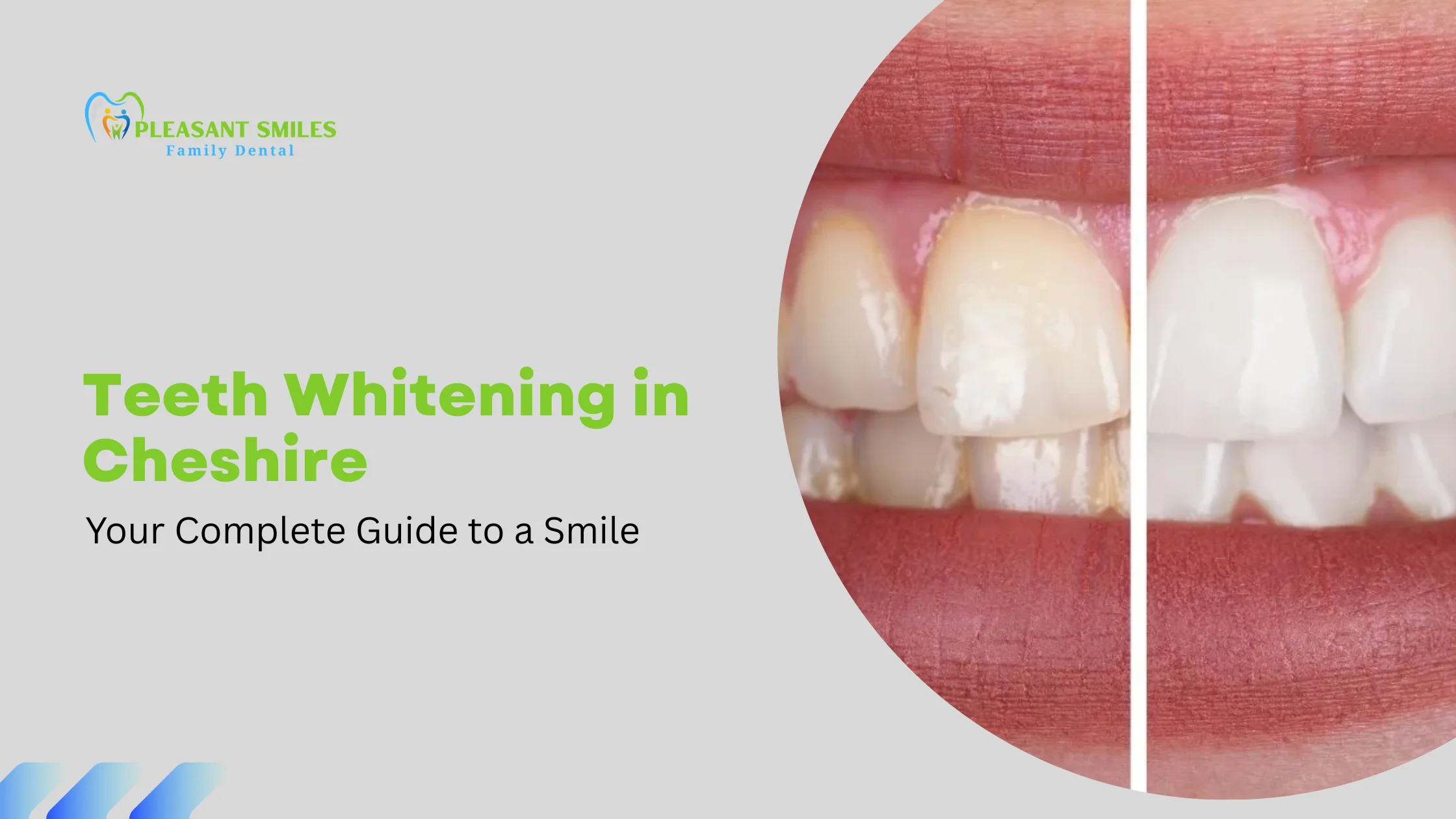
Coffee, tea, and other deeply colored foods and drinks can gradually stain your teeth, even when you brush regularly. If your smile looks more yellow or dull than it used to, professional teeth whitening may help restore a brighter appearance. The right approach depends on what’s causing the discoloration, how sensitive your teeth are, and the results you want to achieve.
At Pleasant Smiles Family Dental, Dr. Vijitha Bandla evaluates your teeth and gums before recommending a whitening option. This matters because whitening works on natural teeth, but it won’t change the color of crowns, veneers, or fillings. An examination can also help identify issues that may need attention before treatment, such as cavities or gum problems.
If you’re considering teeth whitening in Cheshire, CT, this guide explains the differences between in-office whitening and custom take-home trays, what can affect treatment costs, and how to care for your smile afterward. You’ll also learn what whitening can realistically achieve and when another cosmetic treatment may be a better fit.
Why Choose Professional Teeth Whitening Over Store-Bought Kits
Over-the-counter whitening strips, gels, and toothpastes can be useful for mild discoloration, but they don’t all work the same way. Whitening toothpastes mainly help remove surface stains through polishing ingredients, while whitening strips use bleaching agents to change the color of natural teeth. The results depend on the product, how consistently you use it, and the type of staining you’re trying to address.
Professional teeth whitening offers a more individualized approach. Before recommending treatment, a dentist can check whether the discoloration comes from coffee, tea, or other surface stains, or from changes within the tooth. This distinction matters because some types of discoloration respond better to whitening than others. A dental examination can also identify cavities, gum irritation, or existing restorations that may affect your treatment plan.
Another important difference is how the whitening treatment is selected and applied. A dentist can recommend an appropriate whitening product, explain how to use it, and help reduce the risk of gum irritation or excessive tooth sensitivity. Store-bought products can also be effective when used as directed, but they may not be the right choice for every patient, especially when teeth are already sensitive or restorations are visible.
For anyone considering professional teeth whitening in Cheshire, CT, the best option depends on your current tooth color, oral health, and expectations. A dental consultation can help you understand which approach is suitable for your smile and what kind of improvement is realistic.
What Happens During In-Office Teeth Whitening?
If you want to brighten your smile in a single appointment, in-office teeth whitening may be a suitable option. Before treatment, Dr. Vijitha Bandla examines your teeth and gums to check for cavities, gum inflammation, or sensitivity that may need attention.
Here’s what you can expect during your appointment:
- Gum protection: Your gums and soft tissues are covered to help prevent irritation.
- Whitening gel: A professional whitening gel is applied to the surfaces of your teeth.
- Treatment process: The gel is left on for a set period and may be reapplied. Some whitening systems use a specialized light, while others do not.
- Shade assessment: Your dentist checks the results and discusses any sensitivity you experience.
In-office whitening can produce noticeable results in one appointment, although the degree of whitening varies depending on your natural tooth color and the type of stains. It also changes the color of natural teeth, not crowns, veneers, or fillings.
After treatment, your dentist may recommend a toothpaste for sensitivity and ways to maintain your results. If you’re considering teeth whitening in Cheshire, CT, a consultation can help you understand which option suits your teeth and what results to expect.
Take-Home Teeth Whitening: Brighten Your Smile at Home
If you’d rather whiten your teeth gradually at home, custom take-home trays may be a good fit. Your dentist creates trays that fit your teeth and provides professional whitening gel with instructions for use. The custom fit helps distribute the gel across your teeth while limiting contact with your gums.
Here’s how it works:
- Custom fitting: Your dentist takes impressions or scans of your teeth to make your trays.
- Whitening gel: You receive the recommended gel and instructions.
- Daily use: Wear the trays for the prescribed time, following your dentist’s schedule.
Treatment may take days to a few weeks, depending on the whitening product and your teeth’s starting shade. You’ll see the change gradually, but avoid wearing the trays longer than recommended to speed up results.
Take-home trays offer flexibility, but they may not suit everyone, especially if you already have sensitive teeth or gum problems. Dr. Vijitha Bandla can help you compare this option with in-office whitening and choose an approach that fits your needs.
Is Professional Teeth Whitening Right for You?
Professional teeth whitening can help lighten stains caused by coffee, tea, and other foods and drinks. However, the results depend on the type of discoloration and the condition of your teeth. Whitening works on natural teeth, so crowns, veneers, and fillings won’t change color along with them.
You may need to address certain dental concerns before whitening, including:
- Untreated cavities: These may need treatment first.
- Gum disease: Inflamed gums should be evaluated before whitening.
- Sensitive teeth: Whitening may worsen existing sensitivity.
- Visible restorations: Crowns, veneers, and fillings won’t whiten like natural teeth.
During a consultation, Dr. Vijitha Bandla can examine your teeth and gums to determine whether whitening is suitable for you. If your goal is to change the shape of a tooth, close a small gap, or improve the appearance of existing restorations, alternatives such as dental veneers or dental bonding may be worth discussing. The right choice depends on your oral health and the changes you’d like to make to your smile.
How Much Does Teeth Whitening Cost in Cheshire, CT?
Professional teeth whitening in Cheshire can cost around $400 to $1,000, depending on the treatment. In-office whitening and custom take-home trays have different costs, so it helps to compare both options before deciding. Treat this range as an estimate, as actual fees can vary by dental practice and whitening system.
One thing worth checking before booking is whether the quoted price includes the consultation and any follow-up care. Whitening is considered cosmetic in most cases, which means dental insurance typically doesn’t cover it. If cost is a concern, ask about payment options before starting treatment rather than assuming your plan will cover the procedure.
At Pleasant Smiles Family Dental, Dr. Vijitha Bandla can discuss the available whitening options and explain the expected cost for your situation. You can also ask the team about current payment arrangements and whether any discounts are available. If you have questions about Husky coverage, check the practice’s Husky insurance information rather than assuming cosmetic whitening is covered.
How to Maintain Your Brighter Smile
After investing in your new smile, maintenance is key to keeping it radiant. Here’s how to protect your results:
- Avoid staining foods and drinks (coffee, tea, red wine) for at least 48–72 hours after whitening.
- Use a straw for dark beverages to limit contact with your teeth.
- Rinse your mouth or brush after consuming foods that may stain.
- Schedule touch-up whitening sessions every 6–18 months, depending on your habits.
- Brush twice daily with a whitening toothpaste and keep up with regular dental cleanings.
Dr. Bandla also recommends avoiding tobacco and considering a professional touch-up every year for consistently bright results.
Is Teeth Whitening Safe?
Yes, professional teeth whitening is generally safe when the treatment is appropriate for your teeth and gums. That doesn’t mean everyone will have the same experience, though. Some people notice temporary sensitivity or mild gum irritation after whitening.
Before treatment, Dr. Vijitha Bandla can check for cavities, gum inflammation, and existing sensitivity. These issues may need attention before whitening begins. The type of discoloration also matters because not every stain responds equally well to bleaching.
If your teeth feel sensitive afterward, try to avoid very hot or cold foods and drinks until the discomfort settles. A desensitizing toothpaste may help, but contact your dentist if the sensitivity persists or becomes uncomfortable.
The goal isn’t simply to make teeth look whiter. It’s to choose an approach that suits your oral health and gives you a result you feel comfortable with.
Why Choose Pleasant Smiles Family Dental for Teeth Whitening?
Getting your teeth whitened isn’t just about choosing a brighter shade. You also want to know what’s suitable for your teeth, whether you might experience sensitivity, and what kind of results you can realistically expect. At Pleasant Smiles Family Dental in Cheshire, CT, Dr. Vijitha Bandla helps patients work through these questions before treatment begins.
Some patients want to lift stains from years of drinking coffee or tea, while others are concerned that their teeth look uneven in color. These concerns can call for different approaches. During your consultation, Dr. Bandla can assess your teeth, discuss your goals, and explain whether professional whitening is likely to help.
It’s also worth discussing existing crowns, fillings, or veneers, since these won’t whiten like natural teeth. Understanding this beforehand can help you avoid an uneven result and decide whether another cosmetic option makes more sense.
You’ll also receive guidance on caring for your teeth after whitening, including what to do if sensitivity develops. The aim is to help you choose a treatment that suits your smile and understand what to expect, without pressure to pursue a particular cosmetic result.
How to Keep Your Smile Bright After Teeth Whitening
Your teeth won’t stay the same shade forever after whitening, and that’s normal. Coffee, tea, red wine, and tobacco can cause new stains over time. You don’t have to give up your favorite drinks, but rinsing with water afterward and avoiding tobacco can help limit discoloration.
Daily care matters, too. Brush twice a day with fluoride toothpaste, clean between your teeth, and keep up with regular dental cleanings. These habits help maintain your oral health and remove surface stains before they build up. If you experience sensitivity after whitening, ask your dentist which toothpaste is suitable for you.
You may eventually notice your teeth becoming darker again, especially if stain-causing habits continue. Ask Dr. Vijitha Bandla whether a whitening touch-up is appropriate for you and how often it may be needed. The goal is to maintain a healthy smile while keeping any additional whitening suited to your teeth and gums.
Final Thoughts
A brighter smile starts with understanding what’s causing the discoloration and choosing a whitening method that suits your teeth. Coffee and tea stains may respond well to whitening, but existing dental work and certain types of discoloration may need a different approach. Knowing what to expect can help you make a choice that feels right for your smile.
Professional whitening can be a useful option, but maintaining your results also depends on everyday habits, from brushing with fluoride toothpaste to keeping up with regular dental visits. If you’re unsure whether whitening is suitable for you, Dr. Vijitha Bandla at Pleasant Smiles Family Dental can help you understand your options.
If you’re considering teeth whitening in Cheshire, CT, discussing your goals with a dentist is a good place to start. You’ll have a clearer idea of the likely results, the available treatments, and how to care for your smile afterward.
Teeth Whitening in Cheshire FAQs
1. How long does professional teeth whitening last?
Professional teeth whitening can last several months to a few years, depending on your diet, oral hygiene, and habits. Frequent coffee, tea, red wine, and tobacco use can cause new stains to develop sooner. Regular dental cleanings and following your dentist’s aftercare instructions can help maintain your results.
2. Can yellow teeth become white again?
Many yellow teeth can become noticeably lighter with professional whitening, particularly when the discoloration comes from coffee, tea, tobacco, or natural aging. However, results depend on the cause of the staining. Discoloration inside a tooth or stains caused by certain medications may not respond as well to traditional whitening.
3. Can I whiten my teeth if I have crowns, veneers, or fillings?
You can often whiten your natural teeth if you have crowns, veneers, or fillings, but the restorations themselves will not become lighter. This can create a noticeable difference between your natural teeth and existing dental work. Your dentist can assess your smile and help you decide whether whitening or another cosmetic treatment is the better option.
4. Is professional teeth whitening covered by dental insurance?
Most dental insurance plans do not cover teeth whitening because it is considered a cosmetic procedure rather than medically necessary dental care. Coverage depends on your individual plan, so check with your insurance provider before scheduling treatment. Patients considering whitening at Pleasant Smiles Family Dental can ask the team about the expected cost and available payment arrangements.
5. How often can you get your teeth professionally whitened?
There is no single whitening schedule that is right for everyone. How often you can repeat treatment depends on your tooth sensitivity, oral health, the whitening product used, and how much your teeth have darkened. Ask your dentist before scheduling another session or using additional whitening products between treatments.
