


Ever run your tongue across your teeth and feel a rough, hard ridge that just won’t brush away? Maybe you’ve caught a glimpse of yellow or brown buildup near your gums in the bathroom mirror. If that sounds familiar, you’ve probably already searched for how to remove tartar from teeth without a dentist, hoping for a quick fix you can do at home.
We hear this question all the time from patients here in Cheshire, and we’d rather give you a straight answer than a list of risky shortcuts. In this guide, we’ll explain what tartar really is, share safe habits that keep buildup in check, point out the tricks that can quietly damage your teeth, and tell you exactly when it’s time to come in for a cleaning.
Key Takeaways
- Tartar is a hardened plaque, and brushing alone can’t remove it once it forms.
- You can’t safely scrape tartar off at home, but you can remove the plaque that turns into it.
- Good daily habits are your best defense against new buildup.
- Only a dentist or hygienist can clear tartar, especially below the gumline.
- If you have visible buildup or bleeding gums, it’s worth booking a visit sooner rather than later.
You cannot safely remove hardened tartar from your teeth without a dentist. Once plaque mineralizes into tartar (also called dental calculus), it bonds tightly to the tooth, and only a dental professional can take it off with proper tools. What you can do at home is remove the soft plaque before it hardens. Stay consistent with that, and you’ll stop most tartar from ever forming.
So there’s no safe at-home shortcut for tartar that has already been set. Your real power is in prevention, and we’ll walk you through how to do that below.
What is Tartar, and Why Should You Care?
Tartar starts as plaque, a sticky film of bacteria that builds up on your teeth throughout the day from food, drinks, and saliva. The American Dental Association notes that plaque is packed with more than 500 species of bacteria.
When you don’t clear that plaque away, it begins to harden in as little as 24 to 72 hours. Once it does, you’re dealing with tartar, and it clings to the tooth far more stubbornly than the soft film it came from.
Letting tartar stick around causes real problems. It irritates your gums, which can lead to redness, swelling, and bleeding, and over time that opens the door to gum disease.
The bacteria trapped in tartar keep working on your enamel, raising your risk of cavities. It tends to leave your breath stale no matter how often you brush. And it stains, giving teeth a dull, yellowed look that no whitening toothpaste can buff out.
Here’s a quick way to keep the two straight:
| Feature | Plaque | Tartar (Calculus) |
| Texture | Soft and sticky | Hard and crusty |
| Color | Clear to pale yellow | Yellow, brown, or dark |
| Remove at home? | Yes, with brushing and flossing | No, needs a dentist |
| How fast it forms | All day, constantly | 24 to 72 hours from plaque |
| Main risk | Cavities and bad breath | Gum disease and recession |
Safe Home Habits That Keep Buildup in Check
You can’t lift tartar off yourself, but staying ahead of plaque is exactly how you prevent it. These are the habits we recommend most, and they’re gentle on your teeth.
Brushing is the foundation. Spend a full two minutes morning and night with a soft-bristled or electric brush and a fluoride toothpaste, angling the bristles toward the gumline where plaque loves to settle. Replace your brush every three to four months.
Flossing does the work your brush can’t. It reaches between teeth and just under the gums, and skipping it is one of the most common reasons tartar gets a head start. Once a day is all it takes.
A baking soda brushing now and then can help too. Baking soda is mildly abrasive, so it lifts surface plaque and light stains, and research suggests it’s softer than enamel, so it cleans without scratching. Mix a little with water, brush gently, rinse, and keep it occasional rather than daily.
An antibacterial or fluoride mouthwash rounds things out by cutting down bacteria and reaching spots you may have missed. Look for one carrying the ADA Seal of Acceptance so you know it has been tested. Some people also like oil pulling, swishing coconut oil for a few minutes to reduce bacteria, though the evidence is limited, so treat it as a bonus and not a replacement for brushing and flossing.
What you eat matters as much as how you clean. Sugary and starchy snacks feed the bacteria that form plaque, so go easy on them, drink plenty of water, and steer clear of tobacco, which speeds tartar up in a hurry.
Why Home Remedies Only Go So Far
Home care is wonderful for prevention, but it has clear limits, and this is where a lot of online advice gets people into trouble.
For one, these methods only touch what you can see and reach. Much of the most harmful tartar sits below the gumline, and no amount of brushing or swishing gets down there. There’s also the temptation to fix that with a metal pick or one of those tartar scrapers sold online. We strongly advise against it.
It’s far too easy to strip away enamel, which never grows back, or to cut your gums and push bacteria deeper, which can lead to infection and recession. On top of that, scraping at home means no one is checking for the early signs of gum disease or cavities that a trained eye would catch. You might feel like you’re handling it while a bigger problem quietly builds.
We’ve seen patients come in after trying to manage stubborn buildup on their own, only to find their gums had started bleeding or pulling back. The do-it-yourself approach usually costs more in the long run than a simple cleaning would have.
Why a Professional Cleaning Makes the Difference
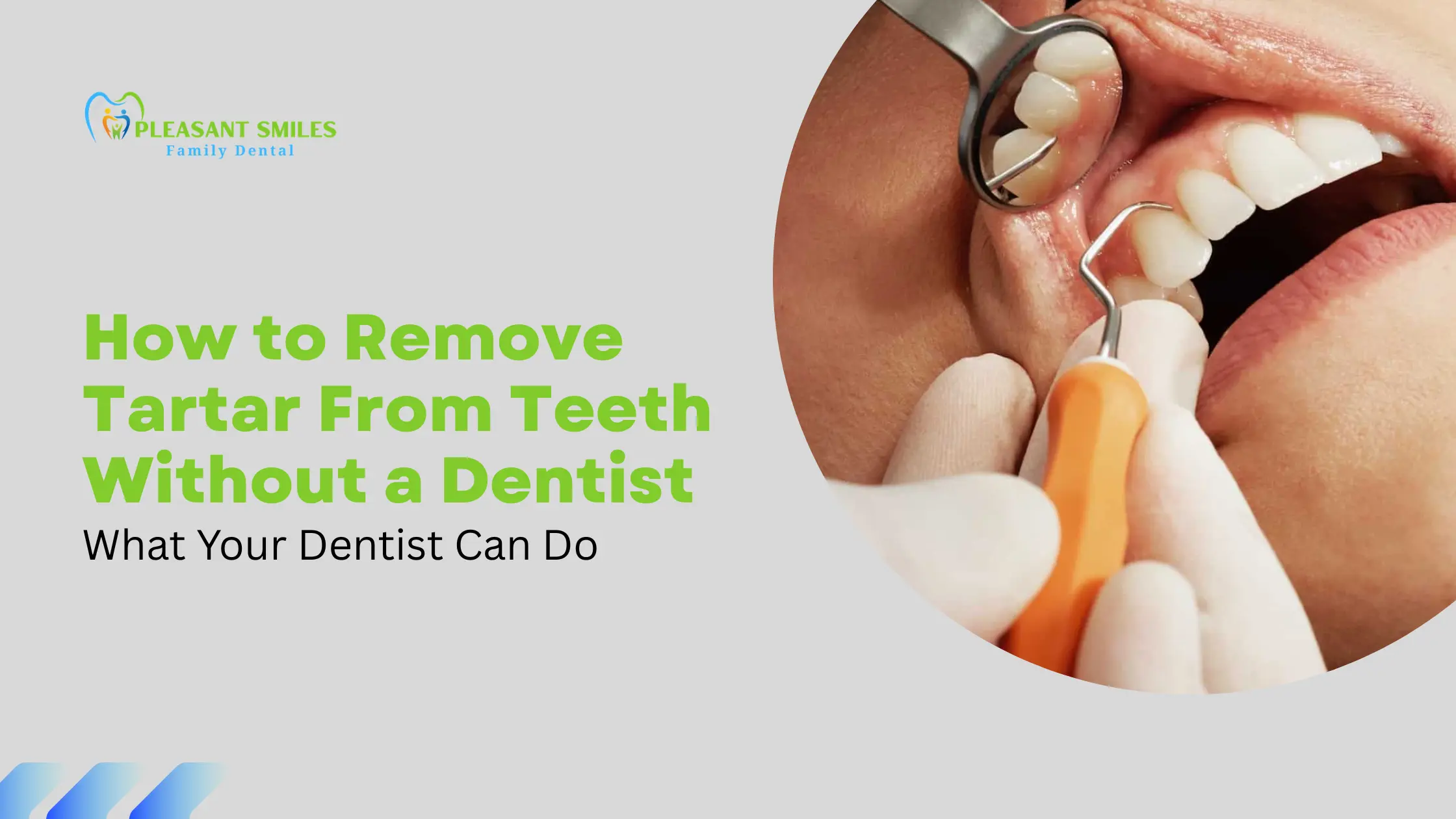
A dentist or hygienist can do what no kitchen remedy can. We use ultrasonic scalers and fine hand instruments designed to lift tartar from the tooth, including the buildup hiding beneath your gums, without harming the enamel.
Just as importantly, a cleaning is a check-up. We spot small issues like early decay or gum inflammation before they turn into root canals or extractions, and we can tailor advice to what your teeth actually need. Catching trouble early almost always saves you discomfort and money down the road.
How We Can Help at Pleasant Smiles Family Dental
At Pleasant Smiles Family Dental in Cheshire, CT, we focus on gentle, preventive care for the whole family, from young kids to grandparents. Our cleanings are thorough but comfortable, and we take the time to show you what’s working in your routine and where you could tighten things up.
We accept most major dental insurance plans and will help you make the most of your benefits, so a healthy smile stays within reach. If it’s been a while since your last visit, we’d be glad to welcome you in and get you back on track. You can learn more about our teeth cleaning and preventive services on our site.
When to Book a Visit
It’s a good idea to come in if you notice any of the following:
- Hard, crusty buildup along or below the gumline
- Gums that bleed, swell, or are pulling away from your teeth
- Bad breath that brushing doesn’t fix
- Tooth sensitivity or a rough, gritty feeling on your teeth
- More than six months since your last cleaning
Final Thoughts
If there’s one thing to take away, it’s this: you can’t safely remove tartar from your teeth without a dentist, and trying to do so with picks or harsh scraping can cost you enamel and healthy gums. What you genuinely control is plaque. Brush well twice a day, floss without fail, rinse with a good mouthwash, eat with your teeth in mind, and you’ll keep most tartar from ever forming.
Think of your home routine as the prevention and your dentist as the only safe way to erase tartar that’s already there. Together, those two things are the simplest, most dependable plan for a healthy mouth. If buildup has already set in, don’t reach for a tool that could harm. Reach out to us instead, and we’ll take care of it the right way.
Frequently Asked Questions
Can you really remove tartar without a dentist?
You can prevent and remove soft plaque at home with good brushing and flossing, but once it hardens into tartar, only a dentist or hygienist can safely take it off, especially below the gumline.
How can I remove plaque from teeth instantly at home?
There’s no true instant fix, but the fastest safe results come from a careful two-minute brushing with fluoride toothpaste, flossing between every tooth, and finishing with mouthwash. That clears the soft plaque you can actually reach.
Does baking soda remove tartar?
Baking soda helps lift surface plaque and light stains and is gentler than enamel, but it won’t remove hardened tartar. Use it occasionally and leave true tartar removal to your dentist.
How do I stop tartar from coming back?
Brush twice a day, floss daily, use an ADA-accepted mouthwash, cut back on sugary snacks, and keep your six-month cleanings. Consistency is what keeps buildup away.
Does professional tartar removal hurt?
Usually not. You may feel some pressure or vibration from the scaler, but we keep the cleaning gentle and let you know what to expect along the way.
What happens if I ignore tartar?
Left alone, tartar can lead to gum disease, cavities, persistent bad breath, and eventually tooth loss. Addressing it early is far easier than treating the problems it causes.