

Why don’t dentists use nitrous oxide anymore? Dental anxiety is a common concern for patients of all ages. For decades, nitrous oxide, also known as “laughing gas,” was widely used to help patients relax during dental procedures. Yet, recent trends show a shift away from its use in many practices.
Understanding the reasons behind this change helps patients make informed decisions about sedation and pain management. Modern dentistry now offers alternative methods that are often safer, more efficient, and easier to manage than traditional nitrous oxide sedation.
What is Nitrous Oxide and How It Works
Nitrous oxide, commonly known as laughing gas, is a mild sedative used in dentistry to help reduce anxiety and discomfort during treatment. It is not a sleep-inducing drug, but a calming agent that allows patients to remain awake and responsive.
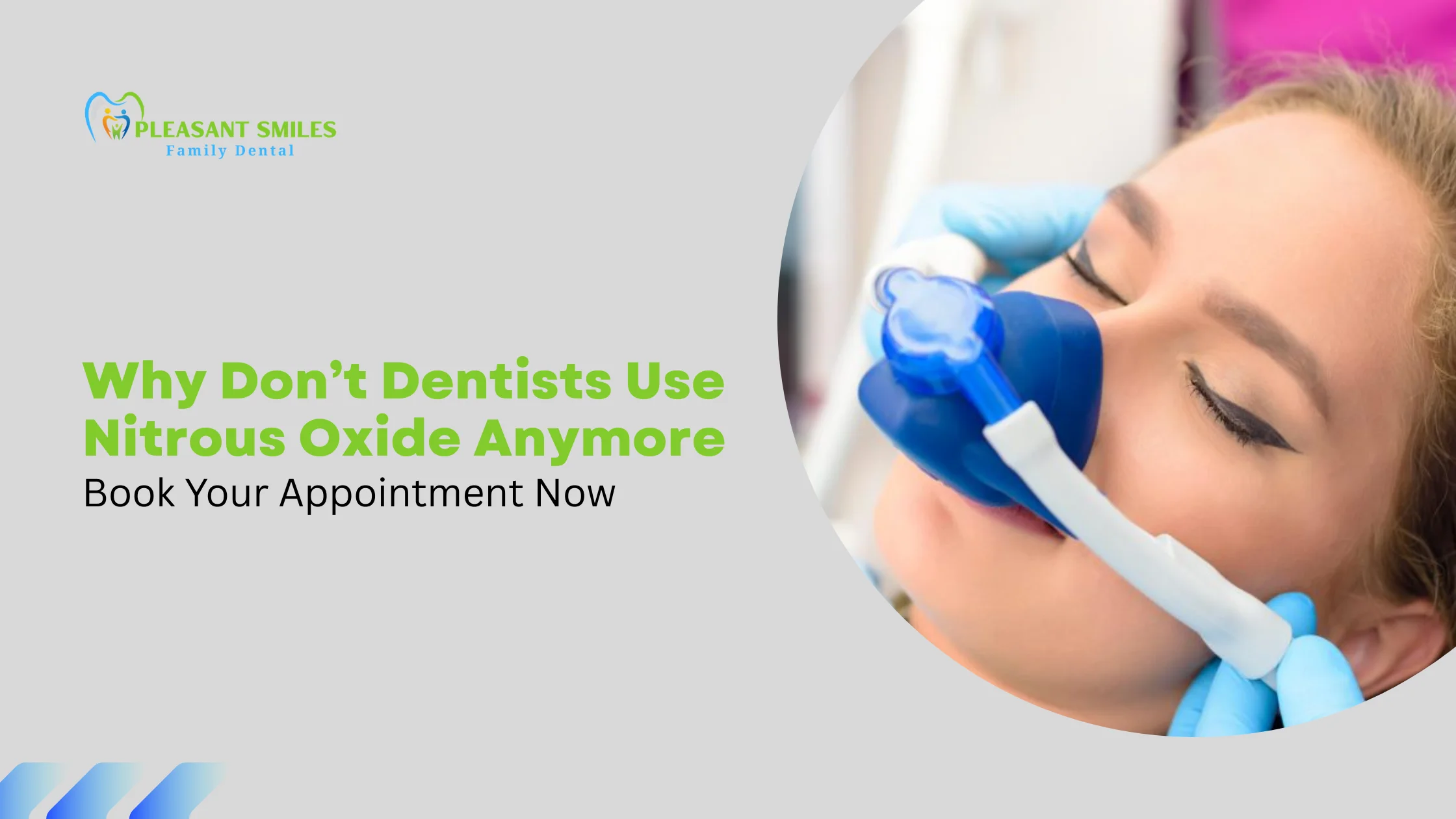
The gas is mixed with oxygen and inhaled through a small mask placed over the nose. This delivery method allows dentists to control sedation levels easily and adjust them in real time based on patient comfort.
Nitrous oxide works by slowing the nervous system’s response to stress and pain signals. Most patients begin to feel relaxed within 2–3 minutes, often experiencing a light, floaty sensation or mild euphoria.
Patients stay fully conscious and can communicate clearly throughout the procedure. This makes nitrous oxide suitable for short treatments where cooperation and awareness are important.
Key points about nitrous oxide:
- Delivered through a mask over the nose.
- Onset is almost immediate, typically 2–3 minutes.
- Effects wear off quickly once the gas is stopped.
- Commonly used for minor procedures, children, or anxious patients.
While nitrous oxide has clear benefits, many dentists are now reassessing its role. Modern safety expectations, efficiency concerns, and newer sedation options have shifted how and when it is used in dental care.
The Rise of Nitrous Oxide in Dentistry
Nitrous oxide has played an important role in dentistry for well over a century. First introduced in the 1800s, it became one of the earliest and most widely accepted methods of dental sedation, helping make procedures less stressful for patients who struggled with fear or discomfort.
Dentists quickly adopted nitrous oxide because it was easy to administer and produced reliable calming effects without putting patients fully to sleep. Compared to older sedatives like ether or chloroform, it offered a safer experience with fewer complications and a much faster recovery, allowing patients to return to normal activities soon after treatment.
Over time, these advantages helped nitrous oxide become a standard option in dental offices, especially for managing mild to moderate anxiety during routine procedures.
What Changed in Modern Dental Sedation Practices
Dental sedation has evolved as practices focus on efficiency, safety, and predictable patient outcomes. While nitrous oxide was once widely used, many offices now prefer sedation methods that better align with modern clinical workflows.
Today’s sedation options are designed to minimize setup time and simplify monitoring. Oral sedatives and IV sedation provide longer-lasting relaxation and more consistent effects, making them easier to manage during complex or extended procedures.
Key reasons nitrous oxide use has declined include:
- Appointment efficiency: Nitrous oxide requires equipment setup and recovery time, which can lengthen visits.
- Training and compliance: Not all dental teams are licensed or equipped to administer inhalation sedation safely.
- Safety considerations: Ongoing staff exposure and patient-specific risks have led to stricter oversight.
- Patient preferences: Many patients favor pills or localized numbing over breathing through a mask.
As dental care continues to advance, providers are adopting sedation methods that balance comfort with efficiency. The goal remains the same—helping patients feel calm and supported while delivering high-quality treatment.
What Alternatives Dentists Use Instead of Nitrous Oxide
As dental practices move away from nitrous oxide, many now rely on newer, more controlled ways to keep patients comfortable. These alternatives focus on reducing anxiety, managing pain effectively, and improving overall safety for both patients and staff.
1. Oral Sedation
Oral sedation involves taking a prescribed pill before the dental appointment, most commonly medications like triazolam or diazepam. This approach helps calm nerves and can produce mild to moderate sedation without the use of inhaled gases. Patients remain conscious but feel more relaxed and less aware of the procedure.
2. IV Sedation
IV sedation is administered directly into the bloodstream, allowing the dentist to adjust sedation levels in real time. It works quickly and provides a deeper, more consistent level of relaxation, making it a preferred option for longer or more complex treatments where anxiety or discomfort may be higher.
3. Local Anesthesia Combined With Comfort Techniques
For many routine procedures, dentists rely on local anesthesia supported by comfort-focused techniques. Topical numbing gels, warmed anesthetic solutions, gentle injection methods, and simple distractions like music or visuals help minimize pain and stress. In these cases, additional sedation is often unnecessary.
4. Behavioral and Psychological Approaches
Non-medication strategies such as guided breathing, relaxation exercises, music therapy, and cognitive behavioral techniques are increasingly common—especially for children or patients with mild dental anxiety. These methods aim to build trust and comfort without using drugs at all.
Overall, these alternatives tend to be more predictable, easier to manage, and safer in modern dental settings. They also reduce long-term exposure risks for dental professionals while still prioritizing patient comfort and care.
Benefits of Nitrous Oxide
Although many dental practices are transitioning to newer sedation methods, nitrous oxide still offers certain benefits in specific situations. When used appropriately by trained professionals, it can be a practical option for managing mild to moderate dental anxiety.
Fast Onset and Quick Recovery
Nitrous oxide works within minutes and wears off shortly after the mask is removed. This allows patients to feel relaxed during treatment while returning to normal alertness quickly, with little to no downtime afterward.
Helpful for Anxiety and More Comfortable
For patients who experience mild anxiety or have a sensitive gag reflex, nitrous oxide can make dental procedures more tolerable without the need for deeper sedation.
Suitable for Both Adults and Children
Laughing gas is commonly used across age groups, making it a flexible option for family dental care when minimal sedation is sufficient.
Safe When Properly Administered
When delivered and monitored by trained dental professionals, nitrous oxide has a strong safety record and is generally well tolerated by patients.
While nitrous oxide continues to be used in some dental settings, many clinics now prioritize more modern, patient-focused sedation alternatives that offer greater control and broader comfort options.
What Risks Are Associated With Nitrous Oxide
Nitrous oxide is widely viewed as safe, but growing awareness of its risks has led many dental practices to reassess its routine use. These concerns affect both patients and dental professionals, which helps explain the gradual shift toward other sedation options.
For patients, side effects are usually mild but still relevant:
- Nausea or vomiting, especially after longer procedures
- Dizziness or lightheadedness during or shortly after treatment
- Rare adverse reactions, particularly in patients with underlying medical conditions
Certain individuals, such as those with vitamin B12 deficiencies, respiratory issues, or pregnancy, may be advised to avoid nitrous oxide altogether.
For dental staff, long-term exposure presents additional concerns:
- Chronic exposure risks, including potential vitamin B12 depletion
- Possible neurological effects if safety standards are not strictly followed
- Dependence on proper ventilation and scavenging systems, which are essential for workplace safety
Maintaining these systems adds operational complexity and cost for dental offices. Because of these combined patient and occupational risks, many practices now favor sedation methods that offer effective comfort with lower exposure risk and simpler administration, making them more practical for modern dentistry.
A Personalized Approach at Pleasant Smiles Family Dental
At Pleasant Smiles Family Dental, we focus on creating a welcoming, relaxed environment where patients feel comfortable and understood. We take time to listen to your concerns and tailor care to your individual needs.
Our practice combines modern dental technology with a gentle approach to make treatments as smooth and comfortable as possible. This helps us deliver efficient, high-quality care while keeping patient comfort a priority.
We believe in clear communication, patient education, and choice at every step. Our goal is to help you feel confident, informed, and at ease throughout your dental care journey.
Frequently Asked Questions
1. Can nitrous oxide still be used in some dental offices?
Yes. Some dental practices still use nitrous oxide, especially for patients with mild anxiety or for certain pediatric visits. However, many offices are gradually reducing its use as newer sedation options become more common.
2. Is nitrous oxide safe for children?
Nitrous oxide can be safe for children when administered by trained professionals and properly monitored. Dentists also consider a child’s medical history, breathing health, and comfort level before recommending it.
3. How do oral sedatives compare to nitrous oxide?
Oral sedatives provide longer-lasting relaxation and do not require inhaled gas or specialized equipment. This makes them a practical choice for patients undergoing longer procedures or those who prefer non-gas options.
4. Is IV sedation more effective than nitrous oxide?
In many cases, yes. IV sedation allows dentists to precisely control the level of sedation throughout the procedure, which is especially helpful for complex or lengthy treatments.
5. Do insurance plans cover dental sedation?
Coverage varies by provider and plan. Sedation that is considered medically necessary may be partially covered, while sedation used mainly for anxiety relief or cosmetic procedures is often not included.
6. Why are dentists moving away from nitrous oxide?
Many dentists are shifting toward newer sedation methods due to improved safety controls, reduced occupational exposure, patient preference, evolving regulations, and the availability of more advanced alternatives.