
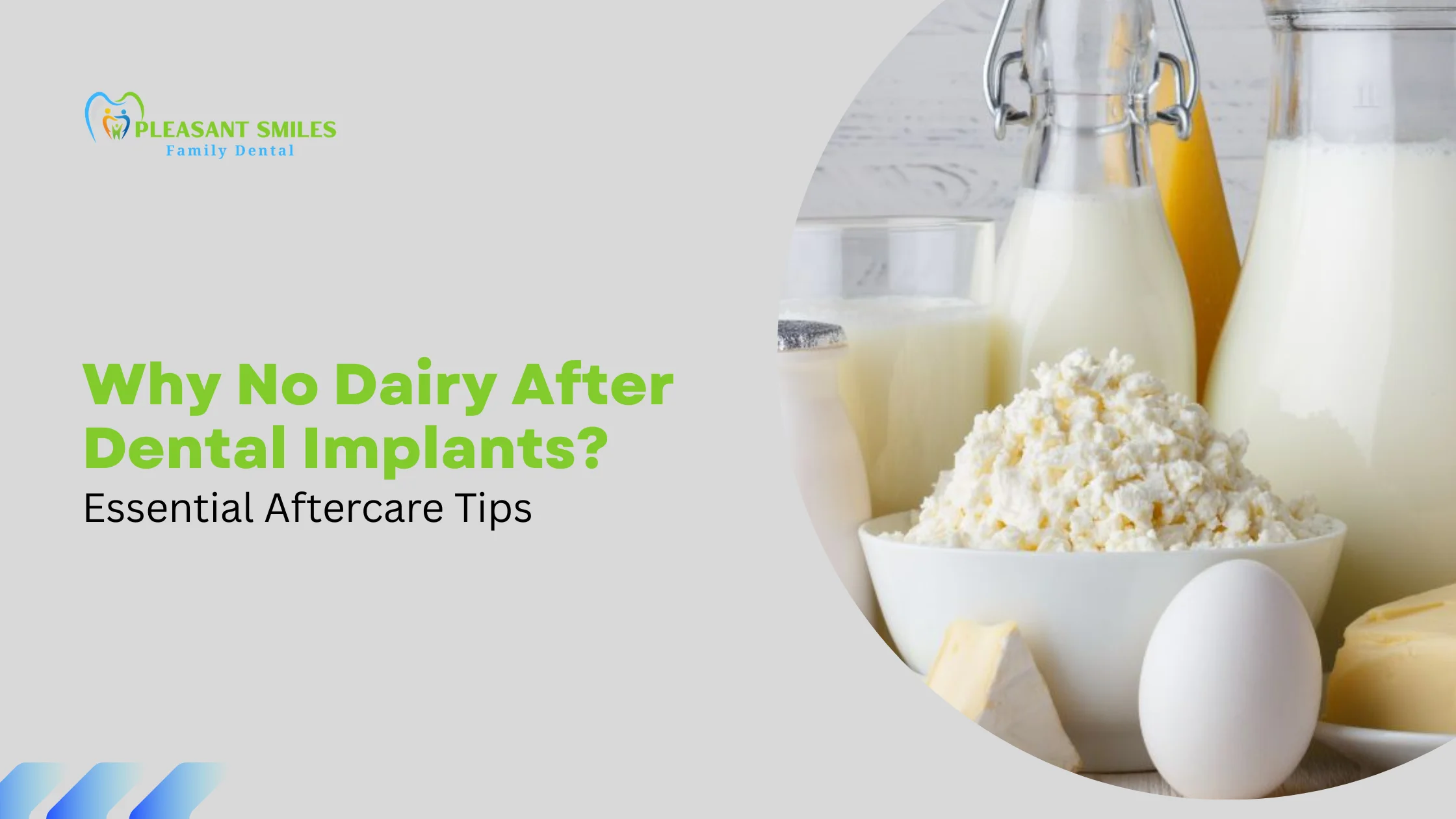
Why No Dairy After Dental Implants? Essential Aftercare Tips

Introduction

Why no dairy after dental implants? You might be surprised to learn that your favorite dairy products, like milk, cheese, or yogurt, are often off the menu immediately after surgery. While it may feel restrictive, avoiding dairy during the initial recovery period plays an important role in ensuring your implant heals properly.

At Pleasant Smiles Family Dental, Dr. Vijitha Bandla emphasizes that what you eat after your procedure is just as important as the surgery itself. Your diet can influence inflammation, comfort, and even the success of the implant as it fuses with your jawbone—a process known as osseointegration. Consuming the wrong foods too soon can slow healing or increase the risk of complications.

This guide will walk you through the reasons why dairy is restricted, how long you should avoid it, and safe alternatives to keep your nutrition on track. Whether this is your first implant or you’re brushing up on aftercare, understanding these dietary considerations can help you recover smoothly and protect your investment in a healthy, lasting smile.

Understanding the Dental Implant Healing Process

After a dental implant, your body goes through a critical healing process that ensures the implant becomes a permanent part of your jaw. This process, called osseointegration, is when the titanium implant fuses securely with the surrounding bone. A strong, stable bond is essential for the long-term success of your implant, allowing it to function just like a natural tooth.

The first 2–3 days after surgery are especially important. During this initial healing phase, your body responds to the surgical site by reducing swelling, starting tissue repair, and forming a protective clot. This is why careful aftercare—including avoiding certain foods like dairy—is crucial. What you eat during this period can directly influence inflammation, infection risk, and your overall comfort.

Diet plays a larger role than many patients realize. Consuming soft, nutrient-rich foods supports healing, while certain items—like dairy—can sometimes increase inflammation or digestive discomfort, which may complicate recovery. Your body needs protein for tissue repair, calcium for bone support, and hydration to flush out toxins and aid immune function.

At Pleasant Smiles Family Dental, Dr. Vijitha Bandla works closely with patients to guide them through this delicate stage. She provides tailored recommendations to make the healing process as smooth as possible, ensuring each patient knows which foods to focus on and which to avoid. Following these guidelines helps minimize complications, reduce recovery time, and protect the long-term success of your implant.

Understanding how your body heals after a dental implant is the first step toward taking control of your recovery. By pairing the right care with a mindful diet, you give your implant the best chance to integrate fully and support a healthy, lasting smile.

Why Dairy is Restricted After Dental Implants Surgery

One of the most common questions patients ask after getting a dental implant is, “Why can’t I have dairy?” At first, it might seem surprising—after all, dairy is often considered healthy—but in the days following implant surgery, avoiding it can make a big difference in your recovery.

Potential for Inflammation

Some people may experience mild inflammatory responses after consuming dairy products. Inflammation can interfere with healing, making the surgical site more sensitive and prolonging recovery. Since your body is already working hard to integrate the implant with your jawbone, minimizing anything that might increase inflammation is crucial.

Risk of Infection

Certain dairy products, particularly unpasteurized items, can contain bacteria. While your body’s immune system is generally effective, introducing additional bacterial load immediately after surgery may increase the risk of infection at the implant site. Protecting this delicate environment during the first few days is key to a successful outcome.

Digestive Considerations

After oral surgery, some patients experience nausea or mild digestive sensitivity. Lactose in milk, cheese, or ice cream can sometimes exacerbate these issues, making you uncomfortable when your focus should be on rest and healing.

Scientific Insights

Research and clinical experience indicate that avoiding dairy for the initial post-operative period supports a more predictable recovery. By steering clear of milk, cheese, and yogurt for the first 2–3 days, you help reduce inflammation, lower the risk of infection, and allow your body to focus on repairing tissue and bone.

At Pleasant Smiles Family Dental, Dr. Vijitha Bandla emphasizes practical solutions. Patients are encouraged to choose nutrient-rich, non-dairy alternatives that provide protein and calcium without interfering with healing. This simple dietary adjustment is one of the most effective ways to protect your implant and ensure a smooth recovery.

How Long to Avoid Dairy After Dental Implants

After dental implant surgery, knowing how long to avoid dairy is just as important as understanding why. While it might feel restrictive, this short adjustment can significantly improve healing and reduce complications.

General Recommendations

Most dentists, including Dr. Vijitha Bandla at Pleasant Smiles Family Dental, advise avoiding all dairy products for the first 2–3 days after surgery. This period is critical as your body begins the initial healing process, and keeping inflammation and bacterial exposure to a minimum helps the implant integrate with your jawbone more effectively.

Gradual Reintroduction

Once the initial healing phase passes, you can start reintroducing dairy slowly. Begin with small amounts of low-fat milk, cheese, or yogurt to see how your body reacts. Keep in mind that healing times vary from person to person, so it’s important not to rush. Dr. Vijitha Bandla recommends consulting your dentist before resuming full dairy consumption to ensure your implant site is stable and free from irritation.

Individual Variations

Some patients may require a slightly longer dairy-free period due to unique medical conditions, medication interactions, or sensitivities. Others may be able to reintroduce dairy sooner. Regular check-ins at Pleasant Smiles Family Dental allow your dentist to personalize advice for your specific situation, keeping recovery on track and avoiding setbacks.

By following these recommendations, patients can enjoy a smoother recovery while minimizing the risk of inflammation or infection. Remember, a few days of careful eating now can save you from complications and support the long-term success of your dental implant.

Dairy Alternatives During Recovery

When your dentist recommends avoiding dairy after a dental implant, it’s natural to worry about getting enough nutrients—especially protein and calcium—while keeping your mouth comfortable. At Pleasant Smiles Family Dental, Dr. Vijitha Bandla emphasizes that you don’t have to sacrifice nutrition or taste during your recovery.

Protein-Rich Options

Protein is essential for tissue repair and healing. Safe, dairy-free sources include eggs, tofu, legumes, and soft-cooked beans. These foods are gentle on your healing gums while still providing the nutrients your body needs to support the implant’s integration.

Calcium Sources

Calcium is crucial for bone health, which is directly involved in dental implant success. Instead of milk or cheese, try leafy greens like kale or spinach, almonds, chia seeds, and fortified plant-based milks. These options help maintain bone strength without risking irritation at the surgical site.

Soft Foods for Comfort

Immediately after surgery, soft textures minimize discomfort. Foods like mashed potatoes, applesauce, well-blended smoothies, and pureed vegetables are easy to eat and gentle on your gums. Smoothies can even be fortified with plant-based milk or protein powders, providing both hydration and nutrients.

Hydration is Key

Staying hydrated supports healing and reduces swelling. Opt for water, herbal teas, or diluted fruit juices instead of sugary or acidic beverages. Avoid straws at first, as the suction can disturb the implant site.

By incorporating these alternatives, you can maintain a balanced diet while protecting your implant. The focus is on nourishing your body without compromising healing, making the recovery process smoother and more comfortable. 

At Pleasant Smiles Family Dental, Dr. Vijitha Bandla provides personalized guidance, ensuring each patient has a tailored list of foods that promote healing while avoiding complications.

When You Can Safely Reintroduce Dairy After Dental Implants

Knowing when to safely bring dairy back into your diet is key to a smooth dental implant recovery. At Pleasant Smiles Family Dental, Dr. Vijitha Bandla recommends waiting until your mouth shows clear signs of healing before reintroducing milk, cheese, or other dairy products.

Signs of Healing

Look for reduced swelling, minimal discomfort, and no active bleeding around the implant site. These are strong indicators that your gums are ready to handle a wider variety of foods without irritation.

Dentist’s Approval

Always check with your dental professional before eating dairy again. Even if you feel ready, a brief exam can confirm that the implant site has sufficiently healed. Dr. Vijitha Bandla provides personalized guidance, ensuring your reintroduction of dairy won’t compromise the implant.

Start Slowly

Begin with small amounts of low-fat or non-dairy alternatives, and monitor how your mouth responds. Gradual reintroduction helps prevent discomfort or digestive issues and allows your body to adjust to the dietary change safely.

Tips for Transition

If you notice sensitivity, stick with soft, easy-to-digest dairy options like yogurt or cottage cheese initially. Avoid hard or chewy cheeses until you’re fully comfortable. Pairing dairy with soft foods like mashed vegetables can also make it easier on the implant site.

Following these steps ensures that you receive the nutritional benefits of dairy without compromising your implant’s success. By carefully monitoring your recovery and consulting with Dr. Vijitha Bandla, you can confidently return to a balanced diet while supporting long-term oral health.

Recommended Soft Foods for the First Week

The first week after a dental implant is critical for healing, and choosing the right foods can make a big difference. At Pleasant Smiles Family Dental, Dr. Vijitha Bandla emphasizes a diet that’s soft, nutritious, and gentle on your implant site.

Breakfast Options

Start your day with soft, protein-rich foods that are easy to chew. Scrambled eggs provide essential protein without stressing your gums, while oatmeal or cream of wheat offers a warm, soothing start. Smoothies are another excellent choice—they can be packed with fruits, leafy greens, and plant-based protein powders, providing nutrition without requiring chewing.

Lunch & Dinner Ideas

Stick to soups, broths, and well-cooked vegetables. Creamy soups, like butternut squash or chicken broth-based options, are gentle on the surgical site and easy to digest. Mashed potatoes or soft-cooked pasta can serve as filling and satisfying sides. For protein, consider tender, slow-cooked meats or soft tofu. Avoid anything crunchy, sticky, or hard, as these can disturb the healing implant.

Snacks

Simple, soft snacks like applesauce, pudding, gelatin, or yogurt alternatives (if dairy is still restricted) help maintain energy levels between meals. These options are not only easy to eat but also reduce the risk of irritation or accidental trauma to the implant site.

Foods to Avoid

During this period, steer clear of crunchy, spicy, or acidic foods. Chips, nuts, citrus, and tomatoes can irritate sensitive tissue, increase inflammation, or disrupt the healing process.

By following these dietary guidelines, you support your body’s natural healing process and reduce the risk of complications. Dr. Vijitha Bandla recommends pairing proper nutrition with hydration, emphasizing water, herbal teas, and diluted fruit juices to keep your body and implant site healthy.

A thoughtful diet in the first week sets the stage for a successful recovery, helping your implant integrate smoothly while keeping you nourished and comfortable.

Conclusion

Avoiding dairy immediately after a dental implant is more than just a precaution—it plays a vital role in reducing inflammation, minimizing infection risk, and supporting a smooth healing process. By following these dietary guidelines and incorporating soft, nutritious alternatives, you give your implant the best chance to integrate successfully and ensure long-term oral health.

At Pleasant Smiles Family Dental, Dr. Vijitha Bandla and her team are dedicated to guiding you through every step of recovery. Remember, each patient’s healing journey is unique, so always follow personalized advice from your dentist. By being mindful of what you eat and when you reintroduce dairy, you can enjoy a faster, more comfortable recovery while protecting your investment in a healthy, confident smile.

For tailored post-operative care and more tips on managing your diet after dental implants, don’t hesitate to contact Pleasant Smiles Family Dental today. Your smile deserves the best care from start to finish.

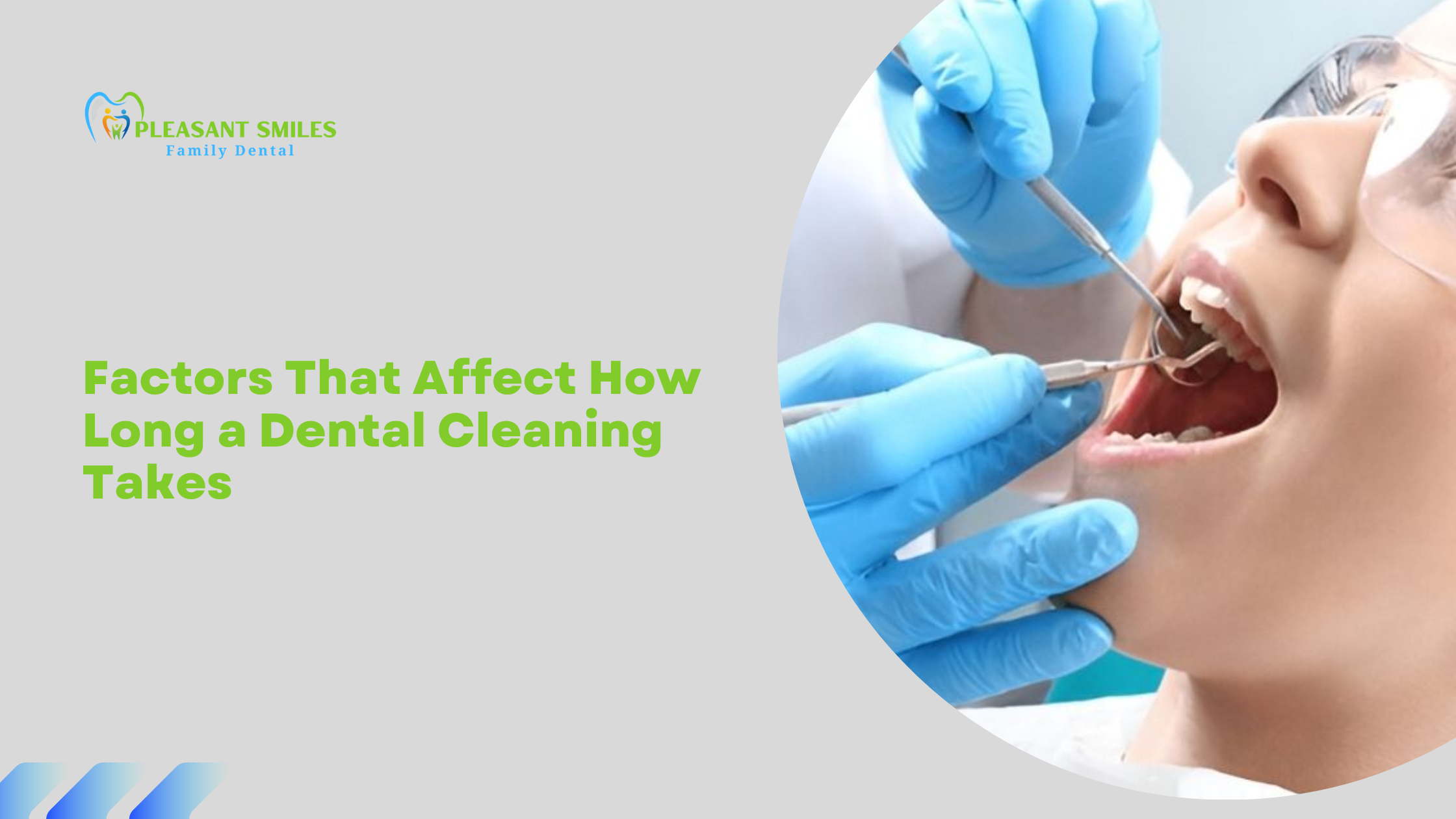
How Long Does a Dental Cleaning Take? A Complete Guide

If you’ve ever put off booking a dental cleaning because you weren’t sure how long it would take, you’re definitely not alone. Between busy work schedules, school runs, and family priorities, it’s easy to assume a dental visit will eat up your day. But here’s the truth — most dental cleanings are quicker, smoother, and far more comfortable than people expect.

At Pleasant Smiles Family Dental, Dr. Vijitha Bandla and her team make every visit efficient and stress-free while ensuring your oral health gets the thorough care it deserves. Whether it’s your routine six-month cleaning or your first visit in a while, we tailor each appointment to fit your needs and comfort. In this guide, we’ll break down exactly how long a dental cleaning takes, what happens during your visit, and why that short time in the chair makes such a big difference for your smile.

What’s Involved in a Routine Dental Cleaning

Before diving into how long a dental cleaning takes, it’s important to understand what actually happens during your visit. A routine dental cleaning is far more than just “scrubbing teeth”—it’s a carefully structured, preventive treatment designed to keep your smile healthy, bright, and problem-free. At Pleasant Smiles Family Dental, Dr. Vijitha Bandla and her compassionate team take pride in providing thorough cleanings that protect your teeth while making your experience as comfortable as possible.

1. Initial Exam and Check-In

Your visit begins with a quick oral health evaluation. Dr. Bandla or one of our skilled hygienists examines your gums, teeth, and soft tissues to identify any signs of decay, inflammation, or early gum disease. This short check-in—usually lasting 5 to 10 minutes—sets the stage for a personalized cleaning that targets your unique dental needs.

2. Plaque and Tartar Removal (Scaling)

Next comes the most essential part: scaling. Using advanced dental instruments, our hygienists gently remove soft plaque and hardened tartar that regular brushing and flossing can’t reach. This process helps prevent gum disease, tooth decay, and bad breath. Depending on the buildup, scaling may take 15 to 30 minutes—and our gentle approach ensures it’s done efficiently and comfortably.

3. Polishing and Flossing

Once your teeth are clean, we use a mildly abrasive paste to polish away surface stains, leaving your enamel smooth and radiant. Then, we carefully floss between your teeth to remove any lingering debris. This polishing and flossing stage not only brightens your smile but also makes it harder for new plaque to form. Expect this to take around 10 to 15 minutes.

4. Fluoride Treatment (If Needed)

For extra protection, a fluoride treatment may be applied. It strengthens tooth enamel and helps fight cavities long after you leave the chair. This simple, painless step takes just a few minutes but offers months of defense against decay.

5. Optional X-Rays or Dentist Consultation

If you’re due for your routine X-rays or a comprehensive checkup, Dr. Bandla may take detailed images of your teeth and jaw to catch potential issues before they become serious. This part adds about 10 to 15 minutes.

When you put it all together, a routine dental cleaning at Pleasant Smiles Family Dental typically lasts 30 to 60 minutes, depending on your oral health and the type of care you need. It’s a small time investment that pays off in a healthier, brighter smile—and long-term peace of mind.

Typical Time Frames for Different Cleaning Types

Not every dental cleaning is the same — the time it takes depends on your oral health, the type of cleaning you need, and how long it’s been since your last visit. At Pleasant Smiles Family Dental, Dr. Vijitha Bandla and her team tailor each appointment to ensure every patient receives the right level of care without feeling rushed.

Routine Dental Cleaning (Prophylaxis)

For patients who maintain regular six-month visits, a routine cleaning is quick and comfortable. These appointments usually take 30 to 45 minutes. During this time, plaque and tartar are removed, your teeth are polished, and your mouth feels completely refreshed. It’s a preventive step that helps you maintain long-term oral health with minimal disruption to your schedule.

First-Time or Overdue Cleanings

If it’s been more than a year since your last dental cleaning—or if you’re visiting a new dentist for the first time—expect a bit more time in the chair. These cleanings typically last 45 to 60 minutes, as extra care is taken to address any tartar buildup, gum irritation, or other early signs of dental issues. Dr. Bandla’s gentle approach ensures even overdue cleanings are a comfortable experience.

Deep Cleaning (Scaling and Root Planing)

For patients showing signs of gum disease, a deep cleaning may be recommended. This is a more intensive procedure that targets buildup beneath the gumline to restore gum health. Deep cleanings are often divided into two separate visits, each lasting 60 to 90 minutes, to ensure thorough and effective treatment without discomfort.

Pediatric Cleanings

Children’s cleanings are typically shorter—around 20 to 30 minutes—and focus not just on cleaning but on education. Our team teaches kids proper brushing, flossing, and healthy eating habits to help them develop strong, lasting dental routines.

At Pleasant Smiles Family Dental, every cleaning—no matter the type—is performed with precision, compassion, and your comfort in mind.

Factors That Affect How Long a Dental Cleaning Takes

Factors That Affect How Long a Dental Cleaning Takes

No two dental cleanings are exactly alike. The time required for your appointment can vary based on your unique oral health and comfort needs. Here are some of the most common factors that influence how long your cleaning might take:

1. Plaque & Tartar Buildup

The more buildup that has accumulated on your teeth and along the gumline, the longer your hygienist will need to ensure a thorough cleaning. Patients who maintain consistent brushing, flossing, and regular checkups usually experience shorter, smoother appointments.

2. Gum Health

If your gums are inflamed or show early signs of gingivitis, the cleaning process may take a bit longer. Our hygienists at Pleasant Smiles Family Dental take a gentle approach to minimize discomfort while restoring your gums to a healthy state.

3. Dental History

Existing restorations—such as crowns, bridges, or braces—require extra attention during cleaning. Navigating around these areas carefully ensures plaque is completely removed without damaging your dental work.

4. Anxiety or Sensitivity

We understand that dental visits can make some patients feel anxious or uncomfortable. Our compassionate team takes extra time to explain each step, answer questions, and provide a calm, reassuring environment so you never feel rushed.

5. X-rays or Comprehensive Exams

Sometimes, your visit includes digital X-rays or a full dental exam by Dr. Vijitha Bandla. These help us detect hidden issues early and ensure your smile stays healthy, though they can slightly extend your total appointment time.

At Pleasant Smiles Family Dental, we tailor every cleaning to your comfort level and oral health needs—never compromising on quality or care.

What to Expect During Your Visit at Pleasant Smiles

From the moment you step into Pleasant Smiles Family Dental, our priority is to make your visit as comfortable and stress-free as possible. We know that dental appointments can feel intimidating, which is why every part of your experience is designed around care, comfort, and compassion.

Warm Welcome & Relaxing Atmosphere

Our friendly front desk team greets you with a smile and helps you settle in. We value your time, so appointments run smoothly and efficiently. Our modern, inviting office environment is designed to put you at ease from the moment you arrive.

Personalized Approach

Before beginning your cleaning, Dr. Vijitha Bandla and our dental hygienists take time to review your oral health history and discuss any concerns. Whether it’s your first visit or a routine checkup, we tailor the cleaning process to your specific needs for the best results.

Gentle Techniques & Modern Tools

Our practice uses the latest dental technology to make cleanings more efficient, precise, and comfortable. Ultrasonic scalers and polishing tools help remove plaque and tartar with minimal discomfort, ensuring a smooth and refreshing experience.

Educational Guidance

Before you leave, our hygienists provide personalized advice on brushing, flossing, and diet to help maintain your bright smile between visits. We want every patient to leave feeling confident, informed, and empowered to take charge of their oral health.

At Pleasant Smiles Family Dental, every cleaning appointment is more than a routine procedure—it’s a step toward long-term oral wellness, delivered with the gentle touch and compassionate care you deserve.

How to Prepare for Your Dental Cleaning in Cheshire

A little preparation before your dental cleaning can go a long way in making your visit smoother, more efficient, and even more comfortable. At Pleasant Smiles Family Dental, Dr. Vijitha Bandla and our caring team want every patient to feel confident and ready for their appointment. Here are a few easy ways to prepare:

Brush and Floss Beforehand

Giving your teeth a quick brush and floss before your appointment isn’t just polite—it’s practical. It removes food particles and surface plaque, allowing our hygienists to focus on deep cleaning and tartar removal rather than basic debris.

Update Your Medical Information

Oral health is closely linked to your overall health. Bring an updated list of any medications you’re taking or recent changes in your medical history. Certain conditions or prescriptions can influence your dental treatment plan, and sharing these details ensures you receive the safest and most personalized care.

Avoid Eating Right Before

Try to skip heavy, sticky, or staining foods—like coffee, berries, or caramel—right before your visit. A clean mouth helps our team get started right away and gives you a fresher post-cleaning feel.

Arrive Early

Getting to the office a few minutes early gives you time to settle in, complete any quick paperwork, and relax before your cleaning begins. Our front desk team works hard to keep every appointment running on time so your day stays on schedule.

At Pleasant Smiles Family Dental, we believe preparation and communication make every visit better. A few small steps before your appointment can make a big difference in your comfort and the quality of your dental care.

How Long Does a Dental Cleaning Take – and Why It’s Worth It

When it comes to your oral health, a routine dental cleaning is one of the simplest yet most powerful ways to protect your smile. In most cases, a cleaning takes about 45 minutes to an hour—a small investment of time that pays off in long-term benefits for both your teeth and overall health.

At Pleasant Smiles Family Dental, Dr. Vijitha Bandla and her team emphasize that cleanings aren’t just about aesthetics. Removing plaque and tartar helps prevent gum disease, cavities, and even systemic health issues linked to oral bacteria—such as heart disease and diabetes. It’s not just about keeping your teeth white; it’s about keeping your entire body healthy.

Most patients do best with cleanings every six months, which helps catch potential issues early and keep your mouth feeling fresh year-round. However, if you’re prone to gum inflammation, smoke, or have certain medical conditions, Dr. Bandla may recommend more frequent visits to maintain optimal gum health.

Think of your cleaning appointment as a reset for your mouth—a chance to start fresh, improve your confidence, and protect your smile for years to come. Spending an hour in the chair today can save you from extensive dental treatments tomorrow.

Final Thoughts

So, how long does a dental cleaning take? For most patients, the answer is under an hour, yet the impact of that short visit lasts far longer. A dental cleaning is more than just a routine chore—it’s a key step in protecting your teeth, gums, and overall health. Regular cleanings help prevent cavities, gum disease, and other oral issues, saving you time, discomfort, and potentially costly treatments down the line.

At Pleasant Smiles Family Dental, Dr. Vijitha Bandla and her team make every minute of your appointment count. From the moment you arrive, you’ll experience a welcoming, calm environment where your comfort and oral health are the top priorities. Using gentle techniques and modern tools, cleanings are efficient yet thorough, leaving your teeth feeling fresh and your smile bright.

Whether it’s your first visit in a while or part of your routine six-month checkup, you can trust that your cleaning will be personalized to your needs. With expert care, clear guidance, and a focus on patient comfort, maintaining a healthy smile has never been easier. Schedule your next cleaning and experience how Pleasant Smiles makes oral health simple, effective, and enjoyable.

Frequently Asked Questions

1. How long should a routine dental cleaning in Cheshire take?

A routine dental cleaning usually takes 30–45 minutes, including plaque and tartar removal, polishing, flossing, and sometimes fluoride treatment. At Pleasant Smiles Family Dental, Dr. Vijitha Bandla ensures your cleaning is thorough yet comfortable, helping prevent cavities, gum disease, and maintain a fresh, healthy smile.

2. Will my dental cleaning take longer if I haven’t been in a while?

Yes. If it’s been over a year, your cleaning may take around an hour due to extra plaque and tartar buildup. Dr. Vijitha Bandla carefully removes buildup, checks your gums, and may take X-rays to ensure your oral health is fully assessed and maintained.

3. Can a dental cleaning be done in under 30 minutes?

For children or patients with minimal buildup, a cleaning can take less than 30 minutes. However, most cleanings require at least 30 minutes to ensure thorough plaque removal, polishing, and gum checks. Pleasant Smiles Family Dental prioritizes both efficiency and quality care for lasting oral health.

4. How often should I get a dental cleaning?

Dental cleanings are recommended every six months to prevent cavities, gum disease, and maintain oral health. Dr. Vijitha Bandla at Pleasant Smiles Family Dental may adjust this schedule for higher-risk patients, ensuring your teeth and gums stay healthy and your smile remains bright.

5. Is a deep cleaning painful or time-intensive?

Deep cleanings (scaling and root planing) take longer than routine cleanings, sometimes 60–90 minutes over multiple visits. Mild discomfort is possible, but Dr. Vijitha Bandla uses gentle numbing and advanced tools at Pleasant Smiles Family Dental, making the process comfortable while effectively treating gum disease.

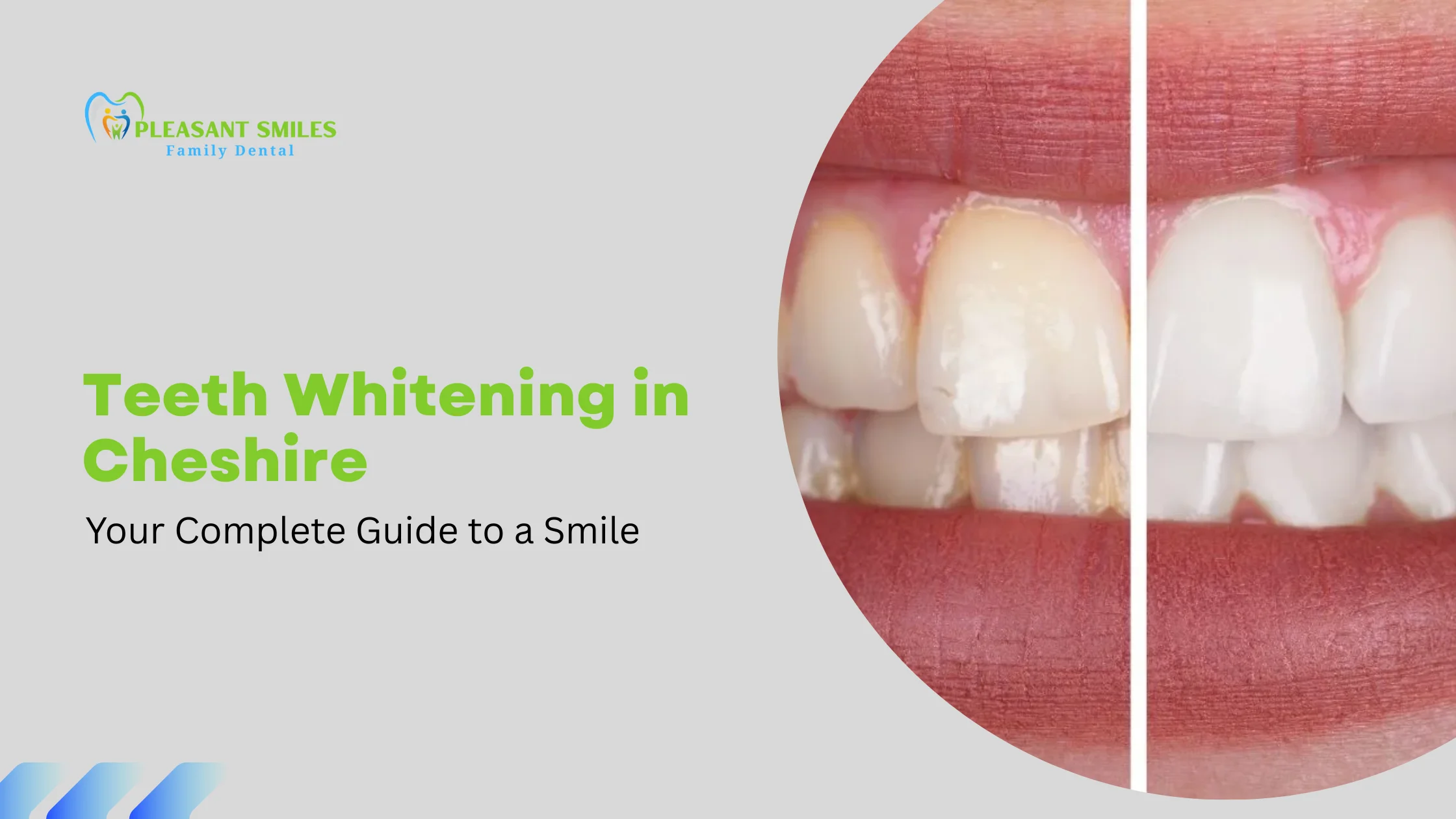
Teeth Whitening in Cheshire: Your Complete Guide to a Brighter Smile

A bright, confident smile can change the way you look, feel, and connect with others. But over time, coffee, tea, wine, and even healthy foods can stain your teeth. If you’ve ever looked in the mirror and wished your smile was just a little whiter, you’re not alone. Many Cheshire residents are now turning to professional teeth whitening to restore their natural brilliance safely and effectively.

At Pleasant Smiles Family Dental, Dr. Vijitha Bandla and her team offer personalized whitening treatments that deliver stunning, natural-looking results—without damaging your enamel or causing unnecessary sensitivity. In this guide, we’ll walk you through everything you need to know before starting your whitening journey, including treatment options, costs, and how to maintain your results for the long haul.

Why Choose Professional Teeth Whitening Over Store-Bought Kits

It’s easy to be tempted by the convenience of over-the-counter whitening strips or toothpaste. But while these products may help with minor surface stains, they can’t deliver the deep, lasting results that professional whitening offers.

Professional whitening treatments—available right here in Cheshire—use dentist-supervised, medical-grade whitening gels that penetrate beneath the enamel surface to remove stubborn discoloration safely. Because your treatment is customized, the strength of the whitening solution and application time are tailored to your needs, minimizing risks like gum irritation or uneven whitening.

In contrast, store-bought kits often use weaker or inconsistent formulas. Some online products even contain harsh ingredients that can erode enamel or irritate gums. The result? You spend more time, more money, and still don’t get the even, bright smile you’re hoping for.

That’s why patients in Cheshire trust Pleasant Smiles Family Dental—for safe, effective, and fast whitening treatments with results that truly shine.

In-Office Whitening: Fast, Noticeable Results

If you want immediate, dramatic improvement, in-office teeth whitening is your best choice. At Pleasant Smiles Family Dental, Dr. Bandla performs a complete oral examination before beginning treatment to ensure your teeth and gums are healthy enough for whitening.

Here’s what you can expect during your appointment:

  1. Protection: Your gums and soft tissues are carefully covered to prevent irritation.
  2. Application: A high-concentration whitening gel is applied to your teeth.
  3. Activation: Depending on the system, a specialized light or LED may be used to enhance the whitening effect.
  4. Reveal: In just about an hour, your smile can be up to six to ten shades lighter—instantly noticeable when you look in the mirror.

Most patients love in-office whitening because it’s fast, effective, and safe under professional supervision. You walk in with stains and walk out with a brighter, more confident smile.

Dr. Bandla also offers customized recommendations after your session—such as using a sensitivity gel or whitening toothpaste—to keep your enamel healthy and your results long-lasting.

Take-Home Whitening Trays: Convenient and Controlled

For those who prefer whitening gradually or from the comfort of home, take-home trays are another excellent option offered at Pleasant Smiles Family Dental. Unlike store-bought versions, these trays are custom-made to fit your teeth precisely, ensuring even coverage and avoiding gum irritation.

Here’s how it works:

  • Step 1: Impressions of your teeth are taken to create your custom trays.
  • Step 2: You receive professional-strength whitening gel and instructions from Dr. Bandla.
  • Step 3: Wear your trays for the prescribed time—usually a few hours a day or overnight—for about one to two weeks.

This method gives you flexibility and control over your whitening pace. It’s also more affordable than in-office whitening and ideal for those with sensitive teeth, as you can adjust usage based on your comfort level.

Patients who use these trays often enjoy natural, gradual results that look authentic—not overly bright or artificial.

Who Is a Good Candidate for Teeth Whitening in Cheshire?

While most people can benefit from professional whitening, not everyone is an ideal candidate. Whitening works best on natural enamel affected by external stains—like those from coffee, tea, or smoking.

You might not be a good candidate if you have:

  • Tooth decay or untreated cavities
  • Gum disease or receding gums
  • Dental restorations such as crowns, veneers, or fillings in visible areas (these won’t change color)
  • Extremely sensitive teeth

During your consultation, Dr. Bandla will evaluate your oral health and recommend whether whitening is the right option—or if other cosmetic treatments, like veneers or bonding, would better meet your goals.

Teeth Whitening Cost and Payment Options in Cheshire

Cost is often a common concern for patients, and it’s important to know what to expect. In Cheshire, professional whitening can range from $400 to $1,000 depending on the system, number of sessions, and whether you choose in-office or take-home treatment.

At Pleasant Smiles Family Dental, transparency matters. Dr. Vijitha Bandla provides a clear cost estimate before starting treatment and offers flexible payment plans. The clinic also accepts Husky insurance and provides discounts for patients without coverage—making quality cosmetic care accessible to more Cheshire families.

The best way to know your exact cost is to schedule a quick whitening consultation, where you’ll receive personalized recommendations and an exact quote for your specific needs.

How to Maintain Your Brighter Smile

After investing in your new smile, maintenance is key to keeping it radiant. Here’s how to protect your results:

  • Avoid staining foods and drinks (coffee, tea, red wine) for at least 48–72 hours after whitening.
  • Use a straw for dark beverages to limit contact with your teeth.
  • Rinse your mouth or brush after consuming foods that may stain.
  • Schedule touch-up whitening sessions every 6–18 months, depending on your habits.
  • Brush twice daily with a whitening toothpaste and keep up with regular dental cleanings.

Dr. Bandla also recommends avoiding tobacco and considering a professional touch-up every year for consistently bright results.

Is Teeth Whitening Safe?

Absolutely—when performed by a qualified dentist. Professional teeth whitening at Pleasant Smiles Family Dental uses FDA-approved products and carefully monitored procedures to ensure your teeth and gums remain healthy.

Some patients may experience mild, temporary sensitivity after whitening, but this usually subsides within 24–48 hours. Dr. Bandla can provide desensitizing treatments or recommend special toothpaste if needed.

The key is supervision. Whitening under professional care ensures that your enamel stays strong, your gums protected, and your results long-lasting.

Why Cheshire Patients Choose Pleasant Smiles Family Dental

When it comes to teeth whitening in Cheshire, patients trust Dr. Vijitha Bandla and the Pleasant Smiles Family Dental team for one simple reason—they truly care about your smile’s health and beauty.

Unlike quick-fix whitening bars or one-size-fits-all solutions, Dr. Bandla focuses on personalized care. Every treatment plan begins with a detailed consultation to understand your oral health, shade goals, and lifestyle habits. This ensures that your results look natural, balanced, and healthy—never overly bright or artificial.

At Pleasant Smiles, comfort comes first. From gentle application techniques to aftercare advice, every step is designed to make your whitening experience smooth and stress-free. Whether it’s your first cosmetic treatment or part of a smile makeover, you can count on Dr. Bandla to guide you with honesty and expertise.

Beyond Whitening: Maintaining a Radiant Smile for Life

Whitening is just one part of achieving your dream smile. To keep your teeth healthy and glowing, consistency matters. Regular cleanings, fluoride treatments, and good brushing habits all help prevent new stains from forming.

Dr. Bandla also recommends avoiding smoking and using a straw when drinking dark beverages. And if you ever notice new discoloration, Pleasant Smiles Family Dental offers convenient touch-up whitening sessions that fit easily into your regular dental visits.

It’s not just about having white teeth—it’s about maintaining a confident, healthy smile that lasts.

Ready to Brighten Your Smile in Cheshire?

Your smile deserves expert care—and the results you’ll love. Whether you want a quick in-office whitening or a custom take-home kit, Pleasant Smiles Family Dental makes it simple to achieve a naturally radiant smile.

Dr. Vijitha Bandla and her friendly team are dedicated to helping Cheshire patients look and feel their best with safe, effective, and affordable whitening solutions. With flexible scheduling, transparent pricing, and options for Husky insurance patients, a brighter smile is closer than you think.

Schedule your teeth whitening consultation today at Pleasant Smiles Family Dental in Cheshire, CT, and take the first step toward a whiter, healthier smile that makes every day a little brighter.

Cosmetic Dentist in Cheshire CT: Your Complete Guide to a Smile

Your smile is the first thing people see and for many it’s a confidence booster—or a source of self consciousness. If you’ve ever looked in the mirror and wished your teeth were whiter, straighter or more even, you’re not alone.

Stained enamel and chipped teeth to noticeable gaps, cosmetic dental issues are common. The good news is dentistry has come a long way. Cosmetic dentistry doesn’t just improve how your teeth look it can change how you feel about yourself.

At Pleasant Smiles Family Dental Dr. Vijitha Bandla has helped many patients in Cheshire get the smile they’ve always wanted. By personalising the latest technology she makes sure every treatment plan is tailored to you. Teeth whitening, veneers or full smile makeover? This guide will walk you through everything you need to know about finding a cosmetic dentist in Cheshire and what’s best for you.

What Cosmetic Dentistry Actually Involves

Cosmetic dentistry focuses on enhancing the appearance of your smile while also supporting overall dental health. Unlike general dentistry, which emphasizes routine care like cleanings, fillings, and preventive treatments, cosmetic dentistry is about aesthetics. But that doesn’t mean it’s only about looks—many cosmetic procedures also restore function and protect your teeth.

Common services in cosmetic dentistry include:

  • Teeth Whitening: Brightening your smile by removing stains caused by coffee, wine, tobacco, or aging.
  • Porcelain or Composite Veneers: Thin shells placed on the front of teeth to cover imperfections like chips, cracks, or discoloration.
  • Bonding: A tooth-colored resin applied to fix small flaws like gaps or uneven edges.
  • Crowns: Restoring damaged or weak teeth with natural-looking caps.
  • Smile Makeovers: A customized combination of treatments designed to transform your smile completely.

The goal of cosmetic dentistry is balance—teeth that not only look beautiful but also function properly and last for years to come.

Popular Cosmetic Treatments in Cheshire

Patients in Cheshire often ask which cosmetic treatments deliver the best results. The truth is, it depends on your needs, but here are some of the most sought-after options:

Professional Teeth Whitening

Whitening at a dental office offers far better results than store-bought kits. Dr. Vijitha Bandla provides both in-office whitening for instant results and custom take-home trays for gradual brightening.

Dental Veneers

Veneers are ideal for correcting chips, cracks, uneven teeth, or stubborn discoloration. Porcelain dental veneers offer a long-lasting, natural appearance, while composite veneers can be more budget-friendly.

Cosmetic Bonding

If you have small gaps or chipped teeth, bonding is a quick, painless way to restore your smile in a single visit.

Crowns and Same-Day Restorations

For severely damaged teeth, crowns not only improve appearance but also strengthen the tooth. Same-day crowns options mean you don’t have to wait weeks for your permanent crown.

Clear Aligners

Straightening your teeth without traditional braces has become incredibly popular. Clear aligners can fix mild to moderate alignment issues discreetly.

Each of these treatments can be tailored to your specific situation, and during a consultation at Pleasant Smiles Family Dental, Dr. Bandla will explain which option—or combination of options—will give you the results you’re looking for.

How to Choose a Quality Cosmetic Dentist in Cheshire

Finding the right cosmetic dentist in Cheshire is just as important as the treatment itself. Cosmetic dentistry requires both technical skill and an artistic eye, so choosing a dentist who understands both is essential. Here’s what to look for:

  • Experience and Training: A skilled cosmetic dentist should have extensive training in both general and cosmetic dentistry. Dr. Vijitha Bandla, for example, combines years of expertise with a patient-focused approach.
  • Before-and-After Results: Ask to see photos of previous patients. This gives you a clear idea of the dentist’s work and helps you visualize what’s possible for your own smile.
  • Technology and Techniques: Advanced technology, such as digital imaging, allows for more precise planning and results. Clinics like Pleasant Smiles Family Dental use the latest tools to ensure accuracy and comfort.
  • Patient Reviews: Online reviews and testimonials can reveal a lot about a dentist’s approach, professionalism, and results. Look for consistent positive feedback that highlights both care and outcomes.
  • Comfort and Trust: Ultimately, you should feel at ease. A great cosmetic dentist takes time to explain your options, listen to your goals, and make sure you feel confident in the plan.

Why Patients in Cheshire Trust Pleasant Smiles Family Dental

At Pleasant Smiles Family Dental, Dr. Vijitha Bandla has built a reputation for combining advanced cosmetic treatments with compassionate care. Patients appreciate her ability to listen, explain, and create treatment plans that truly reflect their individual needs.

Here’s why locals in Cheshire choose Pleasant Smiles:

  • Personalized Care: No two smiles are the same, which is why every treatment plan is tailored. Whether you need a subtle touch-up or a full smile makeover, your plan will fit your lifestyle and budget.
  • Comprehensive Services: From whitening and veneers to restorative treatments like crowns, you’ll find all your cosmetic needs under one roof.
  • Focus on Comfort: Dental visits can feel intimidating, especially when planning cosmetic work. Dr. Bandla and her team prioritize patient comfort, ensuring every step feels stress-free.
  • Insurance and Affordability: Pleasant Smiles Family Dental accepts Husky insurance and provides affordable options, making cosmetic dentistry more accessible for families in Cheshire.

This combination of expertise, technology, and a caring approach is why so many patients confidently call Dr. Vijitha Bandla the best cosmetic dentist in Cheshire.

The Benefits of Cosmetic Dentistry Beyond Just Looks

While cosmetic dentistry is often associated with appearance, its benefits go much deeper:

  • Boosted Confidence: A bright, even smile can make social and professional interactions more comfortable and enjoyable.
  • Better Oral Health: Treatments like crowns, bonding, or aligners often improve function and protect teeth from further damage.
  • Long-Term Savings: Addressing small imperfections early can prevent costly dental procedures down the line.
  • Improved Function: Straighter or restored teeth can improve your bite, reduce jaw pain, and make daily activities like chewing more comfortable.

Cosmetic dentistry isn’t vanity—it’s an investment in your overall health and happiness.

Take the First Step Toward Your Best Smile

If you’ve been thinking about enhancing your smile, now is the time to act. The right cosmetic dentist in Cheshire can transform not only your teeth but also how you feel about yourself. At Pleasant Smiles Family Dental, Dr. Vijitha Bandla is dedicated to helping patients achieve smiles they’re proud to share with the world.

Whether you’re considering teeth whitening, veneers, or a complete smile makeover, you deserve care that combines skill, comfort, and compassion. Schedule your consultation today and take the first step toward a brighter, healthier, more confident smile.

Cosmetic Dentist in Cheshire FAQs

1. What’s the difference between a dentist and a cosmetic dentist?

A general dentist focuses on maintaining your oral health — things like cleanings, fillings, and preventing cavities or gum disease. A cosmetic dentist, on the other hand, specializes in improving the appearance of your smile. While both care for your teeth, a cosmetic dentist goes a step further to enhance how your teeth look through treatments like veneers, teeth whitening, bonding, and smile makeovers. At Pleasant Smiles Family Dental, Dr. Vijitha Bandla combines both general and cosmetic dentistry to give patients a healthy, confident, and beautiful smile.

2. What is a cosmetic dentist called?

A cosmetic dentist is a general dentist with additional training and expertise in aesthetic dental procedures. They’re often referred to as esthetic dentists because they focus on enhancing the visual appeal of your teeth and smile. At Pleasant Smiles Family Dental in Cheshire, Dr. Vijitha Bandla offers a wide range of cosmetic treatments — from subtle enhancements to full smile transformations — tailored to each patient’s goals and natural features.

3. How long do cosmetic teeth last?

The longevity of cosmetic dental work depends on the type of treatment and how well you care for your teeth. For instance, professional teeth whitening can last 6 months to 2 years, veneers can last 10–15 years, and dental crowns may last even longer with proper care. Maintaining good oral hygiene, regular dental visits, and avoiding habits like teeth grinding or chewing on hard foods can help your results last for many years. At Pleasant Smiles Family Dental, Dr. Bandla ensures every cosmetic treatment is durable and customized for lasting beauty.

4. What is the best cosmetic treatment for teeth?

The best cosmetic dental treatment depends on your specific needs and goals. If you want a brighter smile, teeth whitening might be ideal. If you’re looking to fix chips, gaps, or uneven teeth, veneers or bonding can deliver a flawless finish. For a complete transformation, a smile makeover that combines multiple treatments may be the best approach. At Pleasant Smiles Family Dental, Dr. Vijitha Bandla carefully evaluates each patient to recommend the most effective and natural-looking treatment for a confident smile that truly stands out.