


Replacing missing teeth is essential for maintaining oral health, proper chewing, and overall comfort. Many patients often compare dental implants versus dentures to understand which option is more suitable for their needs.
Both options are widely used for missing teeth replacement, but they function differently. Dentures are removable appliances designed to replace multiple missing teeth, while dental implants are fixed solutions placed in the jawbone to support artificial teeth.
When comparing dentures vs implants, factors such as stability, longevity, maintenance, and oral health impact play a key role. Understanding the difference between dentures and implants can help you make a more informed decision based on your condition and long-term expectations.
Key Considerations
- Long-Term Costs: Dentures are cheaper upfront but may cost more over time due to adjustments and replacements, while implants are a higher initial investment with long-term savings.
- Maintenance Requirements: Implants are brushed like natural teeth, whereas dentures need daily removal, soaking, and special cleaning.
- Bone Health and Facial Structure: Implants preserve jawbone density and prevent facial sagging, unlike dentures which do not support the bone.
- Hybrid Solutions: Implant-supported dentures or “All-on-4” offer more stability than traditional dentures without placing an implant for every tooth.
- Lifestyle and Functionality: Implants provide better chewing efficiency and natural feel, while dentures may affect comfort, speech, or eating certain foods.
What Are Dental Implants?
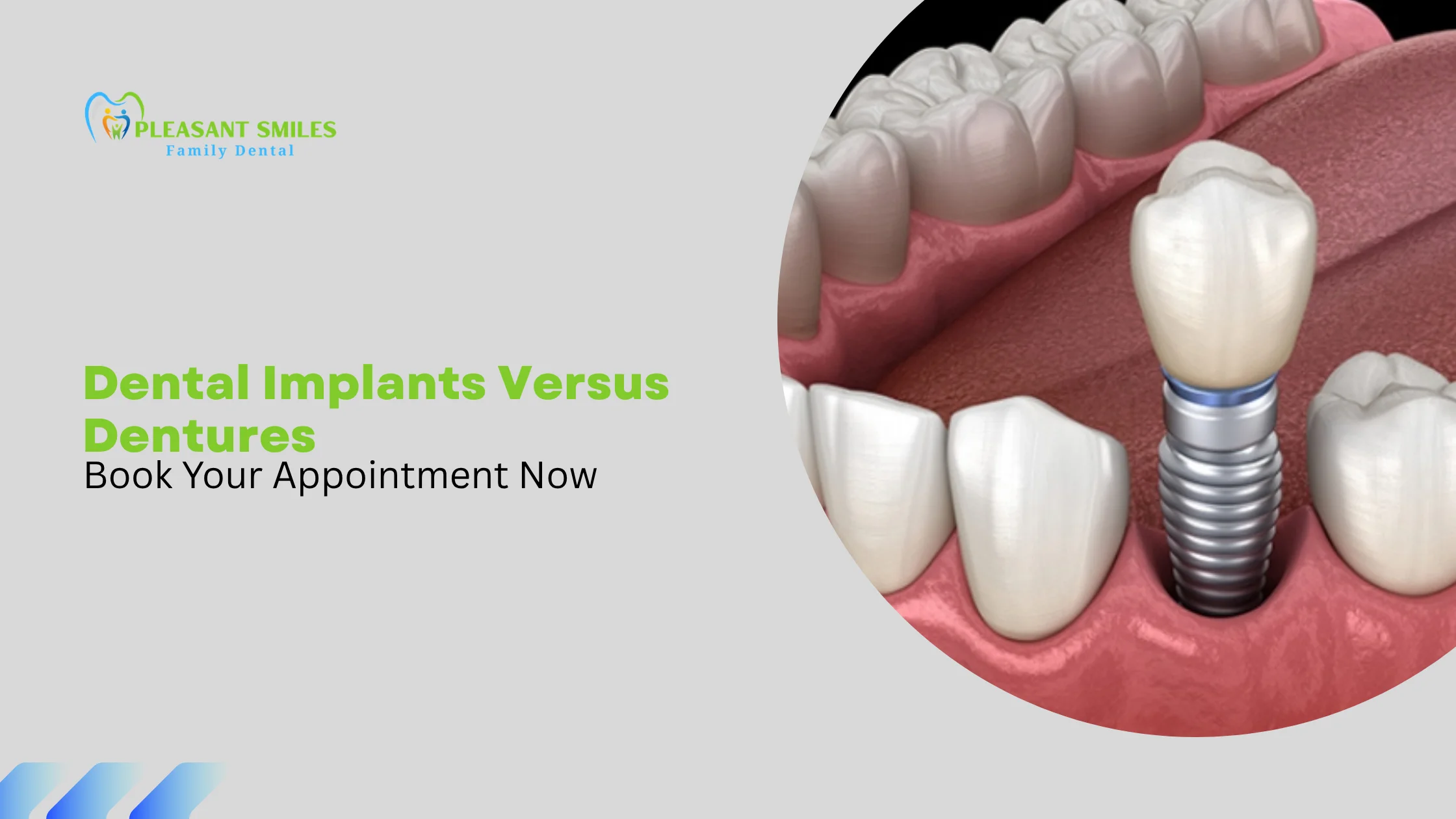
Dental implants are a fixed solution used to replace missing teeth. They involve placing a small titanium post into the jawbone, which acts like a natural tooth root and supports a crown, bridge, or even full arch restoration.
Over time, the implant integrates with the bone through a process called osseointegration, creating a stable and long-lasting foundation. This procedure makes implants one of the most reliable options for restoring both function and appearance.
Compared to other options like dentures, implants do not move or shift in the mouth. They are designed to function like natural teeth, improving chewing ability and helping maintain jawbone health.
What Are Dentures?
Dentures are removable dental appliances used to replace missing teeth and surrounding tissues. They are typically made from acrylic or a combination of materials and are designed to fit comfortably over the gums.
There are different types of dentures, including full dentures for replacing all teeth and partial dentures for filling gaps when some natural teeth remain. This feature makes them a flexible option for various levels of tooth loss.
Compared to implants, dentures are not fixed in place and may need to be removed for cleaning. While they restore basic function and appearance, they may feel less stable during eating or speaking.
Dental Implants vs Dentures—Key Differences
Both dental implants and dentures are effective solutions for replacing missing teeth, but they differ in how they function, feel, and are maintained. Understanding these differences can help you choose the option that best fits your needs.
| Feature | Dental Implants | Dentures |
| Placement | Surgically placed into the jawbone | Rest on top of the gums |
| Stability | Fixed and secure | Removable, may shift |
| Comfort | Feels similar to natural teeth | May take time to adjust |
| Chewing Ability | Strong and efficient | Limited compared to implants |
| Maintenance | Brushed like natural teeth | Removed daily for cleaning |
| Longevity | Long-term solution with proper care | May need replacement over time |
Dental implants are designed to function like natural teeth, offering better stability and chewing strength. In contrast, dentures provide a more affordable and non-surgical option but may require adjustments over time.
Procedure for Dental Implants vs Dentures
Understanding the procedure for dental implants versus dentures helps set clear expectations about time, complexity, and overall treatment approach. Both options restore missing teeth, but the process involved is very different.
Dental Implants Procedure
Dental implants require sufficient jawbone to support the implant. The process begins with placing a small titanium post into the jawbone, which acts as an artificial tooth root.
After placement, the bone gradually fuses with the implant through a healing process called osseointegration. This phase can take a few months, as the implant becomes stable within the bone.
Once healing is complete, a connector (abutment) is attached, followed by a custom-made crown. The final result is a fixed tooth replacement that closely functions like a natural tooth.
Dentures Procedure
Dentures are a non-surgical option and can be made regardless of bone availability. The process typically starts with taking detailed impressions of the gums and any remaining teeth.
These impressions are used to create a custom set of dentures designed to fit comfortably and support proper chewing and speech. In some cases, trial dentures are placed first to check fit and alignment.
The final dentures are supplied after any required modifications. They are designed to rest on the gums and may be held in place using natural suction or a dental adhesive for added stability.
Dental Implants vs. Dentures—Pros and Cons
Pros of Dental Implants
- Improved Stability: Implants anchor securely into the jawbone, reducing movement and preventing slipping while eating or speaking.
- Bone Preservation: Implants stimulate the jawbone, helping maintain bone density and facial structure over time.
- Long-Term Solution: With proper care, implants can last many years and often outlast traditional dentures.
- Enhanced Comfort: Because they are fixed in place, implants feel more natural and reduce gum irritation.
- Better Chewing Ability: Implants provide stronger biting force, allowing patients to eat a wider variety of foods comfortably.
Cons of Dental Implants
- Surgical Procedure Required: Implant placement involves minor oral surgery, which may not be suitable for all patients.
- Healing Time: The process requires time for the implant to integrate with the bone before final placement.
- Higher Initial Cost: Implants typically involve a greater upfront investment compared to dentures.
Pros of Dentures
- Non-Surgical Option: Dentures do not require surgery, making them suitable for patients who prefer less invasive treatment.
- Affordable Upfront Cost: They are generally more budget-friendly compared to implants.
- Faster Treatment Process: Dentures can be made and fitted in a shorter period of time.
- Suitable for Multiple Teeth: Ideal for replacing several or all missing teeth at once.
Cons of Dentures
- Less Stability: Dentures may shift or move, especially while eating or speaking.
- Adjustment Period: It can take time to get used to wearing dentures comfortably.
- Ongoing Maintenance: Dentures require daily removal, cleaning, and occasional adjustments or replacement.
Partial Dentures vs Implants
When to Choose Partial Dentures
Partial dentures are often recommended when a few teeth are missing and a non-invasive, removable solution is preferred. They are suitable for patients with limited jawbone density or those who want a cost-effective option without surgery. Partial dentures restore chewing ability and aesthetics but require daily cleaning and occasional adjustments.
When Implants Are Better
Dental implants are ideal for patients seeking a permanent solution with improved stability and function. Implants preserve jawbone health, prevent bone loss, and feel more like natural teeth. They are especially recommended when long-term durability and minimal movement during chewing or speaking are priorities.
Cost and Comfort Comparison
Partial dentures are generally less expensive upfront but may need replacement over time and can cause minor gum irritation. Implants have a higher initial cost but offer better comfort, stability, and long-term oral health benefits. Over time, implants often provide a more cost-effective solution due to their longevity and reduced maintenance needs.
Implant-Supported Dentures vs Traditional Dentures
What Are Implant-Supported Dentures?
Implant-supported dentures attach to dental implants placed in the jaw, providing a stable and secure fit. Unlike traditional dentures, they don’t rely solely on adhesives and are less likely to shift while speaking or eating. This option is particularly helpful for patients who want a more natural feel and improved chewing efficiency.
Advantages Over Traditional Dentures
Implant-supported dentures help preserve jawbone density by stimulating the bone, which reduces bone loss over time. They also offer better comfort, fewer sore spots, and increased confidence while speaking or smiling. Patients generally find them easier to adapt to compared to removable dentures.
When Traditional Dentures Are Suitable
Traditional dentures remain a practical choice for patients who cannot undergo implant surgery due to medical conditions, insufficient bone, or budget constraints. They restore function and aesthetics but may require adhesives and periodic adjustments to maintain a proper fit.
Making a Decision: Dental Implants vs Dentures
When choosing between dentures and implants, several key factors can help guide your decision:
Age
Younger patients often benefit from implants because they offer a long-term solution that can last decades. Older adults may prefer dentures, as they require less invasive procedures and can be fitted more quickly.
Bone Density
Implants need sufficient jawbone to support the posts. Bone loss from age, tooth loss, or gum disease can make implants challenging, though bone grafting is an option for some patients.
Function and Comfort
Implants generally offer better stability, chewing ability, and a more natural feel than dentures. Implant-supported overdentures combine the benefits of both, providing improved comfort and efficiency over traditional dentures.
Oral Hygiene
Implants require less daily maintenance compared to removable dentures. If you anticipate challenges in keeping dentures clean or in place, implants may be the more practical option.
Choosing the right option depends on your health, lifestyle, and personal preferences. A consultation with a dental professional can help determine which solution will best meet your needs.
Alternatives to Dentures and Dental Implants
While dentures and dental implants are the most common options for replacing missing teeth, several alternatives may suit your needs depending on your oral health, budget, and lifestyle:
Dental Bridge:
A dental bridge, also called a fixed partial denture, replaces one or more missing teeth by anchoring to the surrounding teeth. Bridges can restore your smile and chewing function effectively, though proper care and regular dental checkups are necessary to prevent decay on the supporting teeth.
Temporary Partial Denture (Flipper):
Flippers are removable, retainer-like dentures that fill gaps caused by missing teeth. They are lightweight and cost-effective, offering a quick cosmetic solution while waiting for a permanent option like an implant or bridge. However, they are less durable and may need replacement over time.
Snap-In Denture (Overdenture):
Snap-in dentures combine features of implants and traditional dentures. They attach to a few dental implants in the jaw, providing more stability than conventional dentures. Snap-in dentures can be removable for cleaning or fixed, but they require regular maintenance and come with similar considerations as implants.
Each of these alternatives has its own advantages and limitations. Discussing your oral health, budget, and long-term goals with a dental professional, such as Dr. Vijitha Bandla at Pleasant Smiles Family Dental, will help determine which solution is best suited for your smile.
Pleasant Smiles Family Dental: Dentures and Dental Implants Explained
At Pleasant Smiles Family Dental, Dr. Vijitha Bandla and our experienced team understand that each patient’s dental needs are different. We provide thorough guidance on options for replacing missing teeth, including traditional dentures and dental implant-supported solutions.
Our approach focuses on ensuring that each option—whether a removable denture or a fixed implant—fits comfortably, functions well, and supports long-term oral health. By assessing your jawbone, bite, and overall oral condition, we help patients make informed choices between dentures and implants.
With careful planning and modern techniques, patients can achieve a stable, natural-looking smile while maintaining comfort and functionality. Our goal is to provide clarity on the differences, benefits, and considerations for each solution so you can choose what works best for your dental health.
FAQs
1. What are the main differences between traditional dentures and implant-supported dentures?
Traditional dentures rest on the gums and can be removed, while implant-supported dentures are anchored to dental implants in the jawbone. Implants offer better stability, improved chewing, and help maintain jawbone health, whereas traditional dentures are less invasive and more affordable.
2. Are implant-supported dentures more comfortable than traditional dentures?
Yes, implant-supported dentures generally feel more natural and secure. They reduce slipping, minimize sore spots, and make eating and speaking easier compared to traditional dentures.
3. Do implant-supported dentures last longer than traditional dentures?
Implant-supported dentures can last many years with proper care, often significantly longer than traditional dentures. The implants stimulate the jawbone, helping maintain support and prolong the lifespan of the prosthetic.
4. How do dentures affect bone loss?
Traditional dentures do not prevent bone loss, which can occur over time as the jawbone resorbs after tooth loss. Implant-supported dentures help preserve bone by stimulating the jaw, reducing the risk of facial structure changes.
5. Can I switch from traditional dentures to implant-supported dentures later?
Yes, it is possible to transition from traditional dentures to implant-supported dentures. A dentist will evaluate your jawbone health and may recommend bone grafting if additional support is needed for implants.