


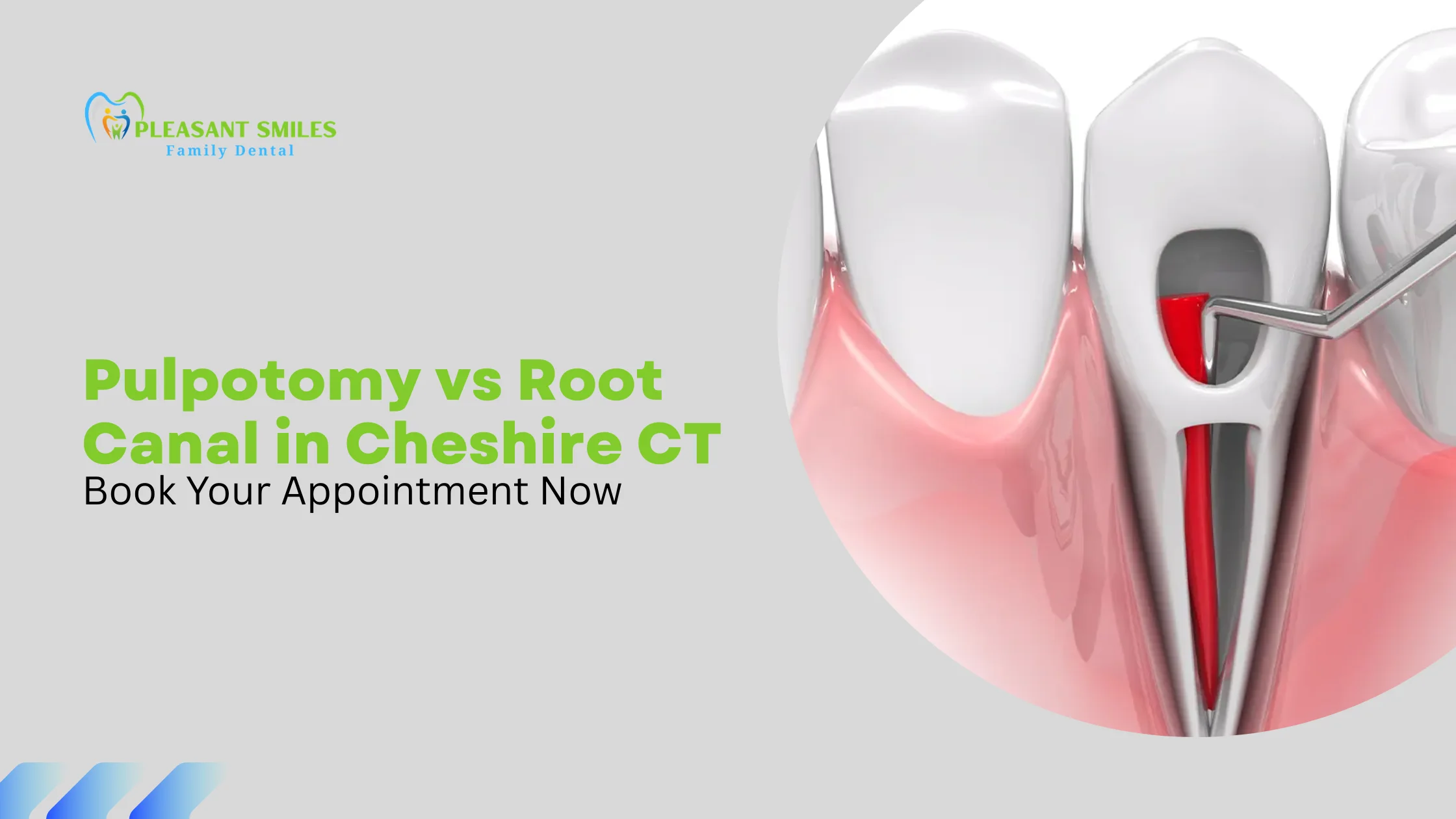
Tooth pain can be confusing, especially when your dentist starts using words like pulpotomy vs root canal. Both treatments address infections within a tooth. But they are not the same. One is used at an early stage. The other is used when the problem has already gone deep.
Knowing the difference helps you avoid the wrong treatment and pick the right one at the right time.
Pulpotomy vs Root Canal: The Quick Answer
A pulpotomy removes only the infected pulp from the top of the tooth. The healthy pulp inside the roots is left untouched.
A root canal removes all the pulp. From the top of the tooth and from every root canal. The inside is then cleaned, disinfected and sealed.
In short, a pulpotomy is partial. A root canal is complete. The right choice depends on how far the infection has spread.
What is Tooth Pulp and Why Does It Matter?
Tooth pulp is the soft tissue inside your tooth. It contains nerves and blood vessels. It helps the tooth grow and lets it sense hot and cold.
When decay or injury reaches the pulp, bacteria get inside. The pulp gets inflamed first. If nothing is done, it becomes infected. The infection then travels down into the roots and into the bone around the tooth.
How far this damage has spread is what decides your treatment. That is why two people with similar tooth pain can need very different procedures.
What is a Pulpotomy?
A pulpotomy is a smaller dental procedure. The dentist removes only the infected pulp from the top part of the tooth. The healthy pulp inside the roots stays in place.
A medicated dressing is placed over the remaining pulp to calm it and protect it. The tooth is then sealed with a filling. In children, a stainless steel crown is often added on top.
The goal is simple. Stop the infection from spreading without removing tissue that is still healthy. This treatment is most often done on baby teeth. But it is also used on permanent teeth in young adults when enough healthy pulp is left.
When a Pulpotomy is the Right Choice
You or your child may need a pulpotomy if:
- The infection is mild and has not reached the roots
- Tooth pain started recently and is still mild
- A baby tooth has deep decay but the roots are still healthy
- A young permanent tooth was injured before the root finished growing
- There is no swelling, no abscess and no infection seen on the X-ray
If any of these are missing, a pulpotomy will usually not be enough.
What is a Root Canal?
A root canal is the full treatment. It is needed when the infection has already gone deep into the tooth or when the pulp is dead.
The dentist removes all the pulp. Both from the top of the tooth and from every canal inside the roots. The inside is then cleaned, shaped and disinfected. Once the tooth is fully clean, it is sealed with a special material so bacteria cannot get back in.
Most back teeth then need a crown on top. This is because a tooth without pulp is more brittle and can crack under chewing pressure.
When a Root Canal is the Right Choice
You may need a root canal if:
- The pain is sharp, throbbing or wakes you up at night
- Hot or cold pain lasts more than 30 seconds after the trigger is gone
- The gum near the tooth is swollen or has a small bump
- The tooth has changed colour and looks darker than the others
- The X-ray shows a dark spot at the tip of the root
- A deep cavity, crack or old filling has reached the nerve
Pulpotomy vs Root Canal: Key Differences
| Feature | Pulpotomy | Root Canal |
|---|---|---|
| Pulp removed | Only from the top of the tooth | All pulp, top and roots |
| Tooth stays alive | Yes | No |
| Best for | Early stage infection | Deep or complete infection |
| Number of visits | Usually 1 | Often 1 to 2 |
| Treatment time | 20 to 40 minutes | 60 to 90 minutes per visit |
| Final restoration | Filling or steel crown | Almost always a crown |
| Common in | Children and young adults | All ages |
| Cost | Lower | Higher |
How Your Dentist Decides Between the Two
Most patients think the choice is based on how much the tooth hurts. It is not. Pain alone is not reliable. Some teeth with serious infections barely hurt. Some mild cases hurt a lot.
Your dentist looks at four main things.
- The X-ray: A dark area at the tip of the root means the infection has reached the bone. This rules out a pulpotomy.
- Pulp testing: Cold tests and other simple tests show whether the nerve is still alive and how it is reacting.
- Bleeding inside the tooth: Once the dentist opens the tooth, the colour of the pulp tells the rest of the story. Bright red blood that stops in a few minutes means the deeper pulp is healthy. Dark, slow blood means the pulp is dying. The first case is a pulpotomy. The second is a root canal.
- Your history: Pain at night, swelling that came and went, or a tooth that has been “off” for months all point to deeper infection.
This is why a proper clinical check matters more than guessing from symptoms.
Symptoms That Mean You Need Treatment Soon
Some tooth pain is harmless. Other signs mean the problem is getting bigger by the day. Watch out for these:
- Pain that does not go away or comes back at night
- Sensitivity to hot or cold that lingers for more than 30 seconds
- Pain when biting or chewing on one side
- Swollen gums or face around the tooth
- A bad taste, pus or a small pimple-like bump on the gum
- A tooth that has slowly turned grey or darker
The longer you wait, the fewer options you will have. A pulpotomy can turn into a root canal. A root canal can turn into an extraction.
Pros and Cons of Pulpotomy
Pros
- Less invasive
- Shorter appointment, usually one visit
- Cheaper than a root canal
- The tooth stays alive
- Lower risk of the tooth becoming brittle later
Cons
- Only works if the deeper pulp is truly healthy
- May need to be converted to a root canal later if the case was misjudged
- Less predictable in adult permanent teeth than in baby teeth
Pros and Cons of Root Canal
Pros
- Removes the source of infection completely
- Very high success rate. Often above 90 percent over 10 years
- Stops the infection from reaching the jawbone
- Saves the natural tooth
- With a crown, the tooth can chew normally for many years
Cons
- More invasive and takes longer
- Costs more, plus the crown is a separate cost
- The tooth becomes non-vital
- A small number of cases need repeat treatment
Which is Better, Pulpotomy or Root Canal?
There is no single winner. They solve different problems.
If the pulp is mostly healthy and the damage is small and recent, a pulpotomy is the smarter choice. It saves more of your natural tooth. Doing a root canal in this case would be too much treatment.
If the pulp is already infected throughout or dead, a pulpotomy will fail. Sometimes within weeks. The patient then ends up needing a root canal anyway. In that case, a root canal from the start is the better choice.
The right treatment is the one that matches the real condition of the tooth. That is why a proper diagnosis with an X-ray and pulp test matters more than what you read online.
Alternatives to Pulpotomy and Root Canal
Sometimes neither treatment is the right fit. The other options are:
- Pulpectomy: This removes all the pulp from a baby tooth. It is used when a pulpotomy is not enough but a full root canal is too much.
- Tooth extraction: Used when the tooth is broken too badly, has a cracked root, or cannot be rebuilt. Often the last option.
- Replacing the tooth: If a tooth is pulled, an implant or bridge can fill the gap. This matters most for back teeth used for chewing.
- Watchful waiting: Used only in very early cases. The dentist places a deep filling and checks the tooth over time to see if the pulp settles down.
Saving your natural tooth is almost always the first goal. No implant feels exactly like your own tooth.
What to Expect After Each Treatment
After a pulpotomy, most people feel mild soreness for a day or two. Soft food helps. Most patients are back to normal eating within 24 hours.
After a root canal, the tooth can feel tender for 3 to 5 days. Especially when you bite on it. Over the counter pain medicine handles this. Avoid chewing hard or sticky food on that tooth until the permanent crown is placed.
For both treatments, long-term success comes down to two simple things. Brushing twice a day. And going for your follow-up visit. Most failures are not from the procedure itself. They come from skipped crowns or new cavities forming next to the filling years later.
About Pleasant Smiles Family Dental
At Pleasant Smiles Family Dental, the focus is on understanding what is actually happening inside the tooth. Not just the surface pain. Every case is checked carefully so the real cause of the problem is clear before any treatment is suggested.
Dr. Vijitha Bandla follows a condition-based approach to dental care. Treatment is chosen based on the health of the tooth, the level of infection, and the overall oral condition of the patient.
If you’re experiencing tooth pain or unsure whether you need a pulpotomy or root canal, scheduling a consultation can help you get clarity on the right treatment for your situation.
Pulpotomy vs Root Canal FAQs
1. Is a pulpotomy the same as a root canal?
No. A pulpotomy removes only the pulp from the top of the tooth. A root canal removes all the pulp from the top and from every root. They are used at different stages of the same problem.
2. Is a pulpotomy painful?
The procedure itself is not painful because it is done under local anesthesia. Some mild soreness for a day or two is normal and goes away with simple pain medicine.
3. Can a pulpotomy fail?
Yes. The most common reason is that the deeper pulp was already infected at the time of treatment but did not show clear signs. If this happens, the next step is usually a root canal.
4. How long does a root canal last?
A root canal with a properly placed crown can last 10 to 30 years. Many last for the lifetime of the tooth. Studies show success rates above 90 percent over 10 years when both the root canal and the crown are done well.
5. Can adults get a pulpotomy?
Yes. It is less common than in children but it is possible. Young adults with a recent injury or deep decay can be good candidates if the deeper pulp is still healthy.
6. Is a root canal safer than pulling the tooth?
For most teeth, yes. Pulling a tooth removes the infection but leaves a gap. This affects your bite and the bone around the area over time. Keeping your natural tooth is almost always the better long-term choice.
7. Does every root canal need a crown?
Most back teeth do. They take heavy chewing pressure and can crack without protection. Front teeth sometimes do not need a crown if enough healthy structure is left.