


That quick, sharp zing when you take a sip of something cold or bite into ice cream can make eating and drinking uncomfortable. Tooth sensitivity is common, and there are several reasons your teeth might suddenly react to cold, hot, sweet, or acidic foods.
One treatment your dentist may recommend is a fluoride treatment for sensitive teeth. Fluoride can help strengthen the tooth surface and reduce the sensitivity that comes from exposed or weakened areas of the tooth.
At Pleasant Smiles Family Dental, we’ll first look at what’s causing your sensitivity before recommending treatment. In this guide, we’ll explain why sensitive teeth happen, how fluoride can help, and when you may need another type of dental treatment.
Quick Answer
A fluoride treatment for sensitive teeth is a quick, painless coating of concentrated fluoride that a dentist paints or places on your teeth. It works by sealing the tiny open channels in your teeth that let hot, cold, and sweet reach the nerve, and by making the enamel stronger. Most people feel relief within a few days, and the treatment takes just a few minutes in the dental chair.
What Causes Sensitive Teeth?
If your teeth hurt when you drink something cold or eat something sweet, you’re far from alone. One U.S. study found that about 1 in 8 adults had tooth sensitivity. It tends to be more common in adults between 18 and 44, women, and people with receding gums.
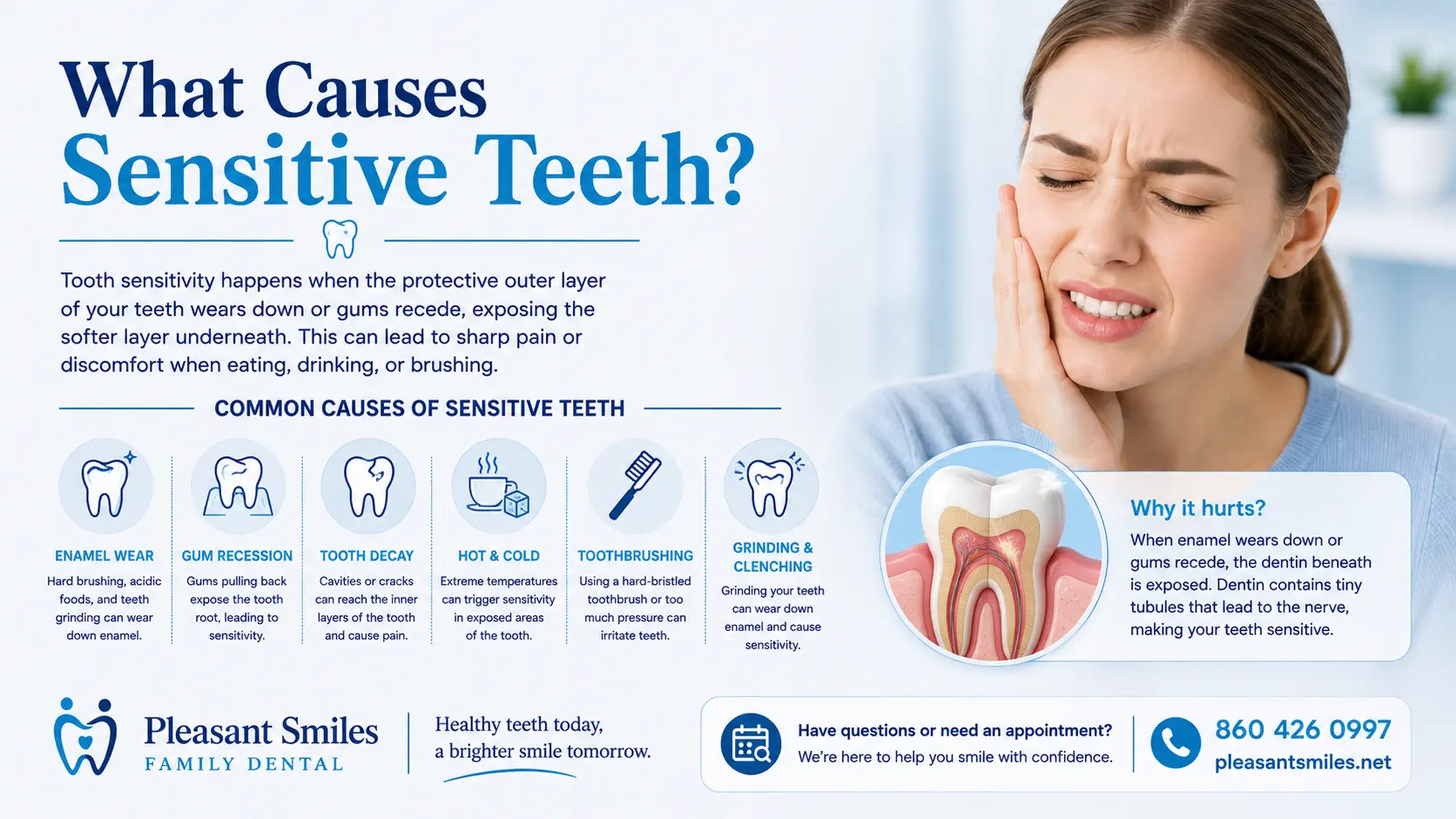
To understand why your teeth become sensitive, it helps to look at what’s underneath the surface. Enamel is the hard outer layer of your tooth. Underneath it is dentin, a softer layer filled with tiny tubes that connect toward the nerve inside the tooth.
When enamel wears down, or your gums recede and expose the tooth root, those tiny tubes can become exposed. Cold drinks, hot foods, sweets, or even a breath of cold air can trigger the nerve and cause that quick, sharp pain. Dentists call this dentin hypersensitivity.
Common causes include:
- Receding gums, often related to gum disease or brushing too hard
- Worn enamel from frequent exposure to acidic foods and drinks
- Teeth grinding or clenching, which can wear down the tooth surface
- A cracked or chipped tooth
- Recent teeth whitening or dental treatment, which can cause temporary sensitivity
How Does Fluoride Treatment Help Sensitive Teeth?
The basic idea is pretty simple. When your dentist applies concentrated fluoride to a sensitive tooth, it helps block the tiny tubes in the dentin that can send hot, cold, or sweet sensations toward the nerve.
With those tubes covered, outside triggers have a harder time reaching the nerve, which can reduce that sudden sharp pain. Fluoride also helps strengthen the tooth surface, giving your enamel extra protection against acid and cavities.
One treatment dentists commonly use is 5% sodium fluoride varnish. It has been used for treating tooth sensitivity for many years and is a well-established option when sensitive teeth are causing discomfort.
Fluoride Varnish vs Fluoride Gel Treatment for Sensitive Teeth
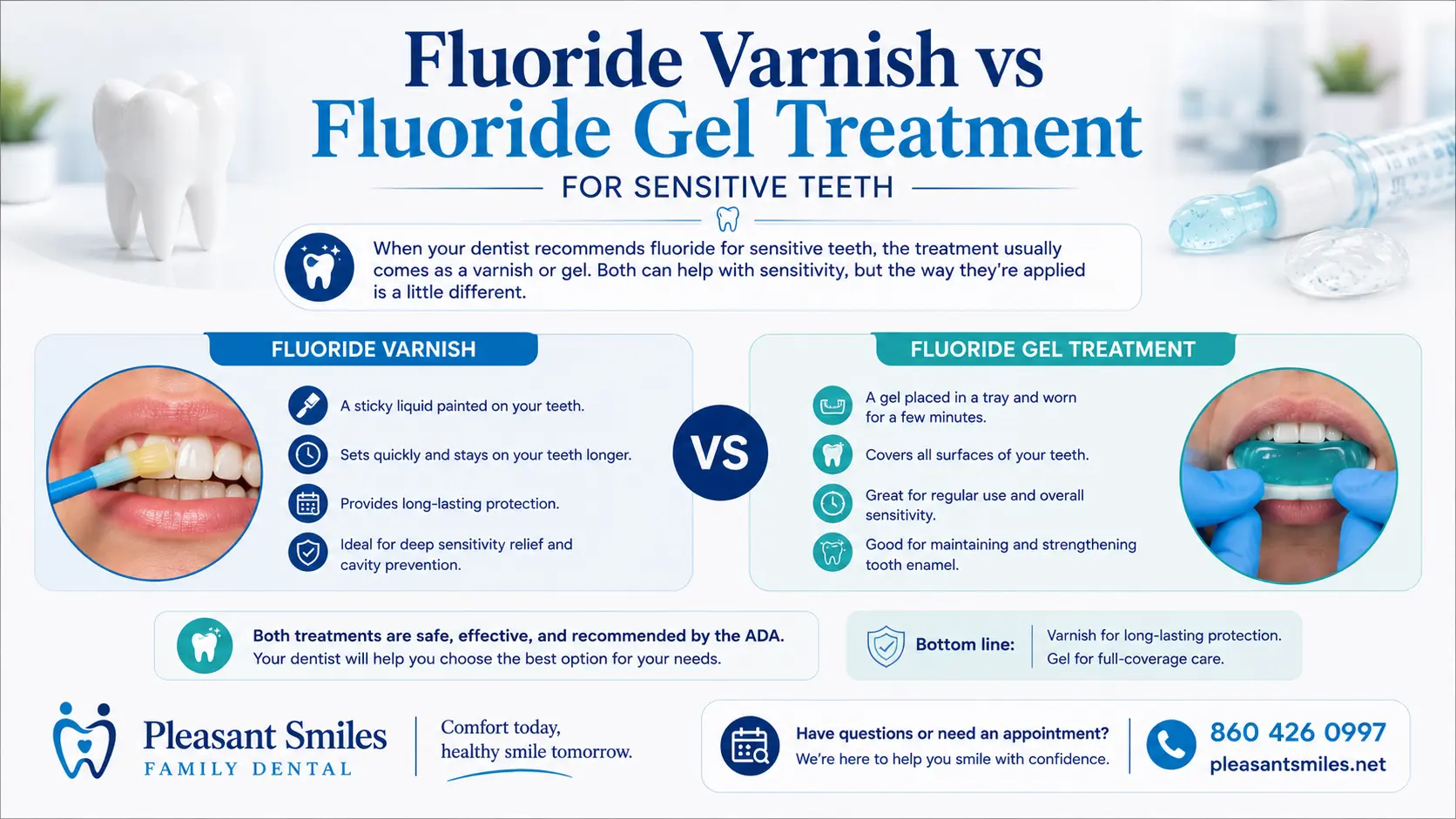
When your dentist recommends fluoride for sensitive teeth, the treatment usually comes as a varnish or gel. Both can help with sensitivity, but the way they’re applied is a little different.
| Fluoride varnish | Fluoride gel | |
| How it’s applied | Painted directly onto the teeth | Placed in a tray you bite into |
| How long it stays on | Sets within minutes and keeps working for hours | Usually stays in place for about 4 minutes |
| Best for | Specific areas, such as exposed roots and gumlines | Covering several teeth at once |
| How much is swallowed | Very little | Slightly more |
| Applied to wet teeth? | Yes | Teeth are usually dried first |
Research comparing the 2 treatments has found that fluoride varnish can work as well as, and sometimes better than, fluoride gel for reducing tooth sensitivity.
Varnish also stays where your dentist puts it and continues releasing fluoride for several hours. That makes it a practical choice when sensitivity is coming from specific areas along the roots or gumline.
What to Expect at Your Visit
A professional fluoride treatment is one of the easiest appointments you will ever have. Here is how it goes:
- We gently clean and dry the teeth we are treating.
- We paint on the varnish or place the gel. This takes only a couple of minutes.
- You avoid hot drinks, crunchy foods, and brushing for a few hours so the fluoride can do its work.
That is it. There are no shots and no drilling, and you can drive yourself home and get right back to your day.
How Fast Will You Feel Relief?
How quickly you notice a difference depends on the type of fluoride treatment you use.
- In-office varnish or gel: These treatments contain a much higher concentration of fluoride than products you use at home. Many people notice less sensitivity within a day or 2, while the full effect can build over the following week.
- Sensitive-teeth toothpaste: This usually takes longer. You may need to brush with it twice a day for 2 to 4 weeks before the sensitivity starts to feel noticeably better. Give it some time and use it consistently.
Your daily habits can affect how quickly your teeth settle down, too. Frequent acidic foods and drinks, brushing too hard with a stiff-bristled toothbrush, and grinding your teeth at night can continue to wear down the enamel.
If you grind your teeth, ask us whether a night guard might help. And if your sensitivity hasn’t improved after about a month of consistent care, give us a call. A cavity, cracked tooth, or another dental problem could be causing the pain and may need a closer look.
Best Fluoride Treatment for Sensitive Teeth: In-Office and At-Home
People often ask us, What’s the best fluoride treatment for sensitive teeth? The answer depends on what’s causing your sensitivity and how severe it is. For many patients, the best approach is professional fluoride treatment along with good care at home.
At Pleasant Smiles Family Dental, we can apply a high-strength fluoride varnish or gel during your visit. These treatments contain much more fluoride than the products you can buy at a store. For patients with ongoing sensitivity, professional fluoride treatment may be recommended every 3 to 6 months.
Between visits, a few simple habits can help:
- Use toothpaste for sensitive teeth: Many contain potassium nitrate, which can help calm the nerve and reduce sensitivity. Look for products with the ADA Seal of Acceptance.
- Ask about prescription fluoride toothpaste: If regular sensitive-teeth toothpaste isn’t doing enough, we may recommend a higher-fluoride toothpaste.
- Use a soft-bristled toothbrush: Brush gently, especially around the gumline, to avoid wearing down enamel or irritating your gums.
- Limit acidic foods and drinks: Soda, citrus, and wine can wear away enamel over time, which can make sensitivity worse.
What If Fluoride is Not Enough?
Fluoride can help with many cases of tooth sensitivity, but sometimes there’s another problem behind the pain. If your sensitivity continues, we may recommend a different treatment based on what we find during your exam.
- Desensitizing toothpaste with potassium nitrate: This can help calm the nerve inside the tooth and can be used along with fluoride treatment.
- Bonding or a sealant: If an exposed or worn tooth root is causing the sensitivity, we can cover the area with a thin, tooth-colored material to help protect it.
- A gum graft: When gum recession has exposed the root, a small gum graft can cover the area and provide longer-term protection.
- A root canal: This is generally considered when one tooth has severe, persistent pain that hasn’t improved with other treatments.
The right treatment depends on what’s causing your sensitivity. An exam helps us find the cause and choose the treatment that makes sense for your tooth.
Is Fluoride Treatment Safe?
Yes. Professional fluoride treatments have been used safely for decades and are recommended by the American Dental Association. The amount used during a dental treatment is carefully controlled, and fluoride varnish hardens quickly on the tooth, so very little ends up in your mouth.
Fluoride treatment is safe for both adults and children when it’s used as directed. More fluoride isn’t better, which is why having it applied by your dental team is the best way to get the right amount.
You may have heard of fluorosis, which can cause faint white spots on developing permanent teeth. It happens when young children swallow too much fluoride while their adult teeth are still forming, generally from birth through about age 8. It isn’t a concern for adults or older children whose permanent teeth have already come in.
For young children, using the right amount of toothpaste matters. Children under 3 should use a smear about the size of a grain of rice. From ages 3 to 6, a pea-sized amount is enough. If you’re unsure how much that looks like, we’re always happy to show you.
When to See a Dentist About Sensitive Teeth
A little sensitivity once in a while can happen. But if it keeps coming back or starts getting worse, it’s a good idea to have it checked.
Make an appointment if you notice:
- Pain that lasts more than a few days or keeps getting worse
- Sensitivity in only one tooth, which can be a sign of a cavity or crack
- Pain when you bite down, even when you’re not eating something hot or cold
- Gums that are receding or bleeding
- Sensitivity that doesn’t improve after using toothpaste for sensitive teeth
These symptoms can sometimes point to a cavity, cracked tooth, or gum disease. Finding the cause early can make treatment simpler and help prevent the problem from getting worse.
Best Fluoride Treatment for Sensitive Teeth in Cheshire
If cold drinks or sweets make you wince, we can help. At Pleasant Smiles Family Dental, we provide fluoride treatments and preventive dental care for families in Cheshire, CT.
We’ll first find out what’s causing your sensitivity. From there, we can recommend a treatment plan that may include an in-office fluoride treatment along with simple steps you can follow at home.
Fluoride treatment is one of the more affordable services we provide, and many dental plans cover it as preventive care. We’ll review your coverage with you before treatment so you know what to expect.
Final Thoughts
Sensitive teeth can take some of the enjoyment out of your morning coffee or a scoop of ice cream. You don’t have to put up with that sharp zing every time you eat or drink something you love.
A fluoride treatment for sensitive teeth is a quick, well-established option that can help reduce sensitivity while strengthening the tooth surface. Using toothpaste for sensitive teeth and brushing gently at home can help, too.
If you’re in Cheshire and that sharp pain keeps coming back, come see us at Pleasant Smiles Family Dental. We’ll look for the cause and help you find a treatment that gets you back to eating and drinking comfortably.
Frequently Asked Questions
1. Does fluoride treatment help sensitive teeth?
Yes. Fluoride can help block the tiny openings in dentin that allow hot, cold, and sweet foods and drinks to trigger the nerve. It also helps strengthen the tooth surface. Many people notice less sensitivity within a few days of professional treatment.
2. How long does a fluoride treatment for sensitive teeth last?
Relief can last for several months, depending on what’s causing the sensitivity. For ongoing sensitivity, your dentist may recommend professional fluoride treatments every 3 to 6 months along with toothpaste made for sensitive teeth.
3. How fast does fluoride treatment work on sensitive teeth?
Many people notice less sensitivity within a few days. If the sensitivity is deeper or has been around for a long time, you may need more than one treatment along with care at home.
4. How soon does fluoride treatment work for sensitive teeth?
An in-office fluoride varnish may start easing sensitivity within a day or 2, with the full effect developing over the following week. Toothpaste for sensitive teeth usually takes longer and may require 2 to 4 weeks of twice-daily use.
5. Can fluoride treatment cause fluorosis?
Professional fluoride treatments aren’t expected to cause fluorosis when used as directed. Dental fluorosis can occur when young children swallow too much fluoride while their permanent teeth are developing. It isn’t a concern for adults whose permanent teeth have already formed.
6. My teeth got sensitive after a filling or crown. Can fluoride help?
It can, especially when the sensitivity is mild and related to the recent dental work. Some sensitivity after a filling or crown can settle on its own, and fluoride may help reduce the discomfort. If the sensitivity continues for more than a few weeks, let us know so we can check the tooth and make sure there isn’t another cause.
