


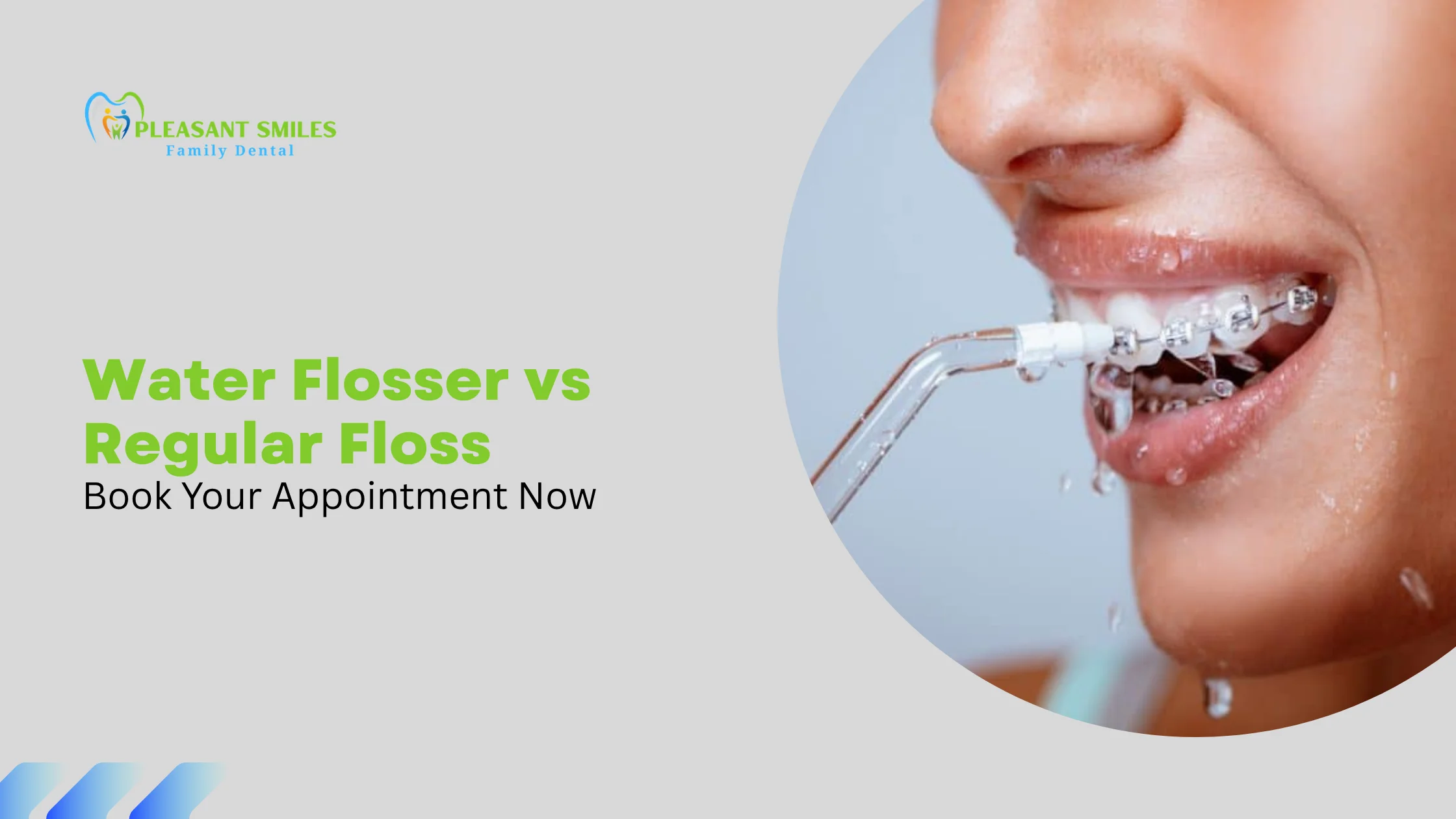
When it comes to daily oral care, many patients ask about water flosser vs regular floss and which one actually works better. The confusion is understandable—both claim to clean between teeth, but they do it very differently.
Flossing is essential because brushing alone misses about 35–40% of tooth surfaces, especially between teeth where plaque builds up. Choosing the right method can directly impact your gum health and long-term dental outcomes.
In this guide, you’ll get a clear, expert-backed comparison to help you decide what fits your routine, lifestyle, and oral health needs.
What Is a Water Flosser?
A water flosser is a device that uses a pressurized stream of water to clean between teeth and along the gumline. It’s also known as an oral irrigator.
Instead of physically scraping plaque like string floss, it flushes out food particles and bacteria. This makes it especially helpful for people with braces, implants, or sensitive gums.
According to the American Dental Association, water flossers can be effective for reducing plaque and gingivitis when used properly. Many modern devices also come with adjustable pressure settings for comfort.
What Is Regular Dental Floss?
Regular dental floss is a thin strand designed to physically remove plaque and debris from between teeth. It has been the standard recommendation for decades.
Floss works by sliding between tight spaces and scraping plaque directly off the tooth surface. This is something water alone may not fully achieve.
The Centers for Disease Control and Prevention emphasizes flossing daily as a key step in preventing gum disease and tooth decay, especially in areas a toothbrush cannot reach.
Water Flosser vs Regular Floss – Key Differences
At first glance, both tools seem to do the same job—clean between your teeth. But once you start using them, the difference becomes very clear. Each works in its own way, and each has strengths that suit different situations.
| Feature | Water Flosser | Regular Floss | Winner |
| Plaque Removal | Great for flushing out food particles and bacteria from around the gums and hard-to-reach areas | Best at physically removing sticky plaque by scraping tooth surfaces directly | Regular Floss |
| Ease of Use | Simple and quick, especially helpful for braces, implants, or limited hand movement | Requires proper technique and a bit of practice to use effectively | Water Flosser |
| Gum Health | Gentle on gums and helps reduce inflammation with a massaging effect | Very effective at cleaning along the gumline, but can irritate if done aggressively | Tie |
| Cost | Higher initial cost due to the device | Very affordable and widely available | Regular Floss |
| Portability | Less convenient for travel due to size and need for power | Easy to carry and use anywhere | Regular Floss |
If you’re looking for precision and deep plaque removal, regular floss still holds a slight edge. But if comfort and ease matter more—especially with braces or sensitive gums—a water flosser can make daily cleaning much easier to stick with.
In reality, it’s not about choosing one over the other. Water flossers are excellent for improving gum health, while regular floss remains the gold standard for cleaning tight spaces between teeth.
What Are the Benefits of Water Flossers?
Water flossers are simple to use and gentle on the gums, making them a great option for people who find traditional floss difficult.
- Gentle on sensitive gums: The steady water stream cleans without the harsh pressure of string floss.
- Ideal for braces and implants: Easily reaches around wires, crowns, and other dental work.
- Helps reduce gum bleeding: Regular use can improve gum health and lower inflammation.
- Beginner-friendly: Requires less technique, making it easier to stay consistent.
Research published in the Mayo Clinic has shown that water flossers can be particularly effective in reducing gum bleeding when used regularly.
What Are the Benefits of Regular Floss?
Regular floss continues to be one of the most reliable ways to clean between teeth, especially in areas a toothbrush can’t reach.
- Removes plaque directly: The string makes physical contact with the tooth surface, helping clear stubborn buildup.
- Affordable and accessible: It’s inexpensive and easy to find anywhere.
- No power needed: Simple to use at home or while traveling.
- Clinically proven: Backed by years of dental research and routine recommendations.
Dentists in Cheshire CT often prefer floss for its precision, especially when cleaning tight spaces where plaque tends to hide.
What Are the Disadvantages of Water Flossers?
Water flossers are convenient and gentle, but they’re not the perfect fit for every situation. It’s important to understand where they may fall short.
- Higher upfront cost: The device is more expensive compared to regular floss.
- Needs power and water: Less convenient when traveling or on the go.
- Limited for tight spaces: May not fully remove sticky plaque between closely spaced teeth.
- Requires maintenance: Regular cleaning is needed to keep the device hygienic.
For many people, a water flosser works best as a supportive tool rather than a complete replacement for traditional floss.
What Are the Disadvantages of Regular Floss?
Regular floss works well, but it does require the right technique and consistency to be effective. For many people, that’s where the challenge begins.
- Technique-sensitive: If not used properly, floss may miss plaque or fail to clean effectively.
- Can irritate gums: Flossing too hard or snapping it can cause bleeding and discomfort.
- Difficult with braces: It can be tricky to maneuver around wires, brackets, or dental work.
- Not beginner-friendly: Some people find it awkward, which leads to skipping it altogether.
This is why many patients prefer water flossers—they’re often easier to use and fit more comfortably into a daily routine.
Which Is More Effective According to Dentists?
Both options work well—but they serve slightly different purposes in your routine. The key isn’t choosing one over the other, but using the right tool consistently.
The Pleasant Smiles Family Dental supports daily interdental cleaning, whether it’s with floss or a water flosser. What matters most is how regularly and correctly you use it.
- Regular floss is more effective at removing plaque tightly stuck between teeth
- Water flossers are better at improving gum health and reducing bleeding
In practice, many dentists recommend combining both methods to get the most complete clean.
Water Flosser vs Regular Floss: Which Should You Choose?
The right choice really comes down to your oral condition and what you’ll actually use every day. Both options work well—consistency matters more than perfection.
- Choose a water flosser if: you have braces, implants, or sensitive gums and want a gentler, easier routine.
- Choose regular floss if: your teeth are tightly spaced and you need precise plaque removal between contacts.
- Go for a water flosser if: you find traditional floss difficult or tend to skip it altogether.
- Stick with regular floss if: you prefer a simple, low-cost option that’s easy to carry anywhere.
In the end, the best option is the one you can use consistently without skipping days.
When Should You Talk to a Dentist?
If your gums bleed regularly, feel swollen, or you notice ongoing bad breath, it’s a sign you shouldn’t ignore. These symptoms often point to early gum issues that need attention.
Gum disease can develop quietly, and by the time it becomes obvious, it may already be progressing. Getting checked early helps prevent more serious problems and protects your long-term oral health.
At Pleasant Smiles Family Dental, Dr. Vijitha Bandla focuses on understanding your specific needs and guiding you toward a practical, easy-to-follow oral care routine that fits your daily life.
Conclusion
When comparing water flosser vs regular floss, the right choice depends on your specific needs, comfort, and consistency. Regular floss is excellent for removing plaque, while water flossers are great for improving gum health and ease of use.
The best results often come from combining both methods and maintaining a consistent routine. Oral health is not about perfection—it’s about habits you can stick to daily.
If you’re unsure which option is right for you, schedule a consultation with Pleasant Smiles Family Dental. Dr. Vijitha Bandla and the team can guide you toward a routine that protects your gums, teeth, and long-term oral health with confidence.
Water Flosser vs Regular Floss FAQs
1. Is a water flosser better than regular floss?
It depends on your needs. Water flossers are great for improving gum health and reducing bleeding, while regular floss is better at removing plaque between tight teeth. Many dentists suggest using both for the best results.
2. Do dentists recommend water flossers?
Yes, especially for people with braces, implants, or sensitive gums. The American Dental Association recognizes water flossers as an effective way to clean between teeth and support gum health.
3. Can a water flosser replace regular floss?
Not completely. A water flosser can remove debris and bacteria, but it may not fully clean tight spaces where plaque sticks. For thorough cleaning, combining both methods is often recommended.
4. Is water flossing enough to remove plaque?
Water flossing helps flush out bacteria and food particles, but it doesn’t always remove sticky plaque from tooth surfaces. Regular floss is more effective for that mechanical cleaning.
5. Which is better for gum disease?
Water flossers are often more helpful for gum disease because they gently clean below the gumline and reduce inflammation. However, pairing them with regular floss can improve overall results.