


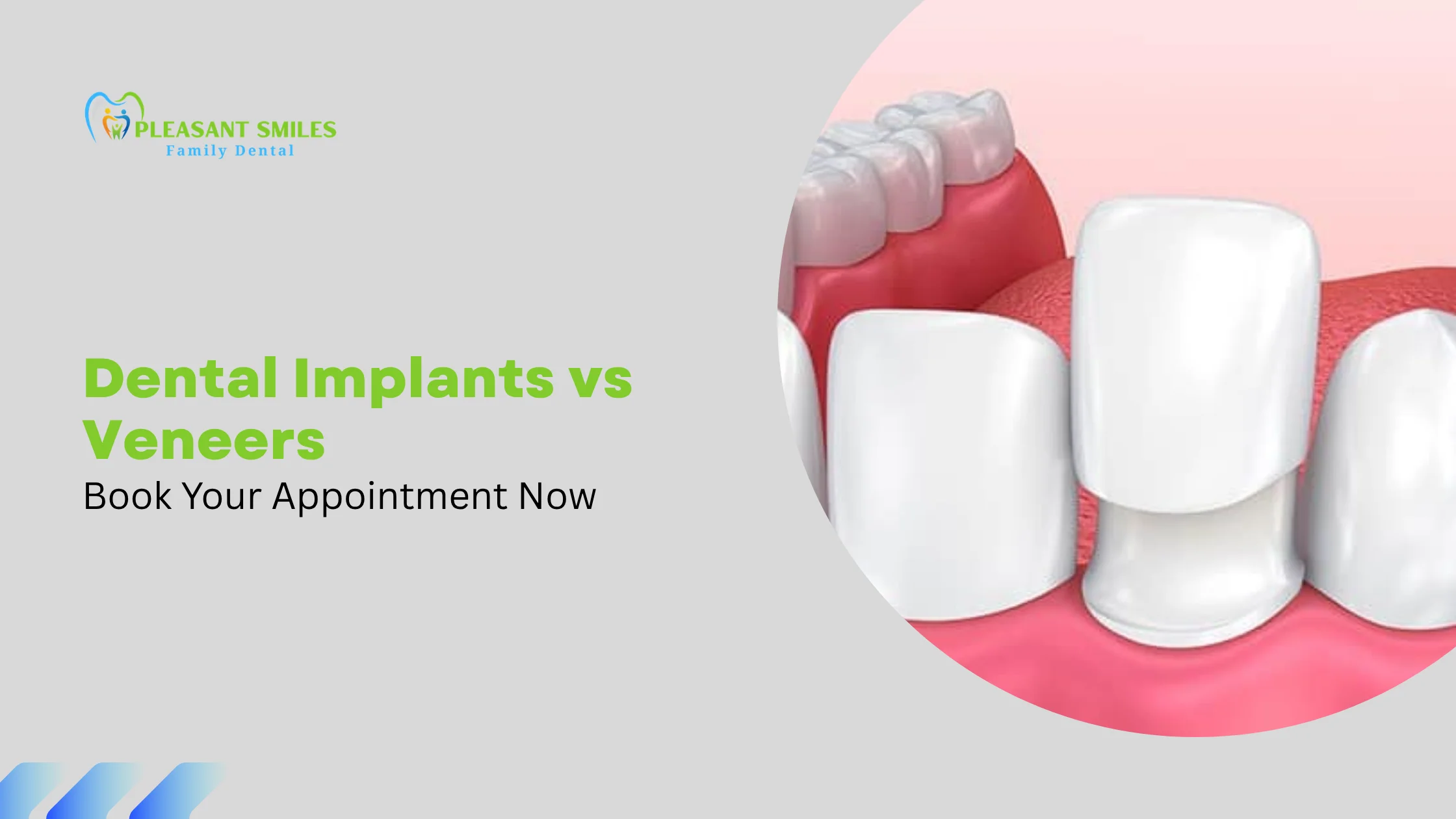
If you are trying to decide between dental implants and veneers, you are actually comparing two very different solutions to two different problems. Implants replace a missing tooth from the root up. They are a complete restoration. Veneers are thin porcelain shells that cover the front of your existing teeth to change how they look. Both can give you a beautiful smile, but they fix different things.
At Pleasant Smiles Family Dental in Cheshire, Dr. Bandla has helped hundreds of patients work through this exact decision. The right choice depends on whether your tooth is missing or just damaged, how much you want to spend, how long you want the result to last, and what you want the end result to look and feel like.
This guide breaks down everything you need to know. Cost, lifespan, pros, cons, procedure, and when each one is the right call. Take the quiz near the end for a personalized recommendation from Dr. Bandla, or call us at (860) 426-0997 for a free consultation.
Quick Comparison: Dental Implants vs Veneers
| Factor | Dental Implants | Porcelain Veneers |
|---|---|---|
| Best for | Missing or severely damaged teeth | Chipped, stained, or slightly crooked teeth |
| Cost per tooth | $3,000 to $5,000 | $1,200 to $2,500 |
| Lifespan | 25+ years, often a lifetime | 10 to 20 years |
| Procedure time | 1 to 6 months total | 2 to 3 visits over 2 to 4 weeks |
| Tooth preparation | Removes the tooth, places implant | Removes a thin layer of enamel |
| Reversible | No | No (enamel is removed) |
| Insurance coverage | 30% to 50% | Usually none |
| Looks and feels like | A natural tooth, feels real | Natural, slightly less “your” tooth |
What Are Dental Implants?
Dental implants are a permanent solution for replacing missing teeth. Instead of sitting on the gums like dentures or relying on adjacent teeth like bridges, implants are placed directly into the jawbone, acting as artificial tooth roots.
The process involves inserting a small titanium post into the bone, which gradually fuses with it through a natural process called osseointegration. Once healed, a crown is placed on top, creating a tooth that looks, feels, and functions very much like a natural one.
What makes implants unique is their ability to restore both function and structure. They don’t just fill a gap they help maintain jawbone density, support facial structure, and allow you to chew comfortably without worrying about movement or instability.
Not Sure Which is Right for You? Book a Free Consultation
Advantages of Dental Implants
- Strong and Stable Fit: Dental implants are securely anchored into the jawbone, providing exceptional stability. This allows you to eat, speak, and smile confidently without worrying about movement or slipping.
- Preserves Jawbone Health: Implants stimulate the jawbone just like natural tooth roots, helping prevent bone loss that typically occurs after missing teeth. This also helps maintain your natural facial structure over time.
- Long-Lasting Solution: With proper care and regular dental visits, implants can last for decades. Their durability makes them one of the most reliable tooth replacement options available.
- Natural Look and Feel: Implants are designed to closely mimic natural teeth in both appearance and function, making them virtually indistinguishable from your existing teeth.
- Protects Surrounding Teeth: Unlike bridges, implants do not rely on adjacent teeth for support. This helps preserve the strength and integrity of your natural teeth.
- Improved Chewing Ability: Because implants function like real teeth, they restore strong biting force, allowing you to enjoy a wider range of foods without discomfort.
- Enhanced Comfort: Since implants become part of your jawbone, they eliminate the discomfort often associated with removable dental appliances.
- Easy Maintenance: Caring for dental implants is simple and similar to natural teeth—regular brushing, flossing, and routine dental checkups help keep them in excellent condition.
Disadvantages of Dental Implants
- Surgical Procedure Required: Dental implants involve a minor surgical process to place the implant into the jawbone. This may not be suitable for patients with certain medical conditions or those who prefer non-invasive treatments.
- Longer Treatment Timeline: The process takes time, as the implant must heal and integrate with the bone before the final crown is placed. In most cases, the full treatment can take several months.
- Higher Initial Cost: Implants typically require a greater upfront investment compared to other options. While they offer long-term value, the initial expense can be a concern for some patients.
- Requires Adequate Bone Support: Successful implant placement depends on having sufficient jawbone density. Patients with bone loss may need additional procedures like bone grafting before treatment.
- Healing and Recovery Period: After the implant is placed, a healing phase is necessary. Some patients may experience temporary discomfort, swelling, or dietary restrictions during recovery.
- Not Ideal for Every Patient: Certain health conditions, such as uncontrolled diabetes or heavy smoking, can affect healing and may impact the success of dental implants.
- Multiple Appointments Needed: Unlike some cosmetic treatments, implants require several visits for placement, healing, and final restoration, which may not suit patients looking for a quicker solution.
- Maintenance Still Required: Although implants are durable, they still require proper oral hygiene and regular dental checkups to prevent complications like gum infection around the implant.
What Are Dental Veneers?
Dental veneers are thin, custom-made shells designed to cover the front surface of your teeth and improve their appearance. They are typically made from porcelain or composite resin and are bonded directly to the teeth.
Unlike implants, veneers do not replace missing teeth. Instead, they are used to correct cosmetic concerns such as discoloration, chipped edges, gaps, uneven shapes, or slightly misaligned teeth. They’re often chosen by patients looking for a quick and noticeable smile transformation.
One of the reasons veneers are so popular is their ability to create a dramatic improvement in a relatively short time. With proper planning and design, veneers can enhance the color, shape, and symmetry of your smile while still looking natural.
Advantages of Dental Veneers
- Quick Smile Transformation: Veneers offer fast cosmetic improvements, often transforming your smile in just a few appointments, making them ideal for patients looking for noticeable results without lengthy treatments.
- Highly Natural Appearance: Porcelain veneers are crafted to reflect light similarly to natural teeth, helping them blend seamlessly and create a bright, realistic smile.
- Fix Multiple Issues at Once: Veneers can address several concerns in one treatment, including discoloration, minor gaps, uneven shapes, and worn edges, simplifying the overall smile makeover process.
- Minimally Invasive Option: Compared to crowns, veneers require only slight enamel removal, preserving most of your natural tooth while still achieving strong and aesthetic results.
- Long-Lasting Durability: With proper care, high-quality veneers can last many years, making them a reliable option for maintaining a confident smile over time.
- Stain Resistance: Porcelain veneers are resistant to common stains from coffee, tea, and other foods, helping your smile stay brighter for longer compared to natural teeth.
- Boosts Confidence: By improving the overall look of your teeth, veneers can significantly enhance self-confidence, especially in social and professional settings.
Disadvantages of Dental Veneers
- Permanent Enamel Removal: Veneers require removing a thin layer of enamel, making the procedure irreversible. Once placed, the tooth will always need protection with veneers or a similar restoration.
- May Cause Tooth Sensitivity: Some patients experience increased sensitivity to hot and cold after treatment due to enamel reduction, especially in the initial weeks following veneer placement.
- Not Ideal for All Cases: Veneers may not be suitable for patients with severe decay, weak teeth, or habits like teeth grinding, as these factors can affect long-term success.
- Risk of Chipping or Cracking: Although durable, veneers are not indestructible. Biting hard objects or excessive pressure can cause them to chip or fracture over time.
- Replacement May Be Needed: Veneers are long-lasting but not permanent. Most need replacement after 10–15 years, depending on oral care and lifestyle habits.
- Limited Repair Options: If a veneer is damaged, it often cannot be repaired easily and may require full replacement to restore appearance and function.
- Cost Consideration: Veneers can be a significant investment, and since they are typically cosmetic, they may not be covered by insurance plans.
- Possible Gum Adjustment Issues: In some cases, gums may take time to adapt to veneers, which can temporarily affect comfort or appearance.
- Does Not Treat Underlying Problems: Veneers focus on aesthetics and do not fix deeper dental issues such as infections, gum disease, or structural damage, which must be treated separately.
Still deciding? Take our 30-min free consultation for a personalized recommendation based on your situation.
Dental Implants Vs Veneers: Comparing Costs, Longevity and Results
When comparing dental implants vs veneers, the choice depends on your goals, whether you need to restore missing teeth or enhance the appearance of existing ones. Both treatments improve your smile, but they differ in function, durability, and long-term value.
- Costs: Veneers usually have a lower upfront cost, especially when treating a few visible teeth. However, since they may need replacement over time, the overall expense can increase. Implants require a higher initial investment but often prove more cost-effective long term due to their durability.
- Longevity: Dental implants are designed to last 20 years or more and can even last a lifetime with proper care. Veneers typically last 10–15 years, after which they may need replacement to maintain appearance and function.
- Results: Both options deliver natural-looking results. Implants replace the entire tooth structure, offering both functional and aesthetic benefits. Veneers enhance the front surface of teeth, focusing mainly on improving cosmetic appearance.
- Maintenance: Implants are cared for like natural teeth with regular brushing, flossing, and dental visits. Veneers require similar care, but patients should avoid habits like biting hard objects to prevent damage.
- Procedure: Veneers are less invasive and usually completed in a few appointments with minimal downtime. Implants involve a surgical procedure and healing phase, making the process longer but more comprehensive.
- Dental Health Impact: Implants help preserve jawbone density and prevent bone loss after tooth loss. Veneers maintain most of the natural tooth but require slight enamel removal, which is permanent.
- Suitability: Implants are ideal for replacing missing or severely damaged teeth. Veneers are better suited for cosmetic concerns like discoloration, small gaps, or uneven shapes in otherwise healthy teeth.
- Insurance Coverage: Both veneers and implants are often considered cosmetic procedures, so insurance coverage may be limited. It’s important to review your plan and discuss options with your dental provider.
Which One Offers Better Results?
The better option depends entirely on your dental needs. If you’re dealing with missing teeth or need a strong, functional replacement, implants are the better choice. If your teeth are healthy but you want to improve their appearance, such as color, shape, or alignment, veneers can deliver excellent cosmetic results.
Who Should Choose Veneers?
Veneers are best suited for individuals who want to improve the appearance of their smile rather than fix major dental problems. They work well when teeth are healthy but have visible cosmetic concerns.
People with stubborn stains, minor chips, small gaps, or slightly uneven teeth can benefit from veneers, as they address multiple aesthetic issues in a single treatment.
They are also a great option for those looking for quick smile enhancement with natural-looking results. However, good oral health, including healthy gums and strong teeth, is essential before choosing veneers.
Who Should Choose Dental Implants?
Dental implants are ideal for individuals who have one or more missing teeth and are looking for a permanent, stable replacement option that closely mimics natural teeth. They restore both function and appearance effectively.
They are a strong choice for those struggling with chewing difficulties, noticeable gaps, or concerns about jawbone loss over time. Implants also help maintain facial structure and long-term oral health.
Suitable candidates should have healthy gums and adequate jawbone support. In cases where bone strength is insufficient, supportive treatments like bone grafting can often make implants a viable solution.
Veneers Vs Implants: Which is Better for You?
Choosing between veneers and implants depends entirely on your dental needs, overall oral health, and personal smile goals. Since both treatments serve different purposes, the right option varies from patient to patient.
If your teeth are healthy but you want to improve their appearance, such as color, shape, or minor alignment, veneers can deliver a quick and natural-looking cosmetic enhancement with minimal tooth alteration. However, if you have missing teeth or need a stronger functional replacement, dental implants offer a long-term and highly stable solution.
The best decision is usually made after a detailed dental evaluation. A professional dentist can examine your condition, discuss your expectations, and suggest a treatment plan tailored specifically for you.
If you’re considering improving your smile, you can book your free consultation with Dr. Vijitha Bandla to explore whether veneers or implants are right for you.
Dental Implants vs Veneers FAQs
1. What is the main difference between dental implants and veneers?
Implants replace a missing or extracted tooth. The implant itself is a titanium post anchored into your jawbone with a crown on top. Veneers are thin porcelain shells bonded to the front of your natural tooth to improve its appearance. Implants are for missing teeth. Veneers are for the look of existing teeth.
2. Are veneers more affordable than implants?
Yes. Veneers cost $1,200 to $2,500 per tooth. Implants cost $3,000 to $5,000 per tooth. That said, veneers are not usually covered by insurance, while implants often are at 30% to 50%, so your out-of-pocket may be closer than it looks.
3. Do implants or veneers look more natural?
Both look very natural when done well. Implants replace a complete tooth, so they feel exactly like your real tooth. Veneers transform the front appearance of a tooth while keeping the natural tooth underneath. Dr. Bandla shows you digital previews before any work begins.
4. Can I get both implants and veneers?
Yes, and many smile makeovers combine both. Implants replace missing teeth, veneers improve the appearance of the surrounding teeth. Dr. Bandla will design a complete plan at your free consultation.
5. Is the procedure painful for either?
Neither is painful. Both use local anesthesia so the area is completely numb. Mild soreness for a few days is normal after an implant. Veneers usually cause no discomfort at all.
