
Most people who come to me with severely damaged or decayed teeth say the same thing: they waited too long because they were afraid of what we might say.
That fear is understandable. But we want to be straightforward with you: no matter how bad your teeth look right now, you almost certainly have options. Modern dentistry has come a long way, and what felt hopeless ten years ago is often very fixable today.
This article covers the real causes of tooth damage, what your treatment options actually are, and what to expect when you walk through our door.
What Actually Causes Teeth to Get This Bad?
Damage rarely happens overnight. It usually builds up over months or years, which is why so many people are surprised when things suddenly feel urgent. Here are the most common reasons we see in practice:
Tooth Decay from Plaque Buildup
Plaque is a sticky layer of bacteria that forms on your teeth every single day. When it sits on the teeth without being removed, it produces acid that eats into tooth enamel. The important thing to know about enamel: once it is gone, it does not grow back. Your body cannot regenerate it because enamel contains no living cells.
Gum Disease
According to the CDC, nearly 42% of U.S. adults over 30 have some form of periodontal disease. It is the leading cause of tooth loss in adults. The problem is it is often painless at first. By the time it hurts, the damage to the gum tissue and supporting bone is already significant.
Teeth Grinding (Bruxism)
Studies estimate bruxism affects around 8 to 10 percent of adults, and a large portion of those people have no idea they are doing it because it mostly happens during sleep. The repeated pressure grinds down enamel, causes cracks, and creates jaw pain and headaches.
Diet High in Sugar and Acid
Frequent consumption of sugary drinks and acidic foods keeps your mouth in an environment where enamel breaks down faster than it can remineralize. Sports drinks and fruit juices are some of the worst offenders because people tend to sip them slowly over time, which prolongs acid exposure.
Signs You Should Not Ignore
Dental problems are almost always easier and less expensive to treat early. These are signs that mean you should book an appointment soon rather than wait:
- Tooth pain or sensitivity to hot, cold, or sweet that lasts more than a few days
- Visible holes, dark spots, or crumbling edges on a tooth
- Gums that bleed when you brush or floss
- A tooth that feels loose or has shifted position
- Persistent bad breath that does not clear up with brushing
- Swelling, a pimple-like bump on the gum, or a bad taste near a tooth — this can indicate an abscess
- Jaw pain, earaches, or frequent headaches, which can signal teeth grinding
An abscess is a dental emergency. If you have swelling in your jaw or face along with tooth pain, call us the same day.
Your First Visit: What We Actually Do
Before any treatment happens, we need an accurate picture of what is going on. At Pleasant Smiles Family Dental, your first appointment includes:
- A full clinical exam of every tooth and your gum tissue
- Digital X-rays to check for decay, bone loss, and infection below the surface
- 3D imaging where needed to assess roots and jaw bone levels
- A bite evaluation to check how your teeth come together
From all of that, we put together a treatment plan that is ordered by priority. Anything involving pain or active infection gets addressed first. Structural damage comes next. Cosmetic improvements come last, once the foundation is healthy.
We walk you through the full plan before we start anything. You will know what each step involves, roughly how long it takes, and what the cost looks like. There are no surprises here.
How Pleasant Smiles Family Dental Helps to Fix Bad Teeth?
There is no one-size-fits-all treatment plan. What is right for you depends on what kind of damage you have, how widespread it is, and what outcome you want. Here is how we approach each situation.
Dental Fillings for Decay
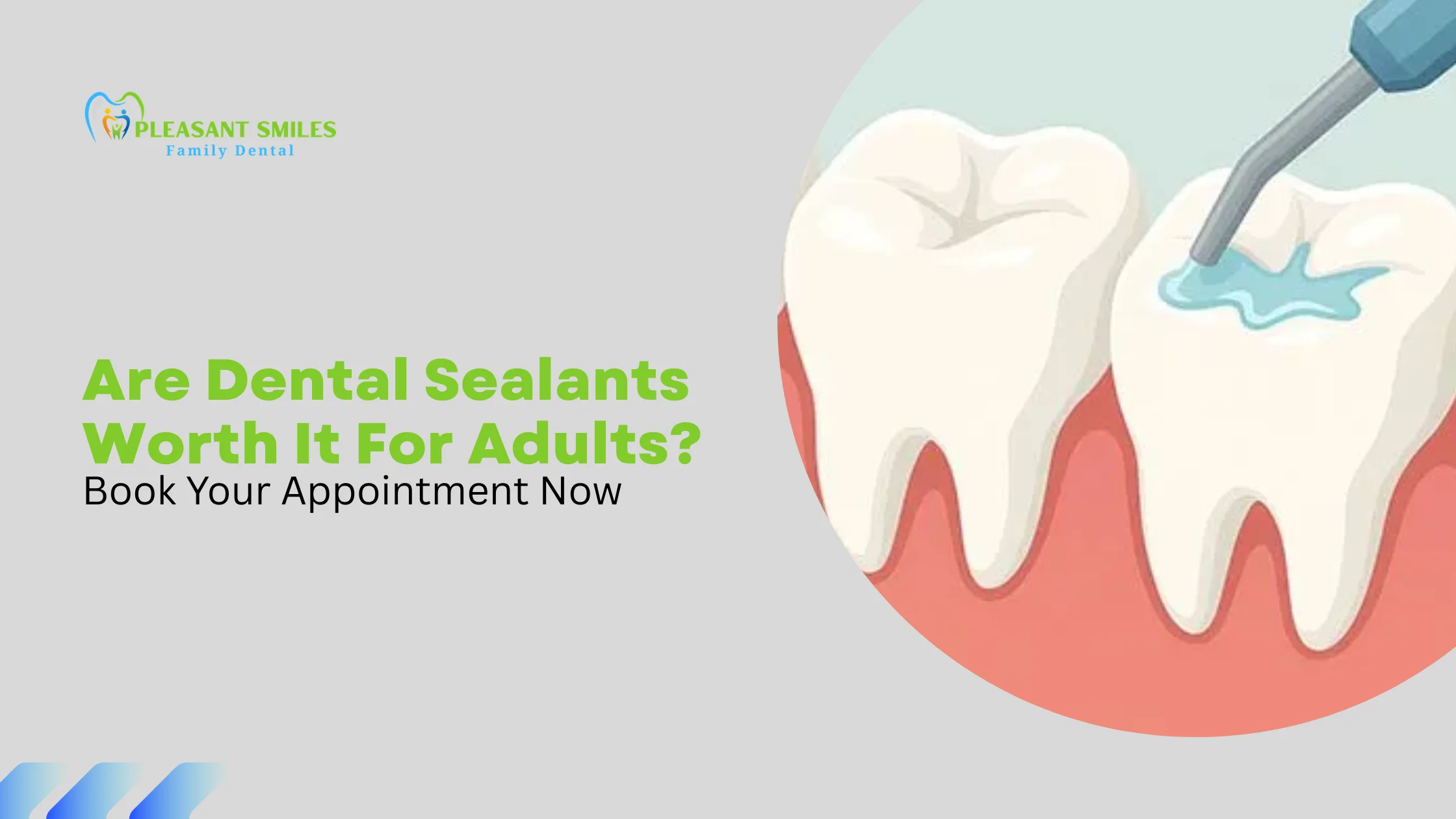
For early to moderate tooth decay, a tooth-colored composite filling is usually all that is needed. We clean out the decayed portion and seal the tooth with a resin material that blends naturally with the rest of your smile. Most fillings take under an hour and are completed in a single visit. Catching cavities early is what keeps them in this category rather than requiring a crown or worse.
Dental Crowns
Dental crowns are used to restore teeth that are cracked, weak, or badly damaged from decay. They cover the entire tooth to improve strength, function, and appearance. Using CEREC technology, crowns can often be created and placed in a single visit without the need for temporary crowns or multiple appointments.
Root Canal Therapy
When decay or a crack reaches the nerve inside the tooth, it creates an infection that will not clear up on its own. A root canal removes the infected tissue, cleans the canal, and seals the tooth permanently. The infection causing the pain is almost always more uncomfortable than the treatment itself. Saving the tooth this way is nearly always better than extracting it.
Tooth Extraction
Some teeth are genuinely beyond repair. If the decay, fracture, or bone loss around a tooth is too severe, extraction is the cleanest and healthiest path forward. We make sure you are completely comfortable throughout, and we discuss replacement options before you leave so there is no gap in your plan.
Dental Implants
Dental implants replace missing teeth by placing a strong titanium post into the jawbone. After healing, a custom crown is attached to restore the look and function of a natural tooth. Implants also help maintain jawbone strength and provide a long lasting solution for tooth loss.
Bridges and Dentures as Alternatives
Dental bridges and dentures are reliable options for replacing missing teeth when implants are not suitable. Bridges fill gaps by using nearby teeth for support, while partial or full dentures restore multiple missing teeth. Modern dentures are designed for a more natural look and comfortable fit.
Gum Disease Treatment
Gum disease treatment helps protect the gums, bone, and teeth from further damage. Deep cleaning procedures remove plaque and bacteria from below the gumline to support healing and improve gum health. In more advanced cases, additional periodontal treatment may be needed to manage bone loss and restore oral health.
Veneers and Dental Bonding
Veneers and dental bonding are cosmetic options used to improve the appearance of healthy, stable teeth. Veneers are thin porcelain shells placed on the front of teeth to correct shape, color, chips, and minor spacing concerns, usually completed over a few visits. Dental bonding is a quicker treatment that repairs small chips or gaps in a single appointment.
Professional Teeth Whitening
For patients whose main concern is staining, professional teeth whitening produces results that over-the-counter products simply cannot match. One important fact worth knowing: whitening agents work on natural tooth enamel only. They do not change the color of crowns, veneers, bridges, or fillings.
Full Mouth Rehabilitation
When the damage spans most of your teeth, what is needed is a coordinated treatment plan that addresses everything together. Full mouth rehabilitation combines restorative and cosmetic procedures in a logical sequence to rebuild your bite, your function, and your appearance from the ground up.
What If You Are Scared or Embarrassed to Come In?
Dental anxiety is one of the most common reasons people end up needing major work. Fear keeps them away, small problems grow into large ones, the large ones feel even more embarrassing to bring to a dentist, and the cycle continues.
We hear this from patients regularly. My response is always the same: whatever state your mouth is in, we have seen worse, and it does not change how we treat you. Our job is not to lecture you about what you should have done years ago. Our job is to figure out where you are today and build a path forward.
For patients with significant anxiety, we offer nitrous oxide sedation to help you stay comfortable during the appointment. You stay awake and can communicate with us, but the edge is taken off considerably. If you are unsure, come in for just a conversation first. Nothing has to happen at that visit.
Keeping Your Teeth Healthy After Treatment
Getting your teeth fixed is the hard part. Maintaining them comes down to a few consistent habits:
- Brush twice a day for two full minutes with a fluoride toothpaste
- Floss once daily, this removes buildup from between the teeth that a toothbrush physically cannot reach
- Limit sugary drinks, especially ones you sip over a long period, like sodas or sports drinks
- Come in for a professional cleaning and exam every six months
- If you grind your teeth at night, wear the night guard we fit for you, it is doing a real job
- Drink water through the day to help rinse the mouth and support saliva production
The six-month check-up is not just about cleaning. It is the window where we catch a developing cavity while it is still just a filling, not a crown. That single appointment difference saves time, money, and discomfort every time.
Conclusion
If you have been sitting on a dental problem, whether that is one painful tooth or years of neglect across your whole mouth, the best time to address it is now. Dental problems do not go away on their own. They grow. And the longer they grow, the more involved the treatment becomes.
At Pleasant Smiles Family Dental in Cheshire, CT, we see patients at every point on that spectrum. No matter where you are starting from, we will give you an honest picture of what is going on and a plan that works for your situation.
Call us at 860-426-0997 or book your appointment online. We are located at 1090 Meriden-Waterbury Turnpike, Suite 2, Cheshire, CT 06410. We accept most major insurance plans and handle the paperwork so you can focus on getting the care you need.
Best Way to Fix Bad Teeth FAQs
Can really bad teeth actually be fixed?
In most cases, yes. Even teeth that look like they are beyond saving can often be treated, restored, or replaced. Very few situations are truly hopeless with modern dental techniques. The only way to know what is possible for your specific situation is to come in for an evaluation and get an honest answer.
What is the best treatment for severely damaged teeth?
That depends entirely on the type and extent of the damage. A badly decayed tooth might be saved with a root canal and crown. A tooth that cannot be saved needs extraction followed by an implant or bridge. Widespread damage across many teeth may call for full mouth rehabilitation. There is no universal answer, only the right answer for your mouth specifically.
Does fixing bad teeth hurt?
Most procedures are performed under local anesthesia, so you should not feel pain while we are working. There is typically some tenderness for a day or two afterward, which is well managed with standard over-the-counter pain relievers. We also offer nitrous oxide sedation for patients who need additional comfort. What almost always hurts more is the untreated problem, not the treatment.
How long does it take to fix bad teeth?
It depends on what needs to be done. A single filling is one visit. A full mouth rehabilitation spans several months across multiple appointments. Once your exam is complete, we will give you a clear timeline before any treatment begins so you can plan accordingly.
How much does it cost to fix bad teeth?
Costs vary based on the treatment involved. We accept most major dental insurance plans and will review your benefits with you before we start. For anything not covered, we can walk through payment options. One thing is consistently true: treating dental problems early almost always costs significantly less than treating the same problem after it has worsened.
Can I fix my bad teeth without going to a dentist?
You can manage minor sensitivity with certain over-the-counter products and improve your home hygiene routine. But tooth decay, infection, gum disease, cracked teeth, and bone loss all require professional treatment. Home remedies do not stop these processes, they just delay the point at which you seek help, which typically means more extensive treatment when you do.