

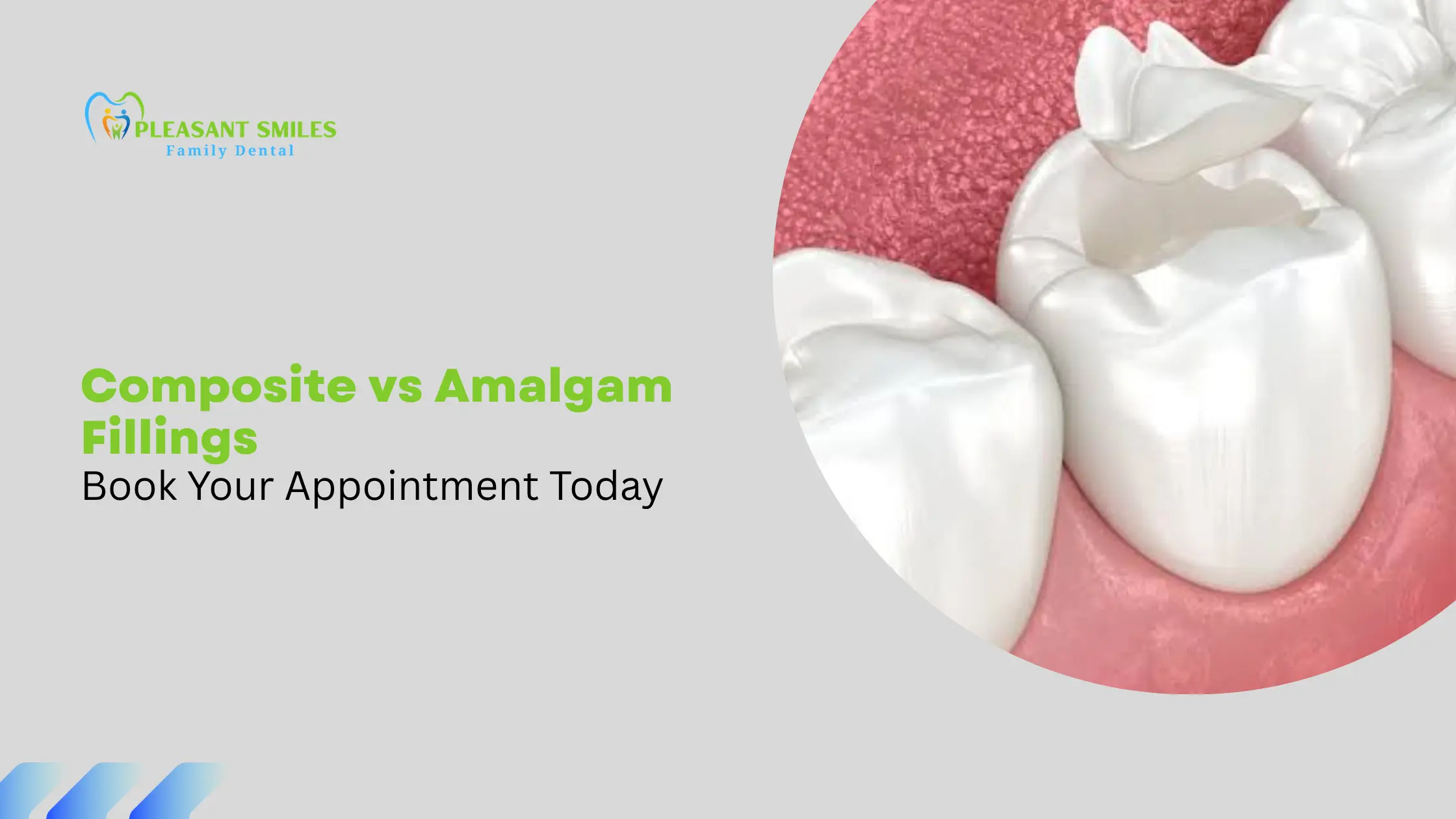
Composite vs Amalgam Fillings: Which is Right for You?

If you need a dental filling, you’ve probably started wondering about composite vs amalgam fillings and which one is right for your tooth. Composite fillings are tooth-colored and blend with your smile, while amalgam fillings are silver-colored and have a long history of use, especially in teeth that handle a lot of chewing.

The choice isn’t as simple as picking the filling that looks better. The size and location of the cavity, the amount of healthy tooth left, your bite, and the condition of the tooth all matter. Your dentist may recommend one material over the other based on these details.

Cost, appearance, durability, and concerns about amalgam can also affect your decision. Knowing how the 2 materials differ can help you ask better questions and feel more comfortable choosing a filling that fits your situation.

Quick Answer

Composite fillings are tooth-colored restorations made from a resin material reinforced with glass filler. The shade can be matched closely to your natural teeth, making composite a popular choice when appearance matters. Composite also bonds to tooth structure and often allows the dentist to preserve more healthy tooth structure during preparation.

Amalgam fillings are made from a mixture of metals that includes elemental mercury, silver, tin, and copper. They have been used in dentistry for more than 150 years and are particularly useful in some situations involving large restorations or heavy chewing forces.

Neither material is right for every cavity. Your dentist considers the tooth, the location and size of the decay, your bite, moisture control during treatment, your dental history, appearance preferences, and cost.

What is a Composite Filling?

A composite filling is a tooth-colored restorative material used to repair a tooth damaged by decay. Your dentist removes the damaged portion of the tooth, cleans the area, places the composite material, shapes it to fit the tooth, and hardens it with a curing light. 

The final restoration is then adjusted so your bite feels natural. The biggest appeal is easy to understand: composite can look like part of your natural tooth.

The material is available in different shades, so your dentist can select one that blends with the surrounding enamel. Composite also bonds to the tooth, which can allow for a more conservative preparation in many cases.

Composite does have limitations. It needs good moisture control during placement, and large restorations in teeth exposed to heavy chewing forces may require a different restorative approach.

What is an Amalgam Filling?

Amalgam is the material commonly called a “silver filling” because of its appearance. It contains elemental mercury mixed with an alloy made primarily from silver, tin, and copper. Amalgam has been used for generations and remains an accepted restorative material.

Amalgam is strong, wear-resistant, and relatively inexpensive. It can be useful when a tooth needs a large restoration or when keeping the treatment area completely dry is difficult. The main drawback patients notice is appearance. Amalgam doesn’t match natural tooth color, so it’s more visible when you smile or open your mouth.

Composite vs Amalgam Fillings: What’s the Difference?

Factor Composite fillings Amalgam fillings
Appearance Tooth-colored and can blend with natural teeth Silver-colored
Material Resin with glass filler Mercury combined with a metal alloy
Tooth preparation Often allows preservation of more healthy tooth structure Preparation may require a different cavity design
Strength Strong and suitable for many restorations Strong and wear-resistant
Large back-tooth fillings May be appropriate depending on the tooth and restoration Can be useful where chewing forces are high
Moisture control Requires good moisture control during placement More forgiving when moisture is difficult to control
Cost Usually costs more Generally less expensive
Cosmetic appearance Excellent Limited because of the silver color
Mercury Does not contain mercury Contains elemental mercury
Existing filling Can be repaired or replaced when clinically appropriate A healthy amalgam filling doesn’t automatically need replacement

The material is only part of the decision. The condition of the tooth matters just as much.

Which Filling Lasts Longer?

This question sounds simple, but the answer depends on the situation. Amalgam has a long history of durability, especially in teeth exposed to heavy chewing forces. Composite materials have improved substantially, and current evidence doesn’t support a simple rule that one material will always last longer than the other.

A systematic review comparing composite and amalgam restorations in permanent posterior teeth found no statistically significant difference in overall failure risk between the 2 materials. The researchers also noted that the studies used different definitions of failure and that other factors can influence the results.

Your filling’s lifespan can also be affected by:

  • The size and location of the filling
  • How much healthy tooth remains
  • Your bite
  • Grinding or clenching
  • Oral hygiene
  • Your risk of developing new decay
  • How well the restoration is maintained

So your dentist needs to look at the tooth rather than choosing a material based on longevity alone.

Which Filling Looks More Natural?

Composite fillings look more natural. A composite restoration can be color-matched to the surrounding tooth. Once polished, it can be difficult to notice when you’re talking or smiling.

Amalgam is silver-colored and remains visible in the mouth. That’s one reason composite is commonly considered when a cavity affects a front tooth or another highly visible area. The ADA lists resin-based composite as a tooth-colored restorative material, while amalgam is non-tooth-colored.

Is Composite Better for Front Teeth?

Composite is often a good option when appearance is important. Front teeth are visible whenever you smile, talk, or laugh. A silver-colored restoration can stand out, while a properly placed composite filling can blend with the tooth.

Your dentist still needs to consider the size and position of the restoration. A material that looks great isn’t automatically suitable for every clinical situation.

Is Amalgam Better for Back Teeth?

Amalgam can be useful for certain back-tooth restorations, particularly when the restoration is large or the tooth is exposed to substantial chewing forces.

The FDA specifically notes that amalgam can have advantages for large fillings in posterior teeth and in situations where moisture makes it difficult for resin-based materials to bond properly.

Composite can also be used for many molar restorations. The right choice depends on the condition of the tooth, the size of the cavity, the location, your bite, and other clinical factors.

Are Amalgam Fillings Safe?

It’s reasonable to have questions about amalgam because it contains mercury. The FDA says dental amalgam releases small amounts of mercury vapor, and it recommends that certain higher-risk groups consider non-amalgam alternatives when those materials are appropriate. 

These groups include children, pregnant or nursing women, people with certain neurological or kidney conditions, and people with known sensitivity to mercury or other amalgam components.

The FDA does not recommend removing an intact amalgam filling simply because it contains mercury. Removing a filling that is working properly can remove healthy tooth structure and temporarily increase mercury vapor exposure during the procedure.

If you already have an amalgam filling and you’re concerned about it, talk with your dentist before making a decision about replacement.

Should You Replace an Old Silver Filling?

An old amalgam filling doesn’t automatically need to come out. Your dentist may recommend replacing it if the filling is damaged, the tooth has new decay, the restoration has fractured, or there’s another clinical reason to treat the tooth.

The FDA recommends leaving an intact amalgam filling in place when there is no decay beneath it unless removal is medically necessary.

That distinction matters. Replacing a healthy filling means working on the tooth again. If the filling is doing its job, there’s usually no reason to remove it just because it looks old or silver.

Are Composite Fillings Worth the Extra Cost?

For many patients, the appearance alone makes composite worth considering. But cost isn’t the only factor.  Composite can preserve more healthy tooth structure during placement and provides a tooth-colored result. Amalgam is generally less expensive and has a long record of durability.

Your insurance coverage also matters. The actual price depends on the tooth, the size of the restoration, the material used, and your dental plan. At Pleasant Smiles Family Dental, you can ask about the expected cost before treatment so you know what you’re choosing and why.

Can You Get a Composite Filling on a Molar?

Yes, composite can be used on many molars.

Modern composite materials can provide strong restorations, but the size and location of the cavity matter. A small or moderate cavity may be a good candidate for composite, while a very large restoration exposed to heavy chewing forces may require a different option.

The ADA notes that resin composites are used for fillings, while amalgam has particular applications in posterior, high-load restorations. Your dentist can tell you whether a composite filling is a good fit after examining the tooth.

What Happens When You Get a Filling?

First, Dr. Vijitha Bandla examines the tooth and looks at what’s happening beneath the surface. X-rays may be recommended when they’re needed to assess decay or other concerns. Then you can talk through the treatment.

If a filling is appropriate, the decayed portion of the tooth is removed, the area is cleaned, and the selected material is placed and shaped. Composite is hardened with a curing light, then the restoration is adjusted so your bite feels comfortable.

The process is familiar to the Pleasant Smiles Family Dental team, but your appointment shouldn’t feel like you’re being rushed through a routine procedure.

The practice describes its approach as gentle, personalized, and focused on making dental care comfortable for families in Cheshire.

If you’re nervous about the treatment, say so. Knowing what worries you gives the dental team a chance to work with you.

Does Getting a Filling Hurt?

Most fillings are performed with local anesthesia when numbing is needed. How much sensation you feel depends on the depth of the cavity and the tooth being treated. A very shallow cavity may require little anesthetic, while deeper decay is more likely to need numbing for comfort.

You may notice pressure or vibration while the dentist works. You shouldn’t feel that you have to silently tolerate pain. Tell your dentist if something feels uncomfortable.

Pleasant Smiles Family Dental places a strong focus on comfortable dental care, particularly for children and families.

Composite vs Amalgam Fillings for Children

Children can receive different types of dental restorations depending on the tooth, the extent of decay, and other clinical factors.

Composite may appeal to parents because it matches the child’s natural tooth color. But the choice still needs to fit the tooth being treated.

The FDA recommends that certain higher-risk groups, including children younger than 6, consider alternatives to amalgam when possible and appropriate.

If your child needs a filling, ask the dentist why a particular material is being recommended. You’ll get a much clearer answer when the decision is based on your child’s actual tooth.

What If the Cavity is Too Large for a Filling?

Sometimes a cavity has damaged too much of the tooth for a traditional filling to provide enough support. In that situation, your dentist may recommend a crown or another type of restoration instead.

Pleasant Smiles Family Dental provides restorative dental care, including fillings and crowns, so the treatment can be based on how much healthy tooth structure remains. The sooner a cavity is treated, the more likely it is that a simpler restoration will be possible.

When Should You See a Dentist for a Filling?

A cavity doesn’t always hurt. You may notice sensitivity to cold or sweets, discomfort when chewing, a visible dark spot, a hole in the tooth, or food repeatedly getting caught in one area. Sometimes, though, you won’t notice anything at all.

That’s why regular dental exams matter. A dentist can identify decay before it becomes a larger problem. If you’ve been putting off a dental appointment because the tooth doesn’t hurt, it’s still worth getting it checked.

Composite vs Amalgam Fillings in Cheshire, CT

If you’re comparing composite vs amalgam fillings in Cheshire, CT, you don’t have to make the decision from a Google search alone.

Pleasant Smiles Family Dental serves patients and families throughout the Cheshire area with preventive, restorative, cosmetic, and emergency dental care. Dr. Vijitha Bandla and her team focus on gentle, personalized treatment in a comfortable setting.

During your appointment, you can ask:

  • Which filling material is appropriate for my tooth?
  • How much healthy tooth structure remains?
  • Would composite work for this cavity?
  • Would amalgam offer an advantage here?
  • How long should I expect the restoration to last?
  • What will my insurance cover?
  • What happens if the cavity is too large for a filling?

Pleasant Smiles Family Dental is located at 1090 Meriden-Waterbury Turnpike, Suite 2, Cheshire, CT 06410. Call 860 426 0997 to schedule an appointment or discuss your filling options.

Frequently Asked Questions

1. What is the difference between composite and amalgam fillings?

Composite fillings are tooth-colored restorations made from resin and glass filler. Amalgam is a metal alloy that contains elemental mercury along with silver, tin, and copper. Composite provides a more natural appearance, while amalgam has a long history of strength and durability, particularly in certain back-tooth restorations.

2. Are composite fillings better than silver fillings?

The better material depends on the tooth and the restoration. Composite is usually preferred when a natural appearance is important. Amalgam can be useful for certain large restorations and areas exposed to heavy chewing forces.

3. Are silver amalgam fillings safe?

Dental amalgam remains an accepted restorative material. The FDA does recommend that certain higher-risk groups consider non-amalgam alternatives when appropriate. If you already have an intact amalgam filling, the FDA does not recommend removing it simply because it contains mercury.

4. Can you put a composite filling on a back tooth?

Yes. Composite can be used for many molar and premolar restorations. The size of the cavity, the chewing forces on the tooth, moisture control, and the remaining tooth structure all affect whether composite is appropriate.

5. Where can I get composite or amalgam fillings in Cheshire, CT?

Pleasant Smiles Family Dental provides restorative dental care for patients in Cheshire, CT. The office is located at 1090 Meriden-Waterbury Turnpike, Suite 2. Call 860 426 0997 to schedule an evaluation and discuss your filling options.
Fluoride Treatment for Sensitive Teeth in Cheshire, CT

That quick, sharp zing when you take a sip of something cold or bite into ice cream can make eating and drinking uncomfortable. Tooth sensitivity is common, and there are several reasons your teeth might suddenly react to cold, hot, sweet, or acidic foods.

One treatment your dentist may recommend is a fluoride treatment for sensitive teeth. Fluoride can help strengthen the tooth surface and reduce the sensitivity that comes from exposed or weakened areas of the tooth.

At Pleasant Smiles Family Dental, we’ll first look at what’s causing your sensitivity before recommending treatment. In this guide, we’ll explain why sensitive teeth happen, how fluoride can help, and when you may need another type of dental treatment.

Quick Answer

A fluoride treatment for sensitive teeth is a quick, painless coating of concentrated fluoride that a dentist paints or places on your teeth. It works by sealing the tiny open channels in your teeth that let hot, cold, and sweet reach the nerve, and by making the enamel stronger. Most people feel relief within a few days, and the treatment takes just a few minutes in the dental chair.

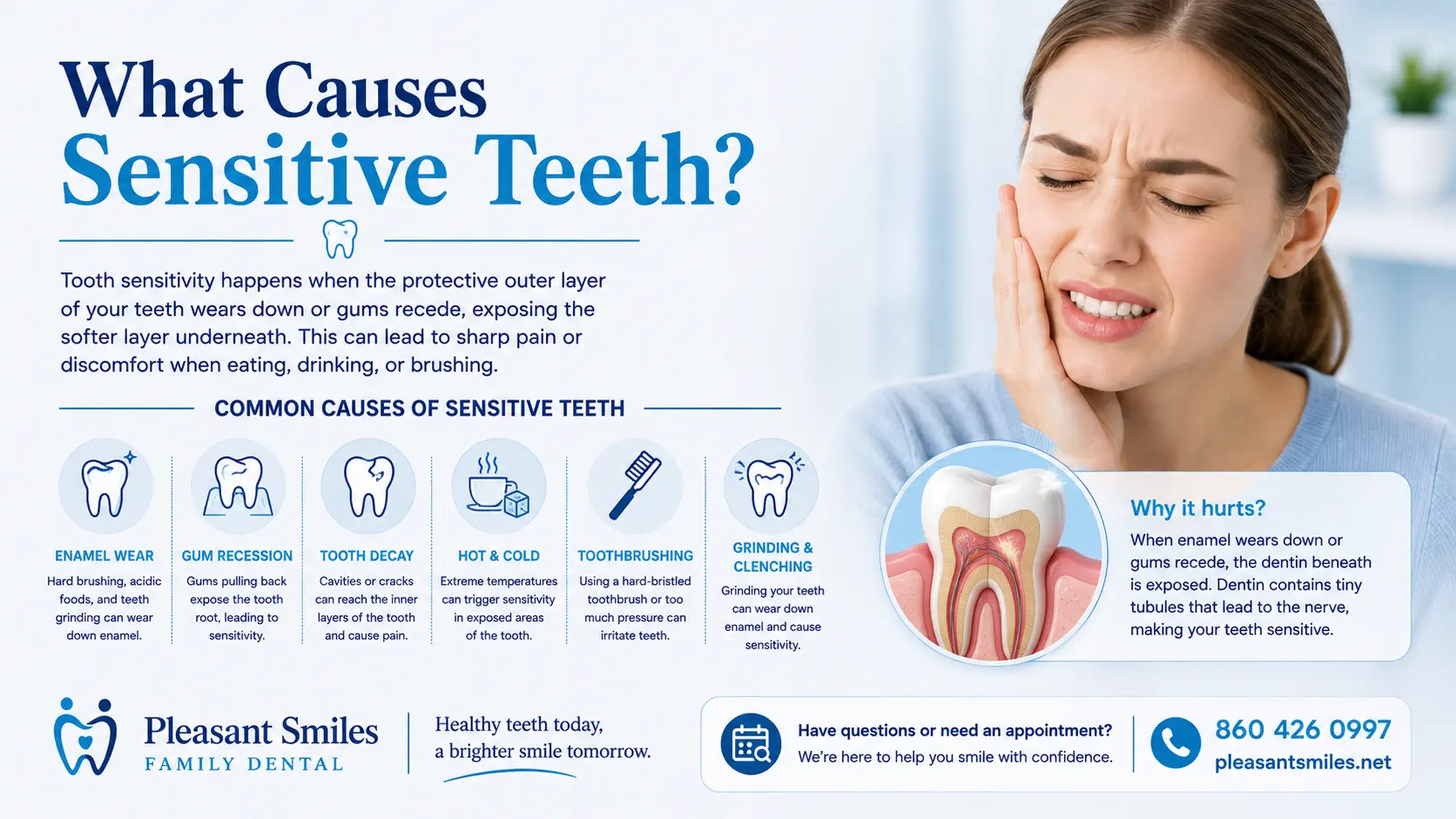
What Causes Sensitive Teeth?

What Causes Sensitive Teeth?

If your teeth hurt when you drink something cold or eat something sweet, you’re far from alone. One U.S. study found that about 1 in 8 adults had tooth sensitivity. It tends to be more common in adults between 18 and 44, women, and people with receding gums.

To understand why your teeth become sensitive, it helps to look at what’s underneath the surface. Enamel is the hard outer layer of your tooth. Underneath it is dentin, a softer layer filled with tiny tubes that connect toward the nerve inside the tooth.

When enamel wears down, or your gums recede and expose the tooth root, those tiny tubes can become exposed. Cold drinks, hot foods, sweets, or even a breath of cold air can trigger the nerve and cause that quick, sharp pain. Dentists call this dentin hypersensitivity.

Common causes include:

  • Receding gums, often related to gum disease or brushing too hard
  • Worn enamel from frequent exposure to acidic foods and drinks
  • Teeth grinding or clenching, which can wear down the tooth surface
  • A cracked or chipped tooth
  • Recent teeth whitening or dental treatment, which can cause temporary sensitivity

How Does Fluoride Treatment Help Sensitive Teeth?

The basic idea is pretty simple. When your dentist applies concentrated fluoride to a sensitive tooth, it helps block the tiny tubes in the dentin that can send hot, cold, or sweet sensations toward the nerve.

With those tubes covered, outside triggers have a harder time reaching the nerve, which can reduce that sudden sharp pain. Fluoride also helps strengthen the tooth surface, giving your enamel extra protection against acid and cavities.

One treatment dentists commonly use is 5% sodium fluoride varnish. It has been used for treating tooth sensitivity for many years and is a well-established option when sensitive teeth are causing discomfort.

Fluoride Varnish vs Fluoride Gel Treatment for Sensitive Teeth

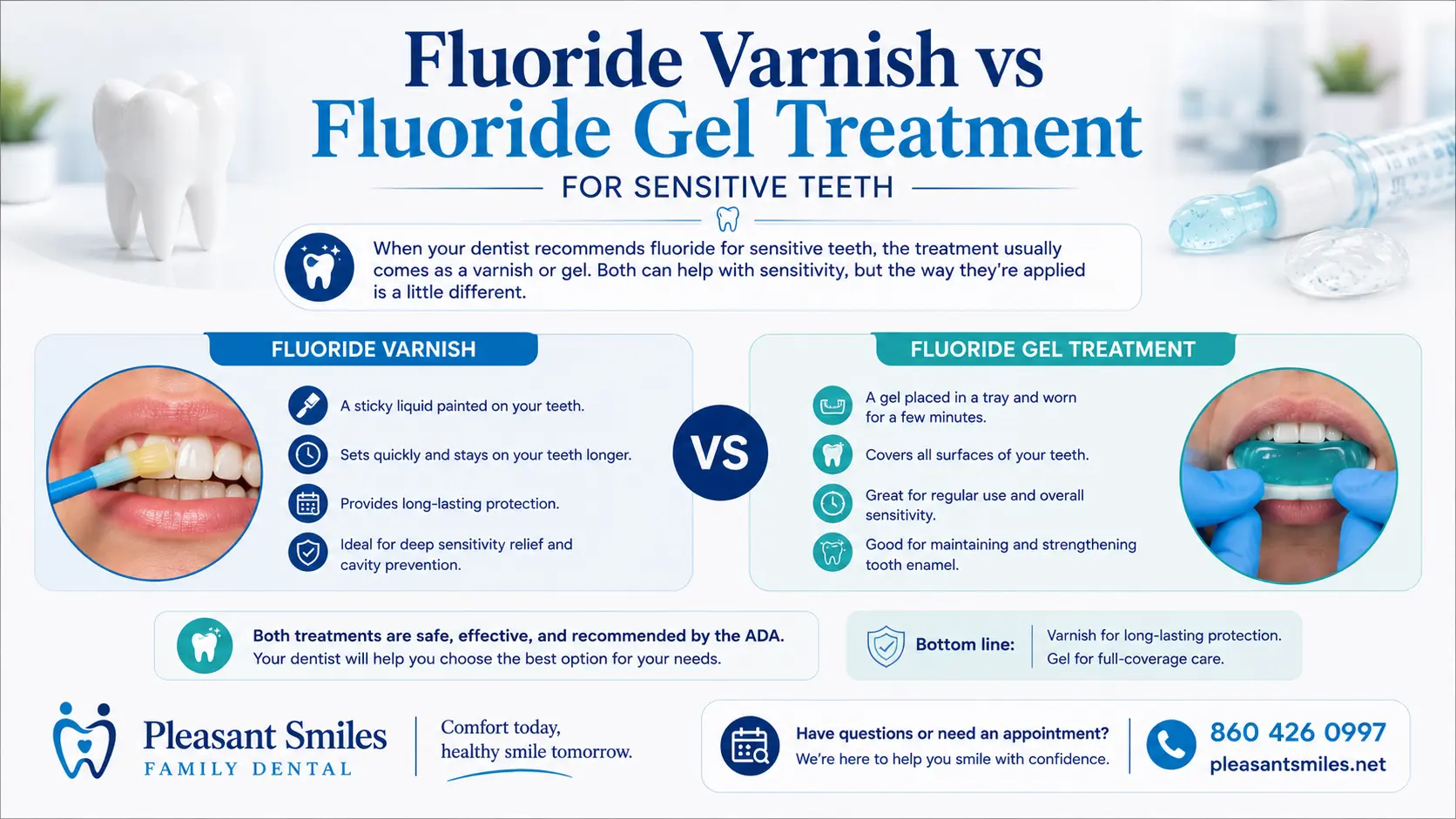
When your dentist recommends fluoride for sensitive teeth, the treatment usually comes as a varnish or gel. Both can help with sensitivity, but the way they’re applied is a little different.

Fluoride Varnish vs Fluoride Gel Treatment for Sensitive Teeth

Fluoride varnish Fluoride gel
How it’s applied Painted directly onto the teeth Placed in a tray you bite into
How long it stays on Sets within minutes and keeps working for hours Usually stays in place for about 4 minutes
Best for Specific areas, such as exposed roots and gumlines Covering several teeth at once
How much is swallowed Very little Slightly more
Applied to wet teeth? Yes Teeth are usually dried first

Research comparing the 2 treatments has found that fluoride varnish can work as well as, and sometimes better than, fluoride gel for reducing tooth sensitivity.

Varnish also stays where your dentist puts it and continues releasing fluoride for several hours. That makes it a practical choice when sensitivity is coming from specific areas along the roots or gumline.

What to Expect at Your Visit

A professional fluoride treatment is one of the easiest appointments you will ever have. Here is how it goes:

  1. We gently clean and dry the teeth we are treating.
  2. We paint on the varnish or place the gel. This takes only a couple of minutes.
  3. You avoid hot drinks, crunchy foods, and brushing for a few hours so the fluoride can do its work.

That is it. There are no shots and no drilling, and you can drive yourself home and get right back to your day.

How Fast Will You Feel Relief?

How quickly you notice a difference depends on the type of fluoride treatment you use.

  • In-office varnish or gel: These treatments contain a much higher concentration of fluoride than products you use at home. Many people notice less sensitivity within a day or 2, while the full effect can build over the following week.
  • Sensitive-teeth toothpaste: This usually takes longer. You may need to brush with it twice a day for 2 to 4 weeks before the sensitivity starts to feel noticeably better. Give it some time and use it consistently.

Your daily habits can affect how quickly your teeth settle down, too. Frequent acidic foods and drinks, brushing too hard with a stiff-bristled toothbrush, and grinding your teeth at night can continue to wear down the enamel.

If you grind your teeth, ask us whether a night guard might help. And if your sensitivity hasn’t improved after about a month of consistent care, give us a call. A cavity, cracked tooth, or another dental problem could be causing the pain and may need a closer look.

Best Fluoride Treatment for Sensitive Teeth: In-Office and At-Home

People often ask us, What’s the best fluoride treatment for sensitive teeth? The answer depends on what’s causing your sensitivity and how severe it is. For many patients, the best approach is professional fluoride treatment along with good care at home.

At Pleasant Smiles Family Dental, we can apply a high-strength fluoride varnish or gel during your visit. These treatments contain much more fluoride than the products you can buy at a store. For patients with ongoing sensitivity, professional fluoride treatment may be recommended every 3 to 6 months.

Between visits, a few simple habits can help:

  • Use toothpaste for sensitive teeth: Many contain potassium nitrate, which can help calm the nerve and reduce sensitivity. Look for products with the ADA Seal of Acceptance.
  • Ask about prescription fluoride toothpaste: If regular sensitive-teeth toothpaste isn’t doing enough, we may recommend a higher-fluoride toothpaste.
  • Use a soft-bristled toothbrush: Brush gently, especially around the gumline, to avoid wearing down enamel or irritating your gums.
  • Limit acidic foods and drinks: Soda, citrus, and wine can wear away enamel over time, which can make sensitivity worse.

What If Fluoride is Not Enough?

Fluoride can help with many cases of tooth sensitivity, but sometimes there’s another problem behind the pain. If your sensitivity continues, we may recommend a different treatment based on what we find during your exam.

  • Desensitizing toothpaste with potassium nitrate: This can help calm the nerve inside the tooth and can be used along with fluoride treatment.
  • Bonding or a sealant: If an exposed or worn tooth root is causing the sensitivity, we can cover the area with a thin, tooth-colored material to help protect it.
  • A gum graft: When gum recession has exposed the root, a small gum graft can cover the area and provide longer-term protection.
  • A root canal: This is generally considered when one tooth has severe, persistent pain that hasn’t improved with other treatments.

The right treatment depends on what’s causing your sensitivity. An exam helps us find the cause and choose the treatment that makes sense for your tooth.

Is Fluoride Treatment Safe?

Yes. Professional fluoride treatments have been used safely for decades and are recommended by the American Dental Association. The amount used during a dental treatment is carefully controlled, and fluoride varnish hardens quickly on the tooth, so very little ends up in your mouth.

Fluoride treatment is safe for both adults and children when it’s used as directed. More fluoride isn’t better, which is why having it applied by your dental team is the best way to get the right amount.

You may have heard of fluorosis, which can cause faint white spots on developing permanent teeth. It happens when young children swallow too much fluoride while their adult teeth are still forming, generally from birth through about age 8. It isn’t a concern for adults or older children whose permanent teeth have already come in.

For young children, using the right amount of toothpaste matters. Children under 3 should use a smear about the size of a grain of rice. From ages 3 to 6, a pea-sized amount is enough. If you’re unsure how much that looks like, we’re always happy to show you.

When to See a Dentist About Sensitive Teeth

A little sensitivity once in a while can happen. But if it keeps coming back or starts getting worse, it’s a good idea to have it checked.

Make an appointment if you notice:

  • Pain that lasts more than a few days or keeps getting worse
  • Sensitivity in only one tooth, which can be a sign of a cavity or crack
  • Pain when you bite down, even when you’re not eating something hot or cold
  • Gums that are receding or bleeding
  • Sensitivity that doesn’t improve after using toothpaste for sensitive teeth

These symptoms can sometimes point to a cavity, cracked tooth, or gum disease. Finding the cause early can make treatment simpler and help prevent the problem from getting worse.

Best Fluoride Treatment for Sensitive Teeth in Cheshire

If cold drinks or sweets make you wince, we can help. At Pleasant Smiles Family Dental, we provide fluoride treatments and preventive dental care for families in Cheshire, CT.

We’ll first find out what’s causing your sensitivity. From there, we can recommend a treatment plan that may include an in-office fluoride treatment along with simple steps you can follow at home.

Fluoride treatment is one of the more affordable services we provide, and many dental plans cover it as preventive care. We’ll review your coverage with you before treatment so you know what to expect.

Final Thoughts

Sensitive teeth can take some of the enjoyment out of your morning coffee or a scoop of ice cream. You don’t have to put up with that sharp zing every time you eat or drink something you love.

A fluoride treatment for sensitive teeth is a quick, well-established option that can help reduce sensitivity while strengthening the tooth surface. Using toothpaste for sensitive teeth and brushing gently at home can help, too.

If you’re in Cheshire and that sharp pain keeps coming back, come see us at Pleasant Smiles Family Dental. We’ll look for the cause and help you find a treatment that gets you back to eating and drinking comfortably.

Frequently Asked Questions

1. Does fluoride treatment help sensitive teeth?

Yes. Fluoride can help block the tiny openings in dentin that allow hot, cold, and sweet foods and drinks to trigger the nerve. It also helps strengthen the tooth surface. Many people notice less sensitivity within a few days of professional treatment.

2. How long does a fluoride treatment for sensitive teeth last?

Relief can last for several months, depending on what’s causing the sensitivity. For ongoing sensitivity, your dentist may recommend professional fluoride treatments every 3 to 6 months along with toothpaste made for sensitive teeth.

3. How fast does fluoride treatment work on sensitive teeth?

Many people notice less sensitivity within a few days. If the sensitivity is deeper or has been around for a long time, you may need more than one treatment along with care at home.

4. How soon does fluoride treatment work for sensitive teeth?

An in-office fluoride varnish may start easing sensitivity within a day or 2, with the full effect developing over the following week. Toothpaste for sensitive teeth usually takes longer and may require 2 to 4 weeks of twice-daily use.

5. Can fluoride treatment cause fluorosis?

Professional fluoride treatments aren’t expected to cause fluorosis when used as directed. Dental fluorosis can occur when young children swallow too much fluoride while their permanent teeth are developing. It isn’t a concern for adults whose permanent teeth have already formed.

6. My teeth got sensitive after a filling or crown. Can fluoride help?

It can, especially when the sensitivity is mild and related to the recent dental work. Some sensitivity after a filling or crown can settle on its own, and fluoride may help reduce the discomfort. If the sensitivity continues for more than a few weeks, let us know so we can check the tooth and make sure there isn’t another cause.

Tooth Root Canal vs Extraction: Which Treatment is Right for You?

Finding out that a tooth is badly damaged can feel overwhelming. One minute you’re expecting a routine dental visit, and the next you’re choosing between saving the tooth or having it removed. It’s a decision that raises plenty of questions, and that’s completely normal.

In many cases, dentists recommend saving a natural tooth whenever it’s possible. A healthy natural tooth helps you chew comfortably, supports the surrounding teeth, and often prevents the need for more extensive treatment later. There are times, though, when removing a tooth is the better option, especially if the damage is too severe to repair or the tooth can’t be restored safely.

The right choice depends on several factors, including the condition of the tooth, your overall oral health, and your long-term goals.

This guide walks you through both treatments in clear, simple language. You’ll learn how they compare in terms of the procedure itself, recovery, long-term results, and overall cost, so you can better understand your dentist’s recommendation and feel confident about the next step in your care.

Quick Answer: Tooth Root Canal or Extraction?

Tooth Root Canal: A root canal is the preferred treatment when the tooth can be saved. It removes the infection while preserving your natural tooth, which helps maintain normal chewing, supports nearby teeth, and often avoids more complex treatment later. An extraction becomes the better choice when the tooth is too badly damaged, has extensive decay, or can’t be restored safely.

Tooth Extraction: Removing a tooth may cost less on the day of treatment, but replacing it with a dental implant, bridge, or denture often makes it the more expensive option over time. That’s why dentists and the American Association of Endodontists recommend saving a natural tooth whenever it’s a healthy, predictable option.

What is a Root Canal?

What is a Root Canal?

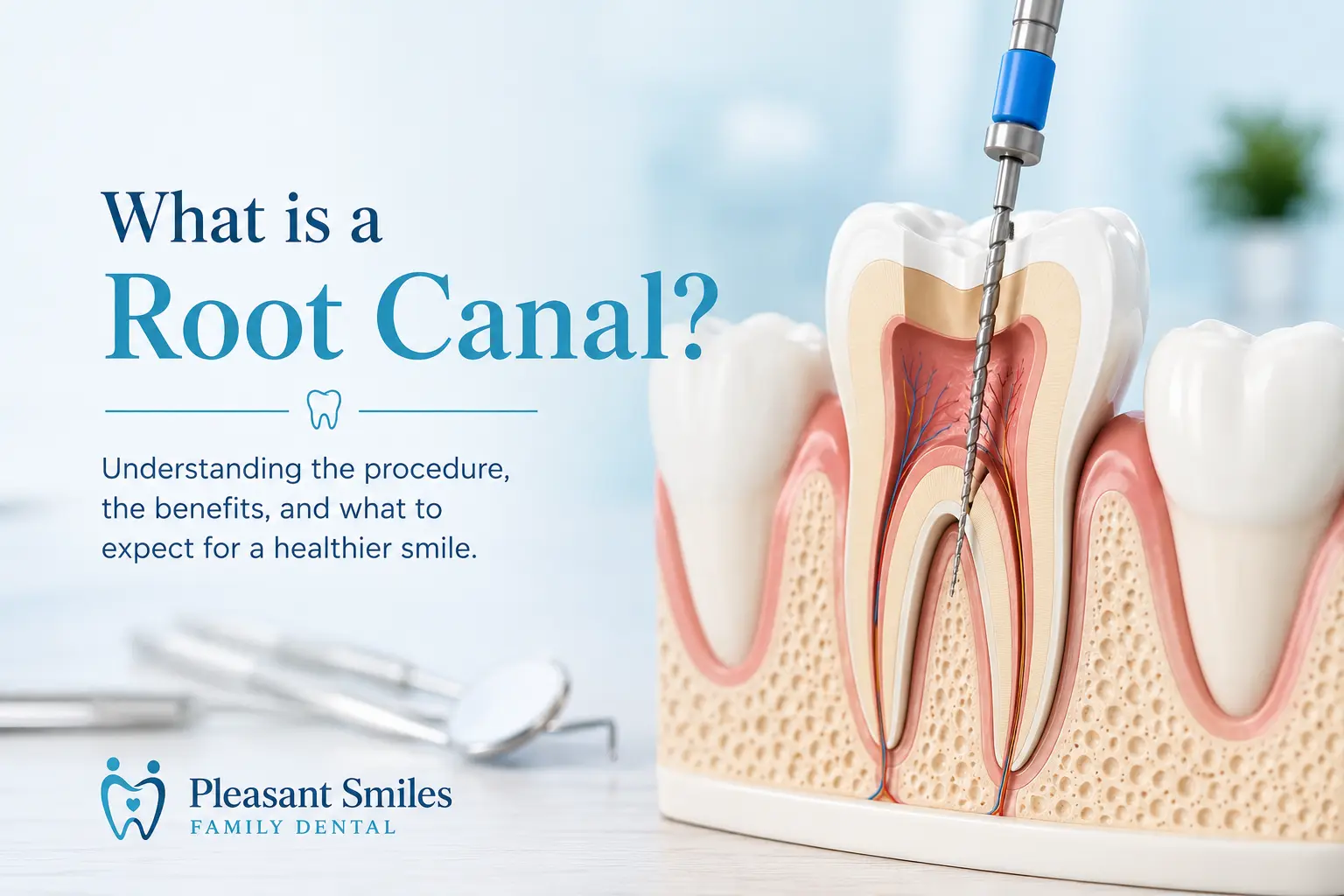
A root canal is a treatment that saves a tooth damaged by deep decay, infection, or injury. Instead of removing the tooth, your dentist cleans out the infected tissue inside the tooth, disinfects the root canals, and seals them to help prevent future infection. The natural tooth stays in place, allowing you to keep your normal bite and smile.

What happens during a root canal?

During your visit, your dentist will:

  • Numb the area with a local anesthetic.
  • Place a protective barrier around the tooth to keep it clean and dry.
  • Make a small opening to reach the infected pulp.
  • Remove the damaged tissue and clean the root canals.
  • Seal the canals with a biocompatible filling material.
  • Place a temporary filling or recommend a dental crown to protect the tooth, if needed.

How long does a root canal take?

Most root canals are completed in one or two visits. Front teeth are often quicker to treat because they have fewer canals, while molars usually take longer due to their more complex root structure.

Does a root canal hurt?

A root canal has a reputation for being painful, but modern treatment is very different. With today’s local anesthetics and advanced dental techniques, most patients say it feels similar to getting a dental filling. According to the AAE, patients who have a root canal are six times more likely to describe the procedure as painless than those who have a tooth extracted.

What is Tooth Extraction?

What is Tooth Extraction?

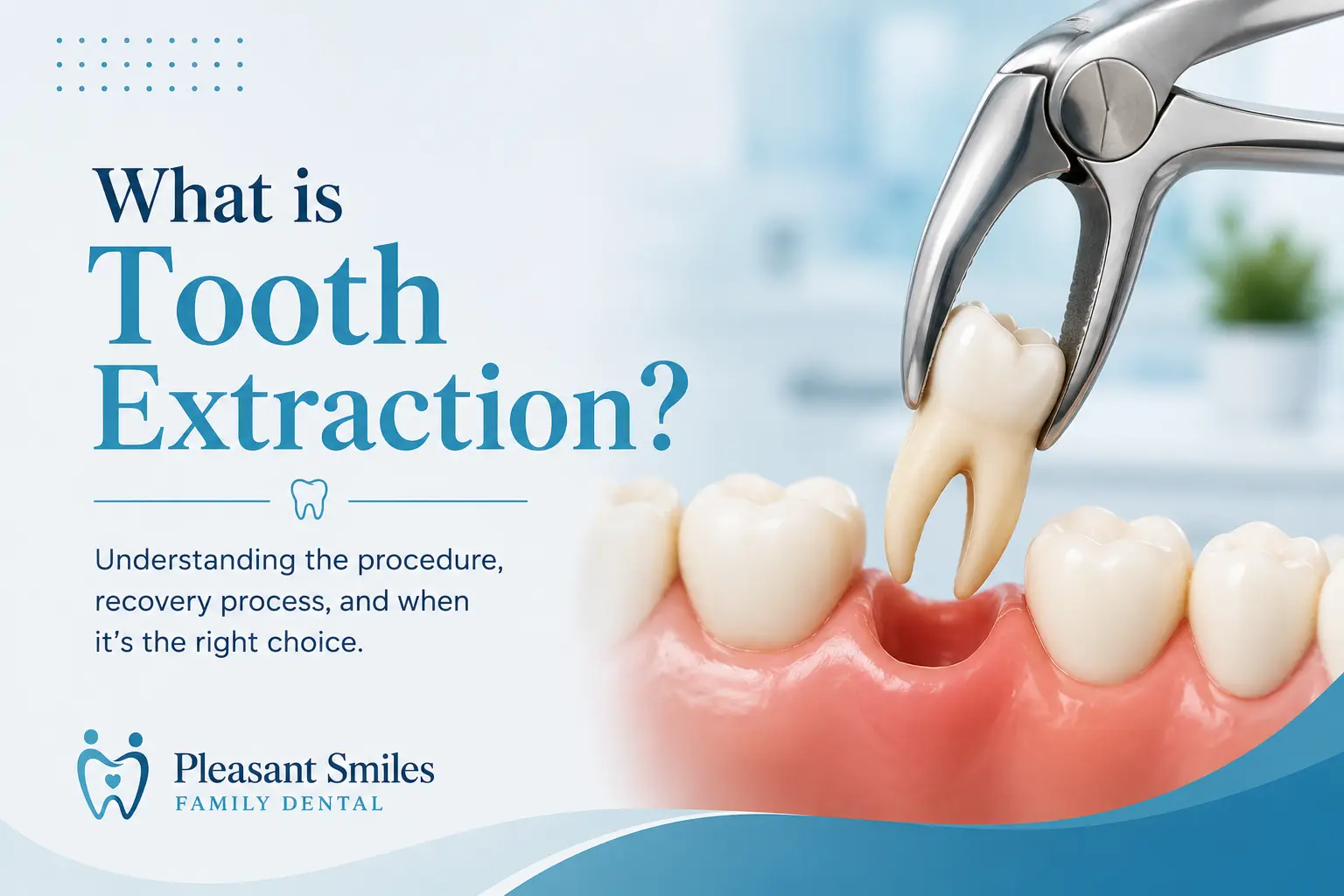
A tooth extraction is a procedure that removes a tooth from its socket in the jawbone. Dentists recommend an extraction when a tooth is too badly damaged by decay, infection, injury, or gum disease to be saved with other treatments. After the tooth is removed, the area begins to heal, and your dentist will discuss whether the missing tooth should be replaced with a dental implant, bridge, or partial denture.

Types of tooth extraction

There are two main types of tooth extractions:

  • Simple extraction: Performed when the tooth is fully visible above the gumline. Your dentist gently loosens the tooth and removes it using specialized dental instruments.
  • Surgical extraction: Needed when the tooth is broken, impacted, or difficult to reach. A small incision is made in the gum, and in some cases, the tooth is removed in sections to make the procedure easier and more comfortable.

What to expect after an extraction

A blood clot forms in the empty socket soon after the tooth is removed. Protecting this clot is an important part of healing, so your dentist will recommend avoiding smoking, drinking through a straw, or vigorous rinsing during the first 24 hours. Most people can return to their normal routine within 2 to 3 days, although complete healing of the bone takes longer, especially after a molar extraction.

Root Canal vs Tooth Extraction: How They Compare

Both treatments can relieve tooth pain and treat an infection, but they do it in different ways. A root canal saves your natural tooth, while an extraction removes it completely. Here’s how they compare.

Factor Root canal Tooth extraction
Natural tooth Preserved Removed
Purpose Treats infection while saving the tooth Removes a tooth that can’t be repaired
Treatment time Usually 1 to 2 visits One visit for the extraction, with additional visits if the tooth is replaced
Recovery Most people feel better within a day or two Normal activities often resume in 2 to 3 days, but healing continues for several weeks
Long-term cost Often lower if the tooth can be saved Can be higher if you choose a dental implant, bridge, or denture
Effect on your smile Keeps your natural bite and appearance Missing teeth may affect your bite unless they’re replaced

Root Canal vs Extraction Pros and Cons

Pros and Cons of a Root Canal

Pros

  • Keep your natural tooth.
  • Preserves the jawbone at that site.
  • Protects your bite and adjacent teeth from shifting.
  • Cheaper long-term than extraction plus implant in most cases.
  • High survival rate at 10 years, per long-term clinical studies.
  • Usually done in one or two visits.
  • No visible gap in your smile.

Cons

  • Higher upfront cost than extraction.
  • Almost always needs a crown afterward.
  • The tooth becomes slightly more brittle over time.
  • Small risk of re-infection that requires retreatment.
  • Off the table when the tooth is cracked below the gumline.

Pros and Cons of a Tooth Extraction

Pros

  • Lower upfront cost.
  • Removes the infection source completely.
  • Fast procedure.
  • The right call when the tooth truly can’t be saved.

Cons

  • Permanent loss of your natural tooth.
  • Bone loss starts at the site within the first year.
  • Adjacent teeth drift; opposing teeth over-erupt.
  • Replacement costs (implant, bridge, denture) add up.
  • Speech and chewing can change.
  • Cosmetic impact for visible teeth.
  • Longer recovery than a root canal.

Tooth Extraction vs Root Canal Pain: Which Hurts More?

Many people worry that a root canal will be more painful than having a tooth removed. The reality is that both procedures are performed under local anaesthesia, so you should remain comfortable during treatment. The biggest difference is what happens after you leave the dental office.

During the Procedure

Whether you need a root canal or an extraction, your dentist will numb the area before starting. You may notice some pressure, but you shouldn’t feel sharp pain. If you do, your dentist can give you more anesthetic to keep you comfortable.

After the Procedure

A root canal usually causes mild soreness for a day or two, and many patients return to their normal routine the next day. An extraction often requires a little more recovery because the empty socket needs time to heal. Some swelling, tenderness, and minor discomfort are normal for the first few days, especially after a surgical extraction.

Which Treatment is More Comfortable?

If your tooth can be saved, a root canal is often the more comfortable option overall. The AAE reports that patients who have a root canal are six times more likely to describe the procedure as painless than those who have a tooth extracted.

Anaesthesia and Sedation Options

Whether you’re having a root canal or a tooth extraction, your comfort comes first. Your dentist will recommend the most appropriate anaesthesia or sedation option based on your treatment, medical history, and comfort level.

  • Local anaesthesia: The most common option for both root canals and tooth extractions. It numbs the tooth and surrounding area, so you stay comfortable while remaining fully awake.
  • Nitrous oxide: Helps you feel relaxed during your appointment while remaining awake. The effects wear off quickly after treatment.
  • Oral sedation: A prescription medication taken before your visit to help reduce anxiety. Because it can make you drowsy, you’ll need someone to drive you home.
  • IV sedation: Provides a deeper level of relaxation for patients with significant dental anxiety or more complex procedures. You’ll be monitored throughout treatment and will need a ride home afterward.
  • General anaesthesia: Rarely needed for a root canal or routine tooth extraction. It may be recommended only for certain surgical procedures or specific medical conditions.

Root canal vs Extraction Cost: What Affects the Price?

The cost of treatment depends on more than the procedure itself. The condition of your tooth, the type of treatment you need, and whether additional care is required can all affect the final cost.

What affects the cost of a root canal?

  • The location of the tooth. Molars usually cost more because they have more root canals to treat.
  • Whether treatment is performed by a general dentist or an endodontist.
  • Whether the tooth needs a dental crown after the root canal.
  • Whether it’s a first-time root canal or a retreatment of a previously treated tooth.

What affects the cost of a tooth extraction?

  • Whether it’s a simple or surgical extraction.
  • Whether the tooth is impacted or difficult to remove.
  • The type of anesthesia or sedation used during the procedure.
  • Whether you’ll need a bone graft before a future dental implant.
  • Whether you choose to replace the missing tooth with a dental implant, bridge, or partial denture.

When comparing your options, look beyond the cost of the procedure alone. A root canal is often followed by a crown, while an extraction may be followed by a dental implant, bridge, or denture. Comparing the complete treatment plan gives you a much clearer picture of the long-term cost.

If you have dental insurance, your benefits may help cover part of the treatment. Before making a decision, ask your dental office for a written treatment estimate and check your insurance coverage so you know exactly what to expect.

When Should You Choose a Root Canal?

Your dentist will suggest a root canal when:

  • The decay has reached the pulp (nerve).
  • You’ve had repeated dental work on the same tooth.
  • The tooth is cracked but the roots are intact.
  • You have lingering hot or cold sensitivity that lasts more than 30 seconds.
  • You feel spontaneous pain, especially at night.
  • The gums near one specific tooth are swollen or tender.
  • The tooth has darkened, a sign the pulp has died.
  • An abscess shows on the x-ray and the tooth is still restorable.

When Should You Choose an Extraction?

Extraction is the right call when:

  • The tooth is cracked below the gumline (vertical root fracture).
  • Advanced periodontal disease has destroyed the bone support.
  • Too little tooth structure remains to hold a crown.
  • A previous root canal has failed and can’t be retreated.
  • The tooth is an impacted wisdom tooth causing problems.
  • Orthodontic planning needs space that the tooth is taking up.

If your case matches one of those, extraction plus a solid replacement plan wins.

Does the Type of Tooth Change the Decision?

Yes. The best treatment often depends on which tooth is affected and how much damage it has. Here’s what dentists typically recommend for different situations.

Cracked Tooth

A cracked tooth isn’t always a lost cause. Small surface cracks may not need treatment at all, while deeper cracks can often be repaired with a root canal and a dental crown. If the crack extends below the gumline or splits the tooth in two, removing the tooth may be the only option. A thorough examination, and sometimes 3D imaging, helps determine whether the tooth can be saved.

Second Molar

Your second molars do most of the heavy chewing, so keeping them whenever possible is usually the best choice. If the tooth can be restored, a root canal followed by a crown often provides the best long-term result. Extraction is generally recommended only when the tooth is too badly damaged to repair.

Wisdom Tooth

Wisdom teeth are different because they don’t always play an important role in chewing. If a wisdom tooth is impacted, difficult to clean, or severely damaged, extraction is often the recommended treatment. A root canal may still be an option for a healthy, fully erupted wisdom tooth that’s functional and easy to restore.

Baby Tooth

Even though baby teeth eventually fall out, they help guide permanent teeth into the correct position. When possible, dentists try to save an infected baby tooth rather than remove it too early. Extraction is usually considered only when the tooth is close to falling out naturally or can’t be restored.

Front Tooth

Saving a front tooth is often the preferred choice because it helps preserve your natural smile. A root canal can remove the infection while keeping the tooth in place, and a crown may be recommended to restore its strength and appearance. If the tooth must be removed, your dentist will discuss replacement options to restore both function and aesthetics.

What to Expect During Recovery

Root Canal Recovery

  • Day 1: numbness wears off within a few hours. Mild ache. Ibuprofen handles it.
  • Day 2 to 3: chew on the opposite side. Soreness fades.
  • Day 4 to 7: back to normal. Temporary filling still in place.
  • Week 2 to 3: permanent crown placed. Treatment done.

Tooth Extraction Recovery

  • Day 1: bite on gauze for about 30 to 45 minutes. Ice pack in cycles. Soft foods only. No straws, no smoking.
  • Day 2 to 3: swelling peaks. Day 3 is usually the worst for pain, per Cleveland Clinic. Salt-water rinses begin (gentle).
  • Day 4 to 7: soft tissue closes. Stitches out if used.
  • Week 2: back to normal activity. Bone still healing underneath.
  • Months later: bone remodeling continues. If an implant is planned, timing depends on your dentist’s protocol.

How We Help You Make the Right Decision

At Pleasant Smiles Family Dental, our goal is to help you make the best choice for your long-term oral health. Whenever a tooth can be saved safely and predictably, we’ll recommend treatment that preserves your natural tooth. If an extraction is the better option, we’ll explain why and discuss the most appropriate replacement options for your smile.

During your visit, we’ll carefully examine your tooth, review digital imaging, and answer all of your questions before recommending a treatment plan. We also offer same-day emergency appointments for severe tooth pain, comfort options for anxious patients, and work with most major insurance plans to make treatment as accessible as possible.

Ready to find the right treatment? Schedule your consultation with Pleasant Smiles Family Dental, and we’ll help you choose the best option for your smile.

Our Final Thoughts

Choosing between a root canal and a tooth extraction doesn’t have to be overwhelming. The right treatment depends on the condition of your tooth, your overall oral health, and what will give you the best long-term outcome. When a tooth can be saved, preserving it is often the healthiest choice.

If an extraction is the better option, there’s no need to worry. Modern dentistry offers reliable solutions to replace missing teeth and restore your smile. The most important thing is making a decision based on a thorough examination rather than waiting until the problem becomes more serious.

If you’re dealing with tooth pain or you’ve been told you need a root canal or extraction, we’re here to help. At Pleasant Smiles Family Dental, we’ll explain your options, answer your questions, and recommend the treatment that’s best for your smile so you can move forward with confidence.

Frequently Asked Questions

1. Which is better, a root canal or a tooth extraction?

A root canal is usually the better option when the tooth can be saved. It removes the infection while preserving your natural tooth, allowing you to maintain normal chewing and your natural bite. An extraction is recommended only when the tooth is too damaged or infected to be restored safely.

2. How do dentists decide between a root canal and an extraction?

Your dentist will examine the condition of the tooth, the amount of remaining healthy structure, the health of the surrounding bone, and whether the tooth can be restored successfully. If the tooth has a good long-term outlook, saving it with a root canal is usually recommended.

3. Is a root canal more painful than a tooth extraction?

No. Both procedures are performed with local anesthesia, so you shouldn’t feel pain during treatment. Recovery after a root canal is often shorter and more comfortable because the natural tooth remains in place, while an extraction requires the empty socket to heal.

4. Can an infected tooth heal without a root canal?

No. Once the pulp inside the tooth becomes infected, it cannot heal on its own. The infection must be treated with a root canal if the tooth can be saved or with an extraction if it cannot be restored.

5. What happens if I don’t replace a tooth after an extraction?

A missing tooth can cause nearby teeth to shift over time, affecting your bite and making chewing more difficult. Replacing the tooth with a dental implant, bridge, or partial denture helps restore function and supports your long-term oral health.

6. How long does a root canal last compared to an extraction?

A properly treated and restored tooth can last for many years, and often a lifetime with good oral care. An extraction permanently removes the tooth, and if you want to restore the space, additional treatment such as a dental implant or bridge is usually needed.